
US Military Operation in Kharg Extremely Complex and Risky: Here's the Picture
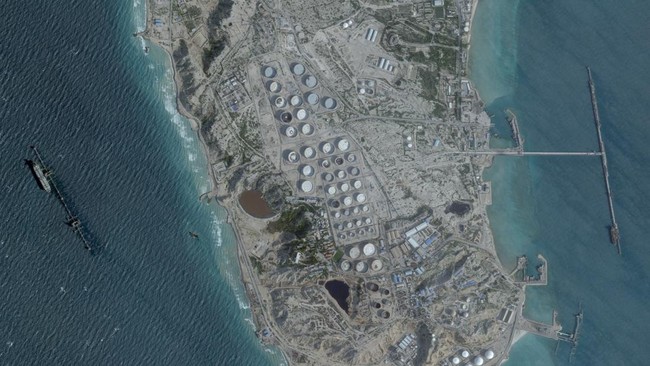
Kharg Island in Iran is one of the most crucial points on the global energy map. This small island located in the Persian Gulf serves as Iran’s main oil export hub, with around 90% of the country’s oil shipments passing through this area.
Amid rising tensions in the Middle East region, the United States harbours grand ambitions to seize control of the island. However, this step would require a complex military operation.
To support these bold ambitions, what steps must the United States take to capture and control Kharg Island?
Inserting Troops into Kharg Island
The first step the United States must take is to insert its forces into the area.
Overall, the United States has prepared a combination of ground, air, and special operations forces in an integrated operation package.
In addition to the force composition, the next challenge is determining the best method to insert troops into Kharg Island. Each option carries high risks, both geographically and from Iranian military threats.
Among the various options, an attack using helicopters is considered the most realistic due to its flexibility.
However, this approach still requires complex support, ranging from air escort to providing temporary refuelling bases, as well as confronting direct threats from Iran’s ground defences.
Clearing and Holding Kharg
For the United States, inserting troops into Kharg Island is not a major issue. However, maintaining dominance in the area becomes the primary complex problem.
The presence of the IRGC (Iran’s elite forces) and field traps pose the main obstacles in the initial phase of taking control of the territory. Additionally, the need for air defence systems adds to the operation’s complexity.
US forces must rely on air protection, including:
combat helicopters,
fighter aircraft,
surveillance systems to counter Iranian missile and drone attacks.
Dependence on air support requires the operation to proceed continuously, significantly increasing operational costs.
On the other hand, Iran has the capability to launch successive attacks using missiles and drones. In the worst-case scenario, the island could be overwhelmed by Iranian assaults.
Amid this pressure, the US could still manoeuvre cunningly by using the oil infrastructure as a shield, placing Iran in a difficult choice.
Iran would have to decide between attacking and damaging its own energy assets, or holding back and losing control of the island.
Although this strategy appears promising, the main issue lies in the operation’s sustainability.
Every logistics delivery essentially becomes a separate military operation, requiring escort and protection from various threats.
High Risk, Low Return: Controlling Kharg Does Not Necessarily Mean Controlling the Oil
With all the complexities the US must face, control over Iran’s oil is not guaranteed to be seized.
Controlling Kharg also does not immediately resolve distribution issues, as the oil must still pass through the Strait of Hormuz. In a conflict situation, this route becomes an obstacle that heightens the risk of disruptions and military escalation.
On the other hand, there is a simpler option than invasion, namely intercepting Iranian tankers directly at sea.
Although more practical and flexible, this approach does not offer the same symbolic impact as a large-scale military operation. Interestingly, this factor is also a consideration, given Donald Trump’s style often seen as a “drama queen” in building geopolitical pressure.