
US Media Highlights Latest Conditions at IKN, Reveals Unexpected Aspects
Jakarta, CNBC Indonesia - US media has once again turned its attention to the development of Nusantara (IKN), Indonesia’s ambitious project to establish a new government centre to replace Jakarta. In her latest report, NPR reporter Katerina Barton provided a direct account of conditions on the ground, ranging from the grand vision to the various challenges that continue to loom over the initiative.
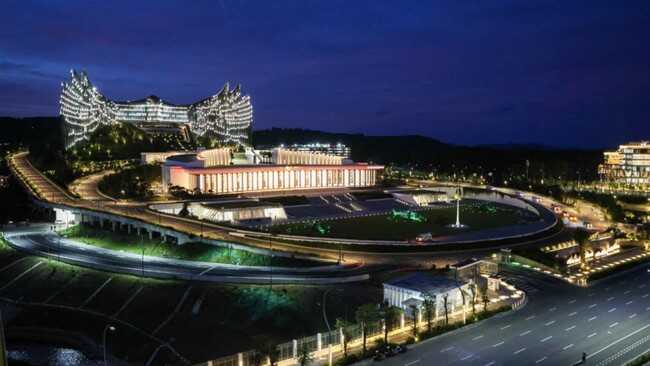
“Behind me is the presidential palace in Indonesia’s new futuristic capital. It is called Nusantara, and this city is being built in the middle of Kalimantan’s forest to replace Jakarta. Jakarta is too crowded, polluted, and sinks further each year due to rising sea levels. For this reason, in 2019, the Indonesian government announced a grand plan to build a new capital from scratch,” said Katerina Barton, reported on NPR’s Instagram on Saturday (28 February 2026).
This scrutiny reaffirmed the fundamental reasons for the capital relocation, namely environmental pressures and population burdens in Jakarta. The project has been positioned from the outset as a long-term strategic initiative, rather than merely an administrative relocation. However, the journey towards full realisation has proven less smooth than imagined.
“Nusantara is being promoted as a futuristic green city, powered by renewable energy, filled with parks and trees, and run with advanced technology. However, progress has been slow. Logistical challenges, funding constraints, and changes in leadership have caused delays to the schedule. So far, only parts of the city have been completed, particularly government buildings and housing for civil servants, and only a small portion of the population lives and works here,” she continued.
The report also captured the contrast between the ambitious vision and the reality of early-stage construction. On one hand, the government continues to push for acceleration so that political functions can proceed according to schedule. On the other, some have begun questioning the project’s long-term sustainability.
“During the recent long holiday, more than 200,000 tourists came to see the city firsthand. The core of the project is the presidential palace, situated beneath the wings of the mythological bird Garuda. What has been built looks beautiful. There are expansive parks and office buildings with hanging plants along their walls. However, critics worry this could become an expensive ghost town, whilst environmental groups and indigenous communities have raised concerns about deforestation and disruption to traditional lands,” she said.
Public enthusiasm is said to be one indicator of the high level of curiosity about IKN. However, global attention is also turning more sharply towards social and environmental impacts. Sustainability has now become the main test for the project’s legitimacy in the eyes of the world.
“Currently, the government plans for Nusantara to become the political capital by 2028. This is a grand vision, but its future remains uncertain,” Barton said.