
US-Israel War vs Iran: Not a Crusade
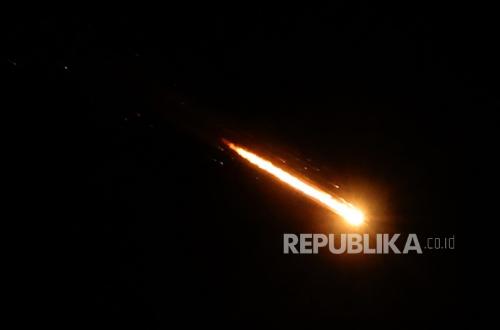
Various analyses have emerged regarding the war between the United States and Iran involving Israel. Numerous discourses have surfaced, including the notion of a crusade, because the US and Israel are united against Iran, which serves as a major source of the world’s oil energy.
In my view, the war that is occurring has no connection to the discourse of a crusade. Historically, it is clearly different; the current war is more caused by the struggle for energy in the Gulf states. If we compare it to the Crusades (11th to 13th centuries), they began as a series of military conflicts with a religious tone between European Christian forces and Islamic powers in the Middle East, under the pretext of seizing Jerusalem and the Holy Land.
Moreover, those conflicts had long and complex historical roots, not only driven by religious motivations but also by political and economic ambitions.
Various in-depth analyses of the causes of the Crusades: first, religious motivations, namely the desire to regain control of Jerusalem, considered holy by Christians; second, the call for a “Holy War” by Pope Urban II in 1095. Clearly, the motivations were due to the factor of wanting to control the Holy Land and the invitation from a religious figure.
This situation was triggered by two important factors: first, the political factor between the Eastern Roman Empire, where the Byzantine Emperor requested assistance from the West to face the expanding threat of the Seljuk Turkish Dynasty; second, economic ambitions to control trade routes, acquire new lands, and the desires of European nobles to gain wealth and honour.
US-Israel War vs Iran: Struggle for Energy
The struggle for energy in several Middle Eastern countries in the Gulf region has triggered the war between the US-Israel and Iran, with the main cause being the competition for energy.
This prolonged conflict has clearly involved the United States-Israel against Iran. It has clearly triggered serious concerns regarding the global energy crisis and the struggle for control over energy resources in the Middle East.
The escalation of the conflict, which intensified in early 2026, marked by airstrikes and threats to infrastructure, has shaken the global energy market. This conflict has caused damage to energy infrastructure in the Middle East, with reports indicating that around 40 energy facilities were severely damaged in less than a month. This has clearly triggered concerns about a global energy supply crisis.
Impacts of the US-Israel War vs Iran
The main actors in the US-Israel war with Iran: first, Donald John Trump (born 14 June 1946) is an American businessman, reality TV presenter, and politician who served as the 45th President of the United States (2017 to 2021) and the 47th since 2025. Trump is the only one to become President of the United States without any prior experience holding political office. The second actor, Benjamin Netanyahu (born 21 October 1949), has been Israel’s Prime Minister since December 2022, having served from (1996-1999) and (2009-2021) until now.
These two figures are the main causes of the war that continues to this day. For Europe and the Western world, there will be conflict or even war between the United States (and its allies) and Iran. Naturally, many countries do not want this to happen to the Western world.
If the war does not stop soon, the increasing tensions will lead to spikes in oil and energy prices. This will clearly make the conflict in the Middle East increasingly disrupt energy supplies.
Therefore, the Gulf states will unite with Iran to close the main oil supply trade route through the Strait of Hormuz, which is the world’s oil trade traffic.
If this persists for a long time, it has the potential to drastically increase world oil prices, with projections reaching up to $150 per barrel. Once again, if the conflict lasts long, it will paralyse the world economy.
United in Building Civilisation
The war that is occurring is actually not beneficial for all countries. Therefore, all countries must agree to stop the war. The main task of all countries is to strengthen civilisation so as to prevent mutual enmity and resentment, which leads to humanitarian conflicts that must be rejected.
Civilisational conflict, often known as “The Clash of Civilisations,” is an international relations theory popularised by American political scientist Samuel P. Huntington in 1993.
Therefore, preventing civilisational conflict is the obligation of all countries to become advanced nations, thereby achieving a modern standard of living marked by mastery of technology, science, arts, monumental buildings, and social-government structures that uphold humanitarian values. This includes the physical and non-physical products of human cultivation. Therefore, an advanced nation’s civilisation upholds “adab,” which means good manners, noble character, or etiquette in international interactions full of moral values.