
US-Israel War Awakens "Sleeping Tiger", Iran and North Korea "Unite"
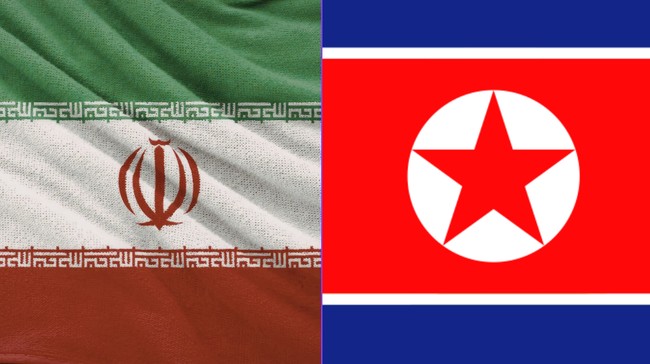
Jakarta, CNBC Indonesia - Analysts assess that Iran and North Korea are poised to reinforce military cooperation, particularly in missile development and nuclear technology, following the cessation of conflict between Iran, the United States, and Israel.
Over many years, Pyongyang has been suspected of supplying missile technology to Tehran and providing technical assistance related to uranium enrichment. Analysts estimate this cooperation could intensify as Iran begins rebuilding military infrastructure damaged by the conflict.
According to reports published by the Hong Kong-based South China Morning Post on Monday (16 March 2026), analysts from the Korea Institute for National Security (KINU) believe the military relationship between the two nations will likely become active again.
“North Korea and Iran will likely resume cooperation in missile development and the reconstruction of uranium enrichment facilities, as Iran feels an acute need to possess the capability to launch major retaliatory strikes,” said Cho Han-bum, senior analyst at KINU.
He added that the relationship between the two nations could strengthen further following the conflict’s conclusion, with both countries likely to reinforce bilateral ties once the war ends.
North Korea’s Support for Iran
During the ongoing conflict, North Korea has also voiced support for the election of Mojtaba Khamenei as Iran’s new supreme leader. North Korea’s Ministry of Foreign Affairs, through the official Korean Central News Agency (KCNA), stated respect for this decision.
“We respect the rights and choices of the Iranian people in selecting their supreme leader,” the ministry stated.
Earlier, Pyongyang also condemned military attacks launched by the United States and Israel against Iran, claiming the two countries have destroyed the foundations of regional peace.
“We firmly condemn the aggressive actions of the United States and Israel that have destroyed the foundations of regional peace and security, whilst worsening global instability through illegal military attacks on Iran,” it said.
North Korea’s Missile Tests
Meanwhile, amid escalating global tensions, North Korean leader Kim Jong-un recently oversaw the launch of a strategic cruise missile from one of the country’s latest destroyer vessels. According to KCNA, Kim stated that North Korea’s nuclear capability has now entered a new phase.
He declared that the nation’s nuclear power has entered “a multi-role operational phase”. He emphasised the importance of maintaining and expanding “strong and reliable nuclear deterrence capabilities”.
These tests occur concurrently with the scheduled commencement of annual joint military exercises between South Korea and the United States, known as Freedom Shield, on 19 March. Kim’s sister, Kim Yo-jong, warned that these exercises could trigger serious consequences.
“Military demonstrations from hostile parties near our nation’s sovereign territory and security areas could produce grave and unimaginable consequences,” she said.
According to Agence France-Presse on Sunday, Iran conducted another nuclear test following Saturday’s launch of approximately 10 ballistic missiles. The test involved 12 ultra-precise 600mm multiple rocket launchers and two artillery companies.
Long-Standing Military Cooperation
It is worth noting that military relations between Iran and North Korea have actually been established since both nations formalised diplomatic ties in 1973. This cooperation expanded during the Iran-Iraq War in the 1980s, when Iran required missiles to counter Iraqi attacks.
During that period, North Korea reportedly supplied Scud-B and Scud-C ballistic missiles to Iran. In the 1990s, Iran’s missile programmes, such as Shahab, are said to have been developed utilising technology from North Korea’s Nodong missiles.
Oh Gyeong-seob, senior researcher at KINU, states that this cooperation likely continues in secret to this day. He also notes that international sanctions have left Iran with few alternatives for obtaining military technology.
“It is highly probable that North Korea—banned from selling weapons and military technology due to international sanctions—has been cooperating covertly with Iran,” he said.
“Due to sanctions, Iran has very few alternative sources besides North Korea and Russia for weapons imports. There is strong evidence that Iran’s progress in missile development and nuclear technology has benefited from North Korean assistance,” he explained.