
US-Israel versus Iran Conflict Begins to Disrupt Indonesian Palm Oil Exports
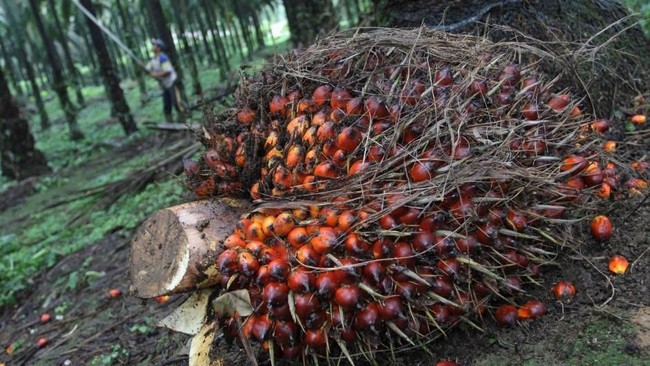
Jakarta — Escalating geopolitical tensions are beginning to affect Indonesia’s crude palm oil (CPO) trade. The conflict in the Middle East has caused logistics costs and shipping insurance premiums to spike by approximately 50%, which is now dampening export demand.
Eddy Martono, chairman of the Indonesian Palm Oil Producers Association (Gapki), stated that whilst Indonesian palm oil exports continue to flow, the increase in distribution costs is beginning to slow new contract enquiries.
He explained that most current shipments stem from existing contracts negotiated previously, whilst new contract demand is declining due to higher shipping costs.
“Given this conflict and the global situation, we are grateful that palm oil exports continue, despite experiencing extraordinary cost increases. The rise in logistics costs and insurance is approximately 50%,” Eddy said during a press conference at the Ministry of Agriculture office in Jakarta on Wednesday, 11 March 2026.
According to him, the cost surge is prompting some buyers to defer new contracts unless they have an urgent supply requirement.
“What is currently proceeding is our fulfilment of contracts already signed, but recently there has been a slight decline in new orders,” he said.
The conflict is also affecting certain trade routes, particularly shipments through the Strait of Hormuz. Some export destinations in the Middle East have temporarily halted, including the United Arab Emirates and Iran.
“Routes through the Strait of Hormuz have definitely been affected and are temporarily suspended. Exports to the United Arab Emirates and Iran have stopped,” he noted.
However, other major markets continue to operate normally. Countries such as Saudi Arabia, India, and China continue to import palm oil from Indonesia, with China being the largest importer.
Indonesia’s total palm oil exports to the Middle East region amount to approximately 1.8 million tonnes. However, there is currently no evidence of increased demand from other markets such as India and China to offset potential declines from the region.
“We have not yet seen increased demand. I do not see any rise in exports to India or China at this point,” he said.
According to Eddy, this situation is also influenced by the use of alternative vegetable oils in these countries, such as sunflower oil and soybean oil, meaning that palm oil demand is unlikely to rise in the near term.
Despite these pressures, he assured that domestic supply remains secure, as national palm oil exports continue to flow daily from various major ports.
“Since exports are currently continuing, we have not yet seen any possibility of stock increases. Shipments continue daily from ports such as Tanjung Priok and Belawan,” he explained.
Meanwhile, crude palm oil (CPO) prices on the global market have not experienced significant increases and remain at approximately US$1,100 per tonne, equivalent to around 1.85 million Indonesian rupiah per tonne (based on an exchange rate of 16,866 rupiah per US dollar).
“There has not yet been a significant price increase in global CPO, remaining at approximately US$1,100 per tonne,” Eddy concluded.