
US-Israel tensions with Iran intensify, Ministry of Industry reveals unexpected factor
Jakarta, CNBC Indonesia - The intensification of the conflict in the Middle East region is starting to affect the national industry. The government acknowledges disruptions to the distribution chain, though the impact has not yet translated into a significant decline in export performance.
Director General of Agro Industry at the Ministry of Industry (Kemenperin), Putu Juli Ardika, said the most noticeable impact at present is in the logistics sector.
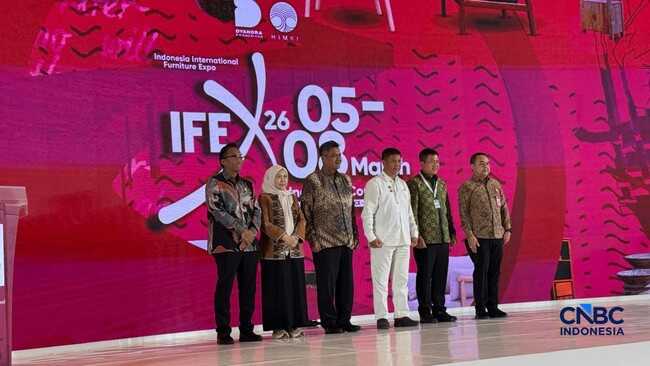
“Yes, the logistics sector, logistics indeed has an impact there, and what is only becoming apparent is that,” Mr Putu said after opening the Indonesia International Furniture Expo (IFEX) 2026 at ICE BSD, on Thursday (5/3/2026).
The issue is not limited to the furniture industry but also the agro sector generally, which relies on the smooth delivery of goods.
“All of that is affected in logistics,” he said.
Nevertheless, the government has not yet observed a decline in exports due to the conflict and is choosing to monitor global developments further.
“It's still very early to say that; we'll see how it develops,” he explained.
Kemenperin has held several internal meetings to prepare mitigation steps, though no specific policy has been adopted yet.
“In the Ministry of Industry there have been several meetings on how to mitigate, but we'll see the developments first,” Ardika said.
Regarding raw materials, he stressed that the agro industry's dependence on conflict zones is relatively small and not a major pressure source.
“No, agro raw materials do not come much from there,” he said.
As an anticipatory step, the government is directing efforts to strengthen exports to markets that are considered more stable.
“Most of all to India and in ASEAN countries,” Putu said.
He added that penetration of non-traditional markets continues to be encouraged to broaden Indonesia's export base.
“Within ASEAN itself. We are developing the non-traditional ones,” he closed.