
US–Israel–Iran War Brings Calamity as Europe Braces for Hardship
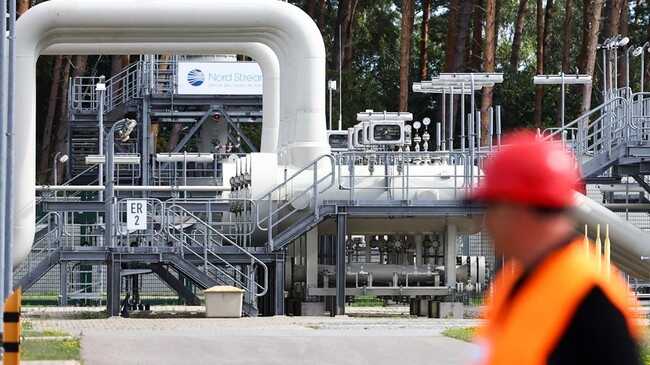
Jakarta – CNBC Indonesia – The war involving the United States, Israel, and Iran is now starting to trigger a domino effect on global energy markets. For Europe, the situation is a serious threat as efforts to refill gas storage ahead of the next winter season have become much riskier and more expensive, amid disruptions to the production and shipment of liquefied natural gas (LNG).
The impact of the war on Iran has unsettled the global LNG supply chain, tightening gas availability and driving prices sharply higher. This comes at a crucial time for Europe as it prepares to top up storage facilities after the winter.
Gas stocks play a vital role in Europe’s energy security. Stores located in underground caves and tanks across the continent are used to meet heating and electricity needs during the winter.
However this year, gas supplies are expected to finish well below normal levels by the end of the heating season. This forces European countries to buy gas in far larger quantities during the summer when they would normally be refilling storage facilities.
Europe’s reliance on LNG has risen sharply since the bloc stopped most pipeline imports from Russia after Moscow’s invasion of Ukraine in 2022.
Reported by Reuters on Thursday (5 March 2026), before the Ukraine war LNG accounted for around 19% of European gas supply. But according to S&P Global Energy, that share is forecast to jump to 45% this year, or about 174 billion cubic metres of gas, equivalent to around 1,800 LNG tankers.
Analysts from Kpler estimate European buyers will need around 700 LNG cargoes, or about 67 billion cubic metres of gas, just to fill summer storage. That amount is about 180 cargoes, or 17 billion cubic metres, more than last year.
A small portion of supply will come via pipelines from Norway and Algeria, and far smaller from Russia. But most of the remaining needs will still have to be met via LNG cargoes shipped on tankers.
Since the conflict with Iran intensified, both pipeline gas and LNG prices have surged. The European gas price benchmark briefly hit its highest level since early 2023 and rose nearly 50% in the past week after Qatar closed a gas field that accounted for about a fifth of global LNG supply.
There has also been a spike in the global LNG benchmark for Asia, the Japan–Korea Marker (JKM), which jumped as much as 68% as buyers try to replace LNG volumes missing from Qatar.
As a result, the cost for Europe to cover the additional 180 LNG cargoes rose sharply. Reuters calculations put the value at about US$10.1 billion on Wednesday, up from about US$6.7 billion on the previous Friday.
If calculated for the total summer-fill requirement of 67 billion cubic metres, total costs are now estimated to rise by about US$13.6 billion to around US$40 billion.
Analysts expect European gas storage facilities to be only around 22% to 27% full by the end of March. That figure is far below the five-year average of about 41%.
If LNG supply to Europe falls further in the next four weeks due to disruptions in the Middle East, storage levels could fall even deeper.
Energy Aspects analyst Erisa Pasko said that if shipping disruption in the Strait of Hormuz lasts for a month, European gas stocks could fall to historic lows by the end of winter, leading to lower storage fills by late October.
The Strait of Hormuz is a vitally important energy chokepoint. Around 120 billion cubic metres of LNG per year, or about 20% of global LNG supply, pass through the strait. About four-fifths of those shipments head to Asian markets.
Meanwhile SEB Research commodity analyst Ole Hvalbye estimates that if disruption lasts a month, about 7 million tonnes of LNG, or around 9.7 billion cubic metres of gas, could be taken off the global market.
In such a scenario, Europe is expected to lose around 5.5 million tonnes of LNG or about 7.6 billion cubic metres of gas as it competes with Asia for available cargoes.
According to Hvalbye, this would push European gas prices above €60 per megawatt-hour, versus around €50 currently and around €32 last weekend.
He also warned that if Qatar’s Ras Laffan LNG complex experiences a prolonged shutdown, energy markets could face pressures similar to the 2022 energy crisis.
In that scenario, he said gas prices could even surge to €100 per megawatt-hour or more. He added that in such conditions, energy conservation would likely become the main mechanism to balance the market.
On the other hand, Norway, Europe’s largest gas supplier currently, has been producing gas at maximum capacity. While gas injected into summer storage facilities will come from a mix of pipeline gas and LNG, additional demand will almost certainly have to be met from LNG.
Pasko added that higher gas prices could reduce incentives for companies to store large amounts of gas, as many market participants expect prices to fall again when the conflict subsides and new LNG supplies come online.
Europe’s reliance on LNG is evident. Currently, the United States is the largest LNG supplier to Europe and also the region’s second-largest gas supplier overall.
Washington has urged the European Union to buy more LNG from the United States as new LNG projects expand supply capacity.
But despite this.