
US-Israel Attacks Trigger Crisis, Trump Asks Israel to Stop Targeting Iran's Energy Facilities
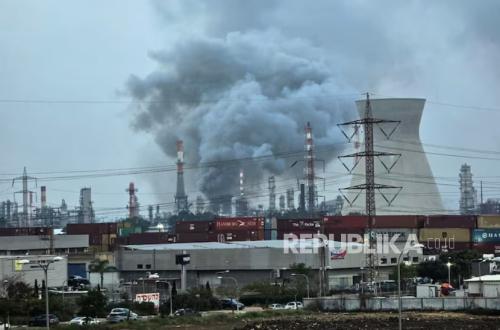
The war launched by the United States alongside Israel against Iran since 28 February is increasingly widening its impact, including shaking the global energy market. Tensions have heightened after attacks on Iran’s main gas facilities triggered retaliatory actions targeting energy infrastructure in the Gulf region.
US President Donald Trump on Thursday (19/3/026) admitted that he had asked Israeli Prime Minister Benjamin Netanyahu not to repeat attacks on Iran’s natural gas infrastructure. Trump made the statement in the Oval Office while meeting Japanese Prime Minister Sanae Takaichi.
“I told him, ‘Don’t do that’, and he won’t do it,” Trump said to reporters.
The request came after energy prices surged sharply due to the escalation of attacks in the energy sector. Iran had previously retaliated against Israel’s attack on its main gas field by striking the Ras Laffan Industrial City in Qatar, which processes about one-fifth of the world’s liquefied natural gas. That attack caused major damage estimated to take years to repair.
Not only that, Saudi Arabia’s main port in the Red Sea was also attacked, amid the country’s efforts to divert some exports to avoid potential closure of the Strait of Hormuz by Iran. This route has long been the passage for about one-fifth of the world’s oil supply.
These attacks underscore Iran’s ability to inflict significant impact on the US-Israel military campaign while also demonstrating the limitations of air defence systems in protecting strategic energy assets in the Gulf region.
Amid the rising conflict, Netanyahu instead proposed the construction of a new oil and gas pipeline network from the Gulf region to Israel’s ports in the Mediterranean Sea. According to him, this energy route could serve as an alternative to avoid security risks in the Strait of Hormuz.