
US-Israel and Iran Ceasefire at Risk of Failure, World in Panic
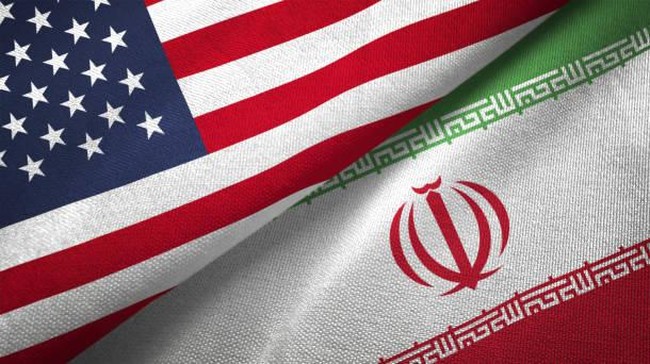
Jakarta, CNBC Indonesia - World leaders are racing against time to save talks between the United States and Iran amid rising risks of the collapse of the newly announced ceasefire. Diplomatic efforts are under increasing pressure as Israel’s attacks in Lebanon continue, sparking fears of a return to large-scale conflict in the Middle East.
As Air Force Two carries US Vice President JD Vance to Pakistan for talks with Iranian officials, the position of the ceasefire mediated by President Donald Trump appears increasingly fragile.
According to The New York Times, the ceasefire announced last Tuesday is now at risk of being cancelled, particularly because Iran views Israel’s attacks on Lebanon as a violation of the agreement, which includes halting attacks on Iran and its allies in exchange for smooth shipping lanes in the Strait of Hormuz.
Israeli Prime Minister Benjamin Netanyahu has rejected international pressure to halt military operations against the Iran-backed Hezbollah group in southern Lebanon. This stance is the main source of tension that could derail key talks between Washington and Tehran scheduled in Islamabad.
Iran had threatened to cancel the meeting with Vance planned for Saturday local time. However, the arrival of the Iranian delegation in Islamabad on Friday signals that talks are likely to proceed, though the situation remains highly uncertain.
Concerns over the impact of this conflict are not only geopolitical but also on the global economy. World Bank President Ajay Banga has warned that if war breaks out again and Iran disrupts commercial shipping lanes in the Strait of Hormuz, global economic growth could slow significantly and inflation would rise.
Several countries are actively working to keep diplomatic channels open. French President Emmanuel Macron has pressed Israel to stop attacks in Lebanon. The British Prime Minister has completed a three-day visit to Gulf countries to discuss reopening shipping lanes. Meanwhile, Saudi Arabia is urging China to continue pressuring Iran to remain engaged in the diplomatic process.
Pakistani Prime Minister Shehbaz Sharif described the US-Iran meeting as a “make-or-break” moment. He revealed he has received numerous communications from world leaders, including from Qatar, Germany, Australia, and the UK, indicating high global attention to the situation’s developments.
Although talks are proceeding, analysts believe the conflict in Lebanon has damaged the negotiation atmosphere. Professor Vali R. Nasr from Johns Hopkins said, “Lebanon has changed the context of the talks.”
He added that this tension deepens the long-standing distrust between the two countries, especially after five weeks of conflict and a long history of disputes.
According to Nasr, sharp differences over Iran’s nuclear programme, the security of the Strait of Hormuz, and other strategic issues will be even harder to bridge. Even veteran diplomats doubt the possibility of reaching a major agreement without extending the two-week deadline set in the ceasefire.
He also highlighted Iran’s suspicions of President Trump, saying, “If you already think that this man, Mr Trump, might trick you, that’s a bad sign.” This distrust is reinforced by past experiences, including Trump’s decision to withdraw from the 2015 nuclear deal and sudden military actions against Iran in the past year.
The US delegation, led by Vance, will be accompanied by special envoy Steve Witkoff and Jared Kushner. They are scheduled to meet Iranian Foreign Minister Abbas Araghchi and Parliament Speaker Mohammad Bagher Ghalibaf. However, it is unclear whether the meeting will be direct or through Pakistani intermediaries.
The talks will take place at the Serena Hotel in Islamabad, which was previously asked to clear guests as it is being used by the Pakistani government for this important event. Diplomats believe a direct meeting would be more effective, though it carries political risks as it could be seen as too compromising.
The role of other countries is also crucial, especially China, which is heavily dependent on energy supplies from the Gulf region via the Strait of Hormuz. Ryan Hass from the Brookings Institution said that escalating conflict would run counter to China’s interests in maintaining global energy market stability. This strengthens reports that Beijing is pushing Tehran to accept the ceasefire.
A Saudi official also mentioned that Riyadh is encouraging China to remain active in the diplomatic process. Meanwhile, spokesperson for the Chinese Embassy in Washington, Liu Pengyu, stated that his country has been working since the start of the conflict “to help achieve a ceasefire and end the conflict.”
Experts assess that the ceasefire is still holding despite its weaknesses because both sides have significant interests in avoiding escalation. Iran faces heavy military and economic pressure but has substantial leverage through its ability to disrupt shipping lanes in the Strait of Hormuz. On the other side, Trump faces rising fuel prices, waning public support, and pressure from his own political base.
However, few predicted that Lebanon would become the most dangerous factor in this peace effort. For Netanyahu, Lebanon is crucial as it is the base of Hezbollah, a group that has long been a threat to Israel and involved in cross-border conflicts for years.
Following the Hamas attack on 7 October 2023, Netanyahu has become even more determined to disarm or destroy Hezbollah in line with the long-stalled UN mandate. Although Trump once asked Israel to reduce attacks, and Netanyahu m