
US-Israel Aggression Triggers Soaring Fertiliser Prices, Deli Serdang Farmers in Distress
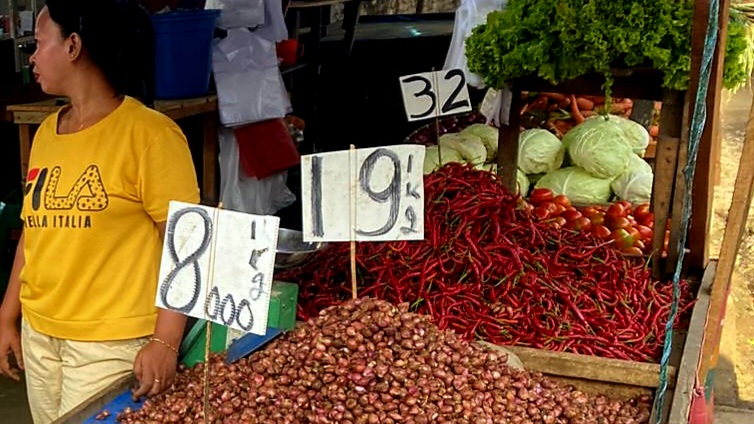
The spectre of a food crisis is beginning to haunt households. The US-Israel military aggression against Iran is no longer just international news but a real threat to the livelihoods of farmers in Deli Serdang, North Sumatra.
Economist from Universitas Islam Sumatera Utara (UISU), Gunawan Benjamin, views that the disrupted global supply chain has triggered a worrying surge in fertiliser raw material prices. Based on data from tradingeconomics.com, he said, the price of sulphur—a vital fertiliser component—has skyrocketed to a record high of CNY 5,383 per tonne.
“This rise in raw materials is sparking concerns over the weakening of farmers’ planting capabilities. If production drops, we (North Sumatra) will face the threat of food price inflation,” he stated in Medan on Friday (27/3).
According to him, this price increase is no longer a prediction but has already become a daily burden. In the last two weeks, non-subsidised fertiliser prices in the Deli Serdang area have continued to climb.
Based on Gunawan’s observations, the price of non-subsidised Urea fertiliser is now at Rp450,000 per sack, up from the previous Rp400,000. Not only that, KCL fertiliser has also risen to Rp430,000 per sack.
Even supporting needs like mulch plastic are not lagging behind, now priced at Rp280,000 per roll from the previous Rp250,000. Ironically, as production costs swell, the selling prices of farm produce are plummeting.
He said that chilli farmers in Deli Serdang are “bleeding” because selling prices are far below the Cost of Production (HPP). The ideal HPP figure for farmers is Rp15,500 per kg, but the selling price is only Rp7,000-Rp10,000 per kilogram.
In fact, the ideal consumer price with that HPP would be at least Rp27,000 per kilogram to maintain farming capital.
Data from the National Strategic Food Price Information Centre (PIHPS), continued Gunawan, shows the average price of red chillies in Medan and surrounding areas at Rp19,800 per kilogram. In some traditional markets, such as Tanjung Morawa, the price even touches only Rp16,000 per kilogram.
This condition is seen as creating a vicious cycle. Chilli farmers, who mostly rely on non-subsidised fertiliser, are at risk of losing capital for the next planting season.
“The issue of rising fertiliser prices combined with capital disruptions will become the main problem for all farmers, not just chilli. The impact of this war will be deeply felt when they start preparing their land again,” he added.
Gunawan emphasised the need for government intervention to mitigate field-level obstacles. Without concrete steps, a production decline will no longer be just a potential but a certainty that will hit the purchasing power of the wider community.
The government will continue to conduct strict supervision in the field.
General Chairman of the Indonesian Farmers and Fishermen’s Contact (KTNA), HM Yadi Sofyan Noor, welcomes various government policies deemed pro-farmer, including a 20% fertiliser price reduction.
This reduction is regulated through Minister of Agriculture Decree Number 1117/Kpts./SR.310/M/10/2025 of 2025.
Member of Commission IV of the House of Representatives (DPR-RI) Adrianus Asia Sidot appreciates the government for officially reducing subsidised fertiliser prices by up to 20% starting Wednesday (22/10).
The Ministry of Agriculture (Kementan) explained the reasons for the global fertiliser price surge. Deputy Minister of Agriculture (Wamentan) Sudaryono said this occurred due to several factors.