
US-Iran War Tensions Rise, China and Russia 'Involved'
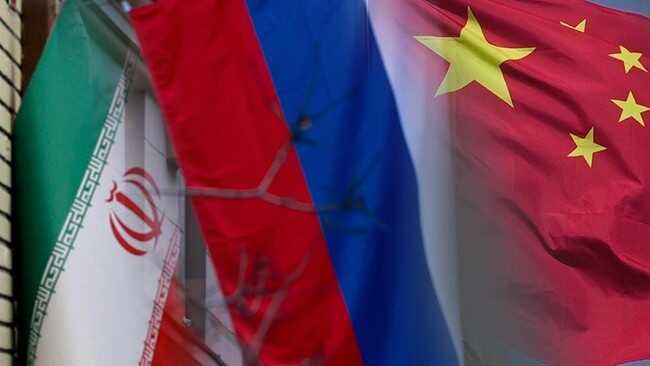
Jakarta, CNBC Indonesia - Iran and the United States will hold high-level talks to discuss the Tehran nuclear agreement in Geneva, Switzerland, this Thursday (February 26, 2026). Although this is a welcome development, it does not necessarily mean that tensions between the two countries will ease.
Western countries have long believed that Iran wants to build nuclear weapons. However, Iran claims that its actions are for peaceful purposes.
US President Donald Trump has also continued to threaten military action if the agreement is not reached. Although he says he is prioritizing negotiations, he does not rule out the possibility of an attack.
“My preference is to resolve the issue through diplomacy, but one thing is certain, I will not allow the world’s number one supporter of terrorism… to have nuclear weapons,” Trump claimed.
In the latest developments, tensions now indirectly involve Russia and China. Here is a summary from CNBC Indonesia:
Russia
Iran is reportedly taking major steps to strengthen its air defense. The Financial Times reported a secret agreement worth hundreds of millions of euros between Tehran and Moscow to supply modern missile systems.
In the report, as quoted by Anadolu Agency, Iran is said to have signed a secret missile agreement with Russia worth about 500 million euros (approximately 10 trillion rupiah). According to information obtained by the newspaper, the agreement was signed in Moscow in December 2025.
The agreement aims to help Iran rebuild its air defense system. Under the agreement, Russia is said to send 500 units of portable Verba launchers and 2,500 9M336-type missiles to Iran over a period of three years.
The delivery of missiles, which are part of the approximately 500 million euro transaction, is planned to take place in three separate stages between 2027 and 2029. However, according to several sources quoted in the report, some systems may have been delivered to Iran earlier than planned.
The Verba system is known as one of the most modern air defense systems possessed by Russia. The system is designed to be used effectively against cruise missiles and low-flying unmanned aerial vehicles (UAVs).
China
Iran is also reportedly on the verge of reaching an agreement with China to purchase supersonic anti-ship cruise missiles amid rising military tensions with the US. This move comes as Washington deploys a large naval force near Iran’s coast in preparation for a possible attack on the country.
According to six sources familiar with the negotiations, the agreement for the Chinese-made CM-302 missiles is almost complete, although the delivery date has not been agreed upon. The supersonic missile has a range of about 290 kilometers and is designed to evade warship defenses by flying low and very fast.
Two weapons experts say that the deployment of these missiles will significantly increase Iran’s offensive capabilities. This poses a serious threat to US naval forces in the region.
The negotiations for the missile system actually began at least two years ago but accelerated sharply after the 12-day war between Israel and Iran in June.
Three officials who were instructed by the Iranian government and three security officials said that the talks entered the final stage last summer, marked by a visit by senior Iranian military officials, including Deputy Defense Minister Massoud Oraei, to China.
“This is a complete game-changer if Iran has supersonic capabilities to attack ships in the area. These missiles are very difficult to intercept,” said Danny Citrinowicz, a former Israeli intelligence officer who is now a senior researcher on Iran at the Institute for National Security Studies, to Reuters.
To date, it is not yet certain how many missile units are involved in the agreement or the value of the contract agreed upon. However, an official from the Iranian Ministry of Foreign Affairs gave a positive signal regarding this defense cooperation.
“Iran has military and security agreements with its allies, and now is the time to take advantage of these agreements,” said the Iranian Ministry of Foreign Affairs official.
On the other hand, the Chinese government has given a more reserved response. In a follow-up statement after the report surfaced, the Chinese Ministry of Foreign Affairs stated that it was unaware of any talks about the potential sale of missiles.
“The Ministry is not aware of any talks about the potential sale of missiles,” said the official statement from the Chinese Ministry of Foreign Affairs.
The CM-302 will be the most advanced military hardware ever transferred by China to Iran, and it will challenge the UN arms embargo that was reimposed last September. The sale is seen as complicating US efforts to limit Iran’s missile and nuclear programs, and it also signals China’s desire to assert its influence in a region that has long been dominated by the US military.