
US-Iran War Shakes IHSG, Analyst: Investors Starting to Return to Indonesia's Market
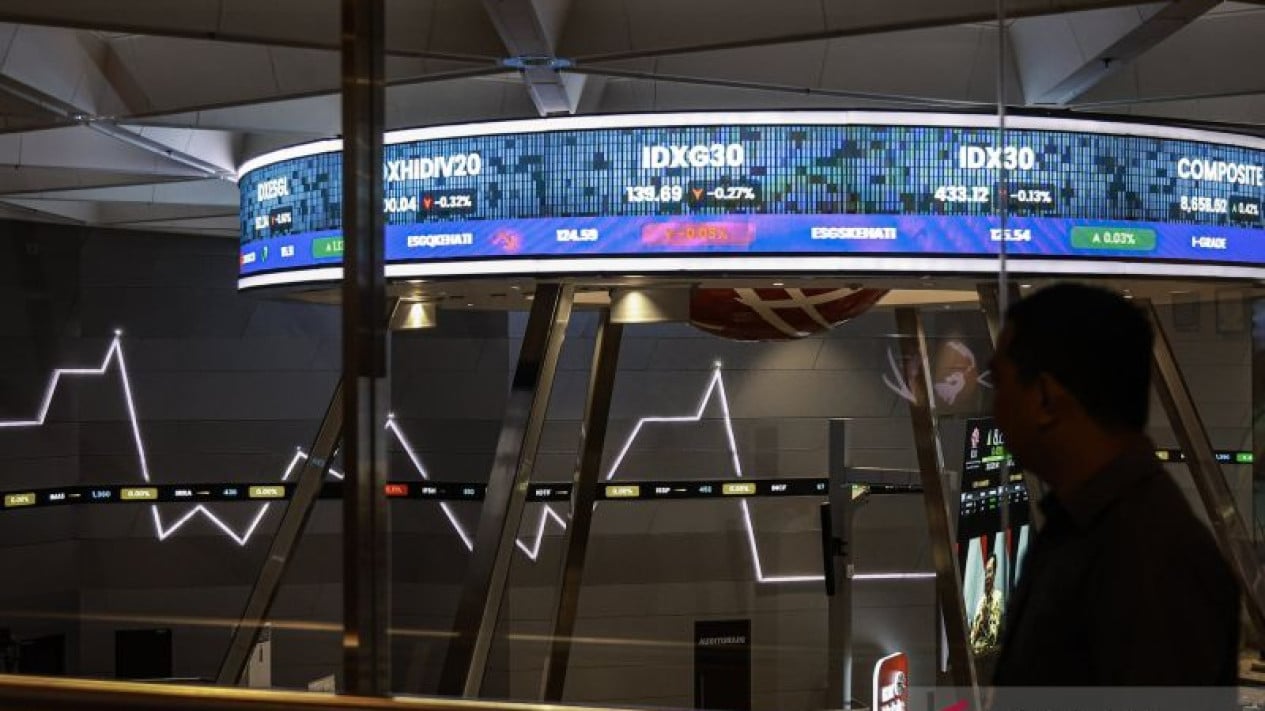
The prolonged Middle East conflict has triggered various sentiments that pressured the Composite Stock Price Index (IHSG), subjecting it to pressure for nearly a month. After the long Eid al-Fitr holiday, the index began showing signs of recovery as investors returned to the domestic stock market.
Capital market analyst Reydi Octa assesses that global economic and geopolitical uncertainties remain high. According to him, high interest rates and oil price volatility stemming from the conflict between the United States (US) and Iran temporarily triggered selling actions in the stock market.
Market players diversified into defensive assets such as gold and bonds, while avoiding risky assets. Reydi also warns that capital flows will be highly sensitive to developments in the conflict and inflation.
Reydi observes that investors are starting to return gradually to the Indonesian stock market (capital inflow). Although they remain selective and cautious.
“Foreign investors are not yet aggressive, still in a phase of limited accumulation while awaiting certainty on global directions and macroeconomic stability,” Reydi stated, quoted from Antara on Wednesday, 25 March 2026.
The return of investors aligns with the IHSG’s recovery alongside the strengthening of Asian stock exchanges. At the close of trading on Wednesday, 25 March 2026, the IHSG rose 2.75% or 195.28 points to break through the 7,302.12 level.
Meanwhile, regional Asian stock exchanges, including the Nikkei index, rose 1,474.72 points or 2.82% to 53,727.00; the Shanghai index rose 50.56 points or 1.30% to 3,931.84; the Hang Seng index rose 217.79 points or 0.87% to 25,281.50; and the Straits Times index rose 34.54 points or 0.71% to 4,896.97.
Reydi explains that the IHSG’s rise was driven by a combination of a technical rebound after the long Eid holiday, improving global sentiment, and fund rotation into the energy and non-primary consumer goods sectors.
Additionally, the easing of geopolitical tensions and the decline in oil prices have provided room for the IHSG to rebound.
Furthermore, Reydi projects that global interest rates are still likely to remain high for a longer period (higher for longer). Meanwhile, oil prices are expected to continue fluctuating in line with geopolitical escalations, making the US-Iran conflict the main driver of the market at present.
“If tensions ease, the market could rebound. However, if escalations increase, pressure will once again dominate,” Reydi said.