
US-Iran War Hits Asia, Potential Losses Reach Rp5,000 Trillion
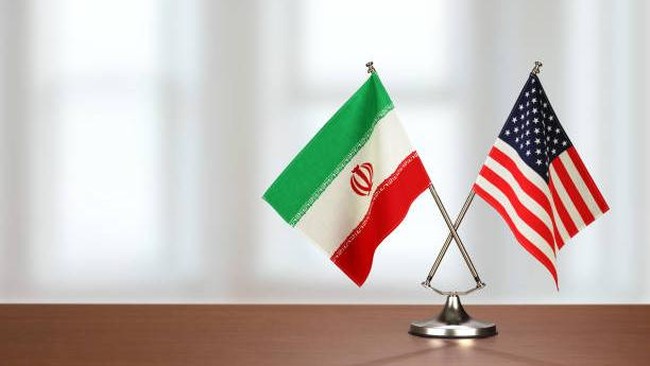
The escalation of conflict between the United States (US), Israel, and Iran is estimated to significantly pressure the Asia-Pacific economy. A United Nations (UN) report states that the impact could reach hundreds of billions of US dollars and push millions of people into poverty.
The UN Development Programme (UNDP) estimates production losses in the region ranging from US$97 billion to US$299 billion. Assuming an exchange rate of Rp17,000 per US dollar, this equates to Rp1,649 trillion to Rp5,083 trillion.
This pressure is triggered by surges in transportation, electricity, and food costs due to disruptions in global energy supplies. The impact is estimated to equal 0.3% to 0.8% of the Asia-Pacific Gross Domestic Product (GDP).
The UNDP also warns that this conflict has the potential to drive 32 million people into poverty globally, including around 8.8 million in the Asia-Pacific region.
Tensions have risen after peace negotiations between the US and Iran failed to reopen trade flows in the Strait of Hormuz. US President Donald Trump is even reported to have imposed a blockade on that strategic route.
This action has triggered an energy crisis that has sharply driven up oil and gas prices and burdened global growth projections. Asia is the most vulnerable region due to its high dependence on energy imports from the Middle East.
“What you are seeing is a kind of major and sudden shock where everything stops and these reserves become crucial,” said Kanni Wignaraja, UNDP Regional Director for Asia and the Pacific, as quoted by CNN International on Tuesday (14/4/2026).
She stated that if countries can adapt quickly, losses could be contained to between US$97 billion and US$100 billion. However, if energy reserves are depleted, the impact could potentially triple.
As the centre of more than half of the world’s manufacturing, economic pressure in Asia risks triggering a global domino effect. Several major US allies such as South Korea, Japan, and the Philippines are now endeavouring to maintain economic stability amid stalled energy supplies.
On the other hand, threats are also spilling over into the food sector. The UN Food and Agriculture Organisation (FAO) warns of potential crises due to disruptions in supplies of oil, gas, and fertilisers from the Middle East.
If the Strait of Hormuz remains closed, countries are estimated to require additional financial support to maintain fertiliser supplies and the continuity of planting seasons.
“It is very important for the ceasefire to continue, and for ships to be able to move again to avoid food inflation,” said FAO Chief Economist Maximo Torero.
The International Monetary Fund (IMF) also forecasts a downward revision in global growth projections. IMF Managing Director Kristalina Georgieva stated that even the most optimistic scenario now points to a slowdown due to supply disruptions and loss of market confidence.
Meanwhile, the Asian Development Bank (ADB) projects that Asia-Pacific growth will slow from 5.4% to 5.1% in 2026-2027, with inflation rising to 3.6%. Although there are signals of continued peace talks, recovery is deemed unlikely to be quick, even if the Strait of Hormuz is reopened.