
US-Iran War Crisis Hits Asia, Here's How Indonesia and Others Respond
Governments across Asia are now struggling to find alternative energy sources to shield their economies from the worst impacts of the energy crisis triggered by the Iran war. However, these rescue efforts are extremely costly and are beginning to burden the budgets of the world’s largest oil-importing countries.
Citing a Reuters report on Tuesday (05/05/2026), supply disruptions from this conflict have led the Asian Development Bank (ADB) to cut its economic growth projection for developing countries in Asia and the Pacific to 4.7% this year. Additionally, the ADB has raised its inflation outlook for the region to 5.2% for this period.
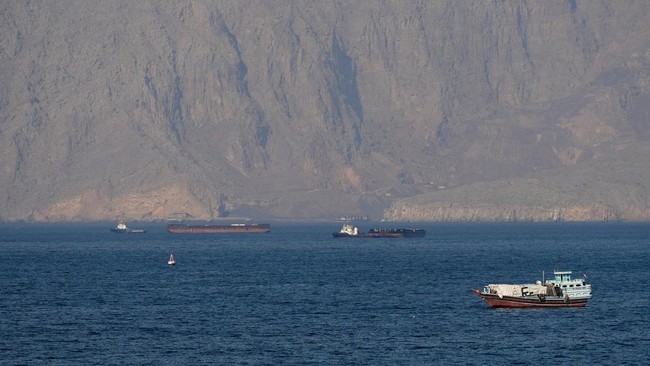
Kpler data shows that overall oil imports to Asia, which relies on 85% of its crude oil shipments from the Gulf, have plummeted by up to 30% in April compared to the previous year. This drop to the lowest level since October 2015 follows nearly two months of almost total closure of the Strait of Hormuz, a key route for one-fifth of global oil and gas supplies.
Fiscal pressures are intensifying across the region, particularly in South Asia, as governments pour billions of US dollars into subsidies and duty waivers to offset price hikes. India’s refining sector, for instance, is absorbing losses of about 100 rupees or equivalent to US$1.06 (Rp18,288) per litre for diesel to keep prices stable for consumers.
Hanna Luchnikava-Schorsch from S&P Global Market Intelligence explained the emergency measures being taken by countries in the Asian region.
“The first line of defence is for governments to absorb the initial shock by providing subsidies or cutting excise duties on fuel products,” said Luchnikava-Schorsch.
Several countries have moved to restrict fuel usage or crack down on hoarding, while others are beginning to limit exports. China, the world’s largest oil importer, is attempting to protect itself with large reserves and a diversified energy supply chain, although Beijing is still granting export exemptions to some regional buyers.
Even as Asian governments continue to drain fiscal resources, foreign exchange reserves, and oil stocks, Goldman Sachs notes that the economic impact of this war has not been as bad as feared. However, the institution has still cut its 2026 growth projections for Japan and several Southeast Asian countries.
Goldman Sachs analysts in their note question the resilience of the economy seen so far amid dwindling buffer stocks.
“How much of the resilience seen so far reflects structural factors rather than an unsustainable drawdown of buffer stocks?” the analysts wrote.
Emerging market currencies in Asia are also facing heavy pressure against the US dollar, with the peso, rupee, and rupiah all hitting new record lows. Since the war began in late February, the rupiah has weakened by more than 2.5%, while the Philippine peso has plunged over 5%.
South Asian economies such as Pakistan, Bangladesh, and Sri Lanka are described as the most vulnerable to the crisis burden. Pakistan even had to pay around US$18.88 per million British thermal units for one LNG cargo, or approximately US$30 million (Rp517.59 billion) more expensive than pre-war market prices.
Hanna Luchnikava-Schorsch again emphasised the vulnerability of these countries in facing global energy price surges.
“These countries are using more of their resources to subsidise domestic public energy companies and essentially protecting end consumers from energy price shocks. These are also countries with the thinnest fiscal buffers,” added Luchnikava-Schorsch.
On the other hand, Indonesia as an energy producer has instructed operators to prioritise the domestic market over exports and halt shipments of non-contracted LNG. Southeast Asia’s largest economy is also starting to look to Africa and Latin America to replace Middle Eastern oil, and plans to purchase 150 million barrels from Russia by the end of the year.
Japan, which buys 95% of its oil from the Middle East, has been forced to increase purchases from the US at skyrocketing spot market prices plus much higher shipping costs. As an emergency measure, on Friday, Japan began releasing 36 million barrels of crude oil from its national reserves to maintain domestic supply stability.