
US-Iran Tensions Flare Up Again: Update on Ships in the Strait of Hormuz
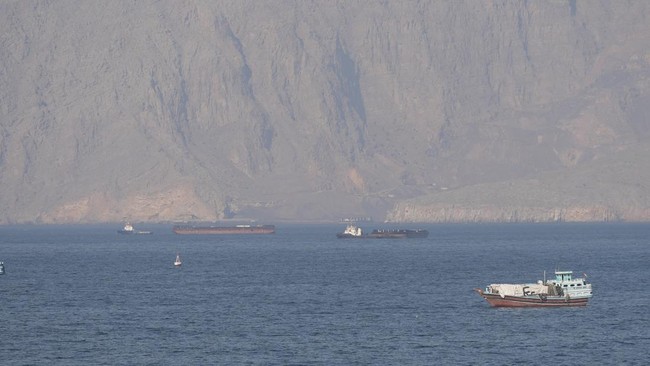
Tensions between the United States (US) and Iran have reignited, directly impacting shipping activities in the Strait of Hormuz. Ship traffic surged over the weekend but slowed again following a series of attacks on commercial vessels.
According to LSEG data, at least 20 ships, ranging from oil tankers to bulk carriers and container ships, transited the Strait of Hormuz on Saturday. One of them was the giant tanker FPMC C Lord, carrying around 2 million barrels of crude oil from Saudi Arabia to Taiwan.
However, the situation changed dramatically the following day. Ship traffic nearly halted on Sunday after incidents of attacks on commercial vessels sparked security concerns in the area.
Global oil prices responded immediately. On Monday, prices surged by about 6% amid reduced shipping activity. Data showed only seven ships transiting the strait that day, a slight increase but still far below normal conditions.
Iran had previously stated that the Strait of Hormuz was open for commercial shipping on Friday, following a US-mediated ceasefire in Lebanon. However, a day later, Tehran claimed to have closed the route again after US President Donald Trump refused to lift the blockade on Iranian ports.
Tensions peaked when the Iranian Revolutionary Guard reportedly fired on an oil tanker on Saturday. In a separate incident, an unidentified projectile also struck a container ship, according to reports from the UK Maritime Trade Operations Centre.
“We are deeply concerned that two India-flagged ships became targets of attacks in the area,” an Indian government representative said in a statement, as quoted by CNBC International on Tuesday (21/4/2026).
On the other side, the US military also ramped up its response. The US Navy reportedly fired on an Iranian cargo ship in the Gulf of Oman on Sunday before Marines took control of the vessel. Trump described the ship as attempting to breach the sea blockade imposed by Washington on Iran.
The heating situation once again highlights the fragility of stability in the Strait of Hormuz, a route through which around 20% of the world’s oil supply passes. Even the smallest disruption in the area could trigger global energy price volatility.
Meanwhile, according to AFP data, in detail, dozens of commercial ships actually passed through the strait before Iran re-closed the route on Saturday. On Sunday, only four ships successfully crossed in both directions, according to maritime tracking firm Kpler.
On Monday, the Iran-flagged tanker Nova Crest, sanctioned by the US, left the Gulf around 04:00 GMT. The ship then continued its journey through the Gulf of Oman, according to Marine Traffic.
Iran also allowed the sanctioned gas tanker Axon I to enter the Gulf yesterday. The ship was heading to the UAE and was said to be “not subject to the US blockade”.
Another ship that transited was the Panama-flagged Starway, owned by China’s Hechuang International Group. The tanker sailed westward through an Iran-approved route around 08:00 GMT on Monday but turned around around 12:00 GMT and was last detected heading back to the strait.
On the other hand, the French-flagged container ship CMA CGM Everglade reported being hit by an “unidentified projectile causing damage to several containers”. This was reported by the United Kingdom Maritime Trade Operations (UKMTO).
According to Bloomberg, more than 750 commercial ships sent signals from within the Gulf on Sunday, with around 350 of them being oil or gas tankers.