
US-Iran tensions escalate; criminologist warns of domino effect as sleeper cells activate terrorism in Indonesia
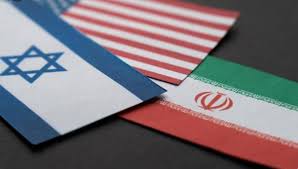
Escalation of conflict between the United States and Iran, following Washington’s military ultimatum, has reached a critical point. The development has triggered global concerns that could reverberate on Indonesia’s domestic security map, given the threat from Iran’s Islamic Revolutionary Guard Corps (IRGC) to widen the battlefield beyond the Middle East.
The IRGC, which has been designated as a Foreign Terrorist Organization (FTO) by the United States since 2019 and formally designated as a terrorist organisation by the European Union in January 2026, declared via its official Sepah News channel that it is prepared to bring this new confrontation to territories unimagined by the US or Israel.
A criminologist specialising in terrorism, Tegar Bimantoro, said the threat of expansion beyond geography is not merely rhetoric. The most immediate and dangerous domino effect for Indonesia would be the manifestation of ideological crime within the country.
“This dynamic opens space for multiple perspectives and many threat scenarios that must be mapped for future security analysis,” he said on Thursday (21/5/2026).
To gauge the short-term trajectory, he highlighted two crucial scenarios that could occur in Indonesia as a result of the tensions. First, the activation of sleeper cells and lone-wolf actions. An open war statement from a group as large as the IRGC can act as a trigger for local extremist groups. The momentum of global chaos is vulnerable to being exploited by sleeper cells, whether affiliated with ISIS/Sunni or sympathisers of other militant groups, to rise and carry out independent terrorist acts domestically as an act of solidarity.
Second, anti-Western propaganda narratives and rapid radicalisation. He noted that US military escalation is almost always used by local radicals as a narrative of “the West attacking Islam”. This sentiment becomes a primary fuel for online propaganda that accelerates radicalisation on social media, facilitates recruitment of terrorist networks, and directs hostility towards Western assets in Indonesia.
Tegar discusses how these narrative scenarios can transform into real terrorist acts on Indonesian soil through cyberspace. Although geographically Indonesia is far from West Asia, individuals within the country exposed to constant suppression narratives online can easily learn techniques, motives, and rationalisations for radical action to apply in their own region.
In addition to digital factors, social strain resulting from global macro-conflicts also creates emotional pressure for individuals who are ideologically vulnerable.
“When they feel frustrated watching global developments but cannot influence them politically, they may vent this through coping mechanisms that deviate, namely by carrying out domestically directed terrorist acts as a form of substitute revenge,” he said.
Tegar reminded that in the modern era, geographical boundaries no longer constrain the spread of radical ideologies. Therefore, alongside 24-hour readiness from security forces under the command of the Commander of the Indonesian National Armed Forces (TNI) and the Chief of Police, tightening patrols in cyberspace and early detection remain key to preventing this global domino effect from taking hold in Indonesia. (H-2)
The United Arab Emirates and Israel have formed a joint fund to develop weapons and anti-drone systems amid rising regional tensions caused by the Iran conflict.
Pakistan and Qatar continue to strengthen diplomatic coordination to press for the resumption of talks between the United States and Iran, which had stalled.
The President of the United States, Donald Trump, is due to arrive in Beijing on the night of Wednesday (13/5). He will meet with Chinese President Xi Jinping for a summit amid the Iran conflict and the Taiwan issue.
The United States government has stated that China agrees that no country or organisation should impose transit tariffs on vessels crossing the Hormuz Strait.
President Donald Trump reiterated that the administration’s top priority is to ensure that Iran does not possess a nuclear weapon.