
US-Iran Nuclear Talks: Deal or Military Strike?
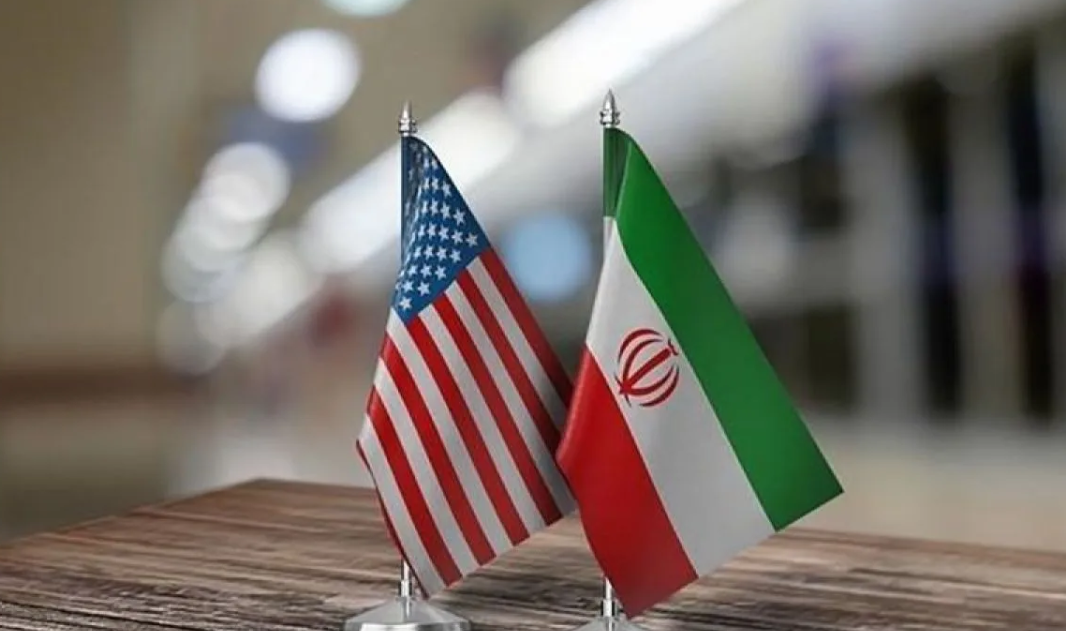
Tensions are rising ahead of renewed talks between the United States and Iran. Representatives from Tehran and Washington are scheduled to meet in Geneva on Thursday to discuss Iran’s nuclear program.
In political and security policy circles, talk of a possible military countdown is growing if a deal is not reached.
Last week, The Wall Street Journal reported that US President Donald Trump is considering a limited military strike against Iran. This was described as an initial effort to pressure Tehran to accept Washington’s demands regarding the nuclear deal, while also trying to avoid escalation that could lead to open war.
The same report said that if Iran continues to reject US demands, the Trump administration is also considering a much broader military campaign, including options aimed at weakening or even overthrowing the leadership in Tehran.
Iran has sent a letter to UN Secretary-General Antonio Guterres, stating that it does not want to start a war. However, Tehran has warned that if attacked militarily, it will respond firmly and appropriately within the framework of the right to self-defense.
Increased Risk of Military Escalation
Menashe Amir, an Iran expert based in Israel and a Farsi-speaking journalist for Israel International Radio, said there is no certainty about Washington’s ultimate goal if a conflict actually occurs.
“It is possible that even Trump himself does not know the answer,” he said.
However, talk of regime change in Iran is said to be increasingly prominent in Washington.
“Trump has come to the conclusion that the Middle East will never find stability without the end of the current leadership in Tehran,” Amir added.
Two US officials told Reuters on February 20 that military planning against Iran has reached an advanced stage.
The options being discussed include targeted attacks on specific individuals to possible actions leading to regime change, if the President gives the order.
However, Damon Golriz of the Hague Institute for Global Change warned that limited military intervention could escalate beyond initial control.
According to him, a regime facing an existential threat no longer sees escalation as just an option, but as a necessity for survival.
Golriz added that amid domestic unrest and international isolation, the Tehran regime could trigger a chain reaction through militant proxy groups in the region, which risks increasing instability in the Middle East.
Meanwhile, Kamran Matin, a lecturer in international relations at the University of Sussex, believes that Trump is more likely to prefer a deal than armed conflict.
“Military conflict will be difficult to predict, and there is no clear exit strategy. The President’s advisors have also repeatedly pointed out the risks of open conflict,” he told Deutsche Welle.
Pressure from Israel
Israeli Prime Minister Benjamin Netanyahu is said to be trying to push Trump to take military action against Iran.
Last year, the US was involved in a 12-day war between Israel and Iran by dropping bunker-busting bombs on Iranian nuclear facilities.
Israel sees the Tehran regime as an existential threat and a potential target for Iranian drones and missiles if conflict escalates.
In his speech to the Israeli parliament, the Knesset, on February 23, Netanyahu said Israel was vigilant and ready for any scenario.
He warned that if the Ayatollah regime in Tehran makes the biggest mistake in its history and attacks Israel, it will respond with force that they cannot imagine.
Amir added that Israel has convinced Washington with extensive evidence that the problem in the region can only be resolved radically by overthrowing the regime.
“In Trump’s latest statements, we see that he is not only discussing Iran’s nuclear program, but also the repression of the Iranian people. This could indicate a fundamental change in the American president’s doctrine,” he said.
These various political and military signals are increasing the pressure on the talks in Geneva, which many observers see as a last chance for a diplomatic solution.
Regime Change in Iran
Although talk of regime change is growing, some analysts doubt that the current dynamics will lead to the emergence of a secular democracy in Iran.
Matin highlighted that the US National Security Strategy released in November shows the end of the nation-building era, with Washington’s policy focus now shifting from the Middle East to China.
Without a clear political alternative for Iran, he said, a deal with the existing regime may be a more realistic option for the US.
Golriz also doubts that a military strike will pave the way for democracy.
“The tenacity of the Tehran regime after killing more than 30,000 protesters without any significant internal defections shows how far a democratic transition is,” he said.
He believes that if the Islamic Republic does collapse, the more likely scenario is the emergence of an authoritarian military government or, in the worst case, a total state collapse that triggers a wider regional conflict.