
US-Iran Nuclear Agreement: Rational or Emotional Negotiation?
By: Sabpri Piliang, Middle East Analyst
The rational US-Iran negotiations in Oman last week have sparked an orientation matrix and Israel’s emotional matrix of various grievances. Israel is dissatisfied! The US position is actually capable of forcing Iran into emotional negotiations, something that directly leads to military confrontation. Israel desires this.
For Netanyahu and his “right-wing” coalition, these negotiations full of “smiles” have strengthened the Mullah regime. The US is viewed as squandering significant momentum against Iran’s infrastructure and superstructure.
What the US (read: Trump) is doing in Muscat, according to Israeli assumptions, is not Trump’s true character. Luring an opponent into an emotional position would produce hasty and mistaken Iranian decisions.
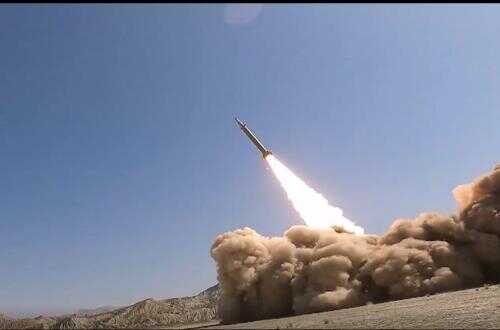
Supposedly, with “pressure” (Israeli assumption), naval blockade (USS Abraham Lincoln) and US F-35 aircraft, Iran would agree to eliminate its hypersonic missiles—something Israel greatly fears.
For Iran, meeting Israel’s comprehensive demands (through the US) would be a fatal and poor mistake for the regime. Delaying the uranium enrichment programme to 60 per cent seems feasible and more realistic.
However, “abandoning” the missile programme, plus disarming Yemeni Houthis and Lebanese Hezbollah, Iran will never accept. All-out confrontation is the choice.
Trump appears to have inclusive considerations. Economic impact and other US allies’ interests become separate calculations. Conversely, Israel only weighs its exclusive interests—the missile threat.
The Muscat negotiations (Oman’s capital) represent an extreme shift in Trump’s stance after weeks of directing weapons at Iran. Public pessimism about war changed to optimism.
Trump recognises Iran as a difficult opponent. Forced emotional negotiation can lead to “barbaric” and manipulative tactics, whilst the negotiators become manipulators themselves.
Trump was right to send high-level negotiators (Steve Witkoff and his son-in-law Jared Kushner) to Oman. Emotional negotiation shifted back to rational negotiation.
Israel worries about something from rational US-Iran negotiations. Trump will follow President Joe Biden’s path, after he took office in 2021. Biden decided to lift economic sanctions on Iran.
Iran, then on the brink of economic bankruptcy, quickly recovered. Iran received a blank cheque it could fill itself, without prerequisites for nuclear agreement discussions.
Unfortunately, Iranian economic sanctions were renewed in 2020. Iran’s per capita income fell 14 per cent, inflation jumped from 9.6 per cent to 40 per cent, economic losses of USD 250 billion, and the defence budget was cut 28 per cent.
Israel fears the US-Iran negotiations to be continued in a week or two will result in lifting economic sanctions, thereby reviving Iran regionally.
Empirically, Biden’s soft stance (Yedioth Ahronoth, 8 February 2026) resulted in strengthening Iran’s proxies: Houthis, Hezbollah, and Hamas. An assumption emerged that Hamas’s 7 October attack on Israel resulted from Biden’s sanctions lifting.
US-Iran negotiations have their own unique dynamics. Equating Khamenei with Noriega’s capture (Panama) or Maduro (Venezuela) is an “extreme idea” that could cause regional chaos.
What Trump is doing is correct. Israel’s right-wing government’s illusions are otherwise. Rather than the Mullah regime’s collapse, strengthening emerges.
Israel’s popular imagination and paranoia that Trump will behave like Joe Biden. These negotiations squander the best opportunity to replace the cornered Mullah regime.
Harms Israel
Israel indeed dislikes the Muscat agreement (Oman). Military and right-wing circles believe US-Iran negotiations potentially threaten Israeli security.
Halting the nuclear programme whilst removing Iran’s missile armament are two main things for Israel. Both will only be obtained by the US minimally from the negotiation table.
For Israel, there are two options if US-Iran negotiations only focus on limiting the nuclear programme without discussing missiles, say Iran agrees to halt it.
Israel must follow and comply with the “safe zone” agreement, where Israel is prevented by the US from attacking Iran. The second option: Israel may be permitted to attack Iran to eliminate the threat and Israeli security. This is called an open agreement (Jerusalem Post, 8 February 2025).
Negotiation is one innovation. The “noisy” Middle East (by Israel) always invites debate whether democracy exists in this region?
US-Iran nuclear negotiations will continue seeking the “congruent” point, with equal sides and angles. This means US-Iran-Israel must proceed in harmony, accordant, equal, and consistent. It seems ambivalent!
US President Donald Trump and Israeli PM Benjamin Netanyahu met in Washington on Wednesday (11 February 2026). This consultation momentum indicates: continue negotiations or go directly to war?! The answer is American-Israeli strikes on Iran today.