
US-Iran Negotiations Stalemated, Strait of Hormuz Increasingly at Stake
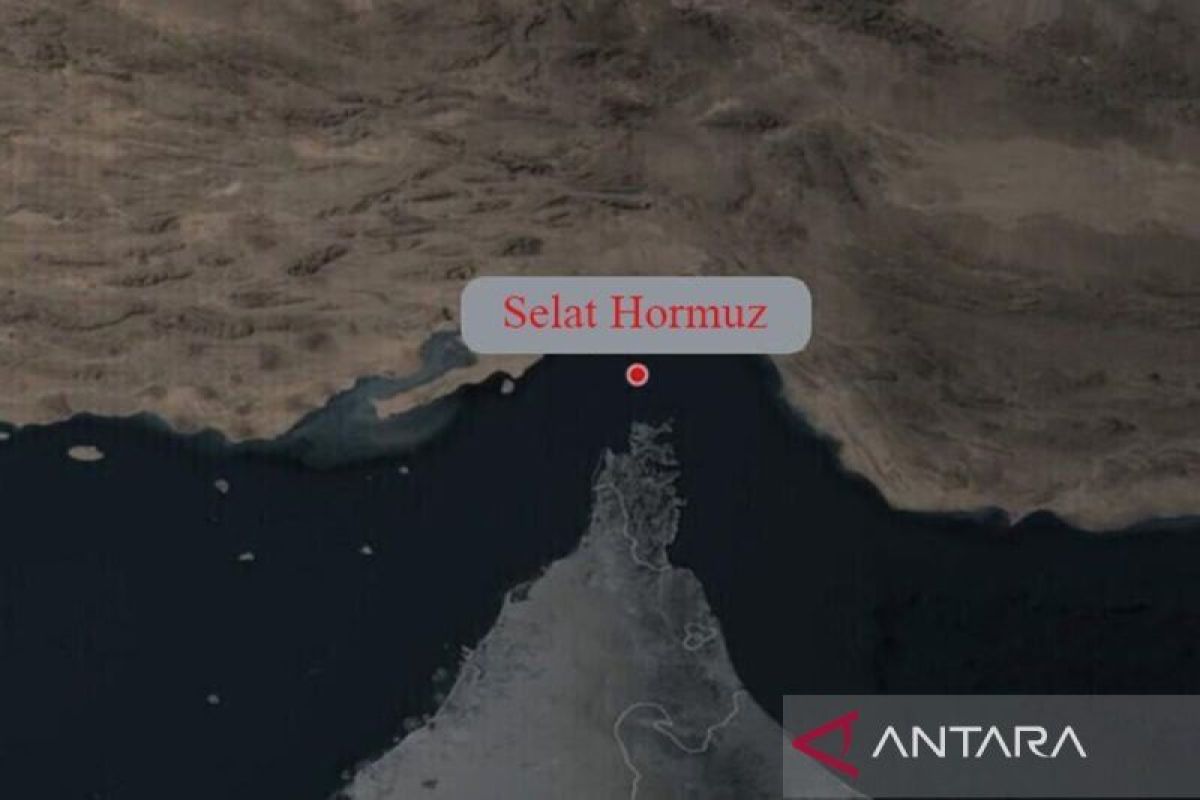
The war between the United States, Israel, and Iran, now entering its third month, remains unresolved, with de-escalation efforts following the ceasefire extended since 7 April showing no signs of success.
The US and Iran held their first round of negotiations in Islamabad on 11-12 April, but failed to reach an agreement to end the conflict.
Several issues continue to pose obstacles, including the Strait of Hormuz, the US blockade of Iranian ports, and Iran’s right to uranium enrichment.
In developments, Iran submitted, via Pakistan on 30 April, a 14-point peace plan proposal to the US and urged for a swift agreement to reopen the Strait of Hormuz.
However, US President Donald Trump stated on Sunday (3/5) that the latest proposal from Iran, which he had carefully reviewed, was “unacceptable”.
While the US and Iran fail to find common ground to end the war, the economic impacts of the conflict continue to undermine countries worldwide, including Indonesia.
Several nations have taken steps to mitigate the energy crisis impacts, such as the Dutch government announcing a nearly 1 billion euro aid package (approximately Rp20.2 trillion) to cushion the rise in energy costs for households.
In Asia, the South Korean government has called for reduced energy use, and Malaysia has encouraged its citizens to work from home.
Strait of Hormuz Blockade
The Strait of Hormuz is a distribution route for 20 percent of the crude oil, oil products, and LNG produced by Persian Gulf countries to global markets, making this sea lane highly strategic.
However, for the same reason, the route has become one of the biggest stumbling blocks in US-Iran negotiations, with both sides clashing over differing visions for the future of the Strait of Hormuz.
Although both sides agreed to a ceasefire on 7 April, Trump instead imposed a naval blockade targeting Iranian maritime traffic in those waters starting 13 April.
Iranian parliamentary speaker Mohammad Bagher Ghalibaf emphasised that amid the lack of a peace agreement, Iran is creating a “new order” in the Strait of Hormuz to eliminate the “crimes” of the US and its allies.
“Shipping and energy traffic security is threatened by the United States and its allies through ceasefire violations and blockades. But their crimes will end,” he said.
Meanwhile, in its latest effort to open navigation, President Trump announced Project Freedom on Sunday (3/5), an operation to assist stalled ships in the Strait of Hormuz to exit those waters.
US Central Command (CENTCOM) stated that US military support for the operation includes guided-missile destroyers, more than 100 land- and sea-based aircraft, multi-domain unmanned systems, and 15,000 military personnel.
The military operation began on Monday morning.
Additionally, the US is lobbying its European allies for contributions to help “free” the Strait of Hormuz, with Trump issuing threats to countries reluctant to assist.
On Thursday (30/4), Trump said he was considering reducing US troops in Germany, then Spain, and Italy, deeming his European allies unhelpful in the operations against Iran.
Trump expressed similar sentiments in April when he claimed the US could no longer rely on its European allies, thus seriously considering withdrawing from the NATO alliance.
In response to Trump’s demands, Germany finally agreed to deploy the minesweeper ship “Fulda” to the Strait of Hormuz for an international maritime security mission.
Conversely, French President Emmanuel Macron remains firm in refusing involvement in the US military operation in the Strait of Hormuz, citing that the move “lacks clarity”.
Iranian Ships Evade Blockade
Despite the US blockade on Iranian ports, Tehran is reportedly still able to slip its tankers out of the Strait of Hormuz, even sailing as far as Indonesian waters.
According to tanker movement monitoring agency TankerTrackers, a giant very large crude carrier (VLCC) owned by Iran’s National Iranian Tanker Company (NITC) successfully evaded the US Navy and reached Indonesian waters.
The giant ship, identified as “HUGE” (9357183), carrying a crude oil supply worth nearly 220 million US dollars (Rp3.81 trillion), was detected moving through the Lombok Strait in Indonesia towards the Riau Islands.
On Monday (4/5), the same agency announced a second Iranian giant tanker entering the Lombok Strait carrying Iranian crude oil.
“The second tanker named ‘DERYA’ (9569700) is doing the same,” TankerTrackers revealed on social media platform X.
They explained that the ship initially attempted to deliver 1.88 million barrels of oil to India in mid-April but did not proceed. It was then detected sailing south from India.
TankerTrackers said that after entering Indonesian waters, the “DERYA” ship also headed towards the Riau Islands.
US Public Weary
Meanwhile, domestically in the US, the American public is increasingly weary of the protracted conflict with Iran, potentially becoming a political burden for President Trump, especially amid declining public support.
US expert from the University of Indonesia, Suzie Sudarman, said Trump could still consider new strikes on Iran amid the negotiation deadlock.
“The US could attack Iran, but the cost of the war would certainly be borne by its people, who are already weary of Donald Trump’s behaviour,” said Suzie.
The head of the US Studies Centre at UI explained that in various war scenarios