
US-Iran Negotiations Deadlocked: What Are the Next Steps?
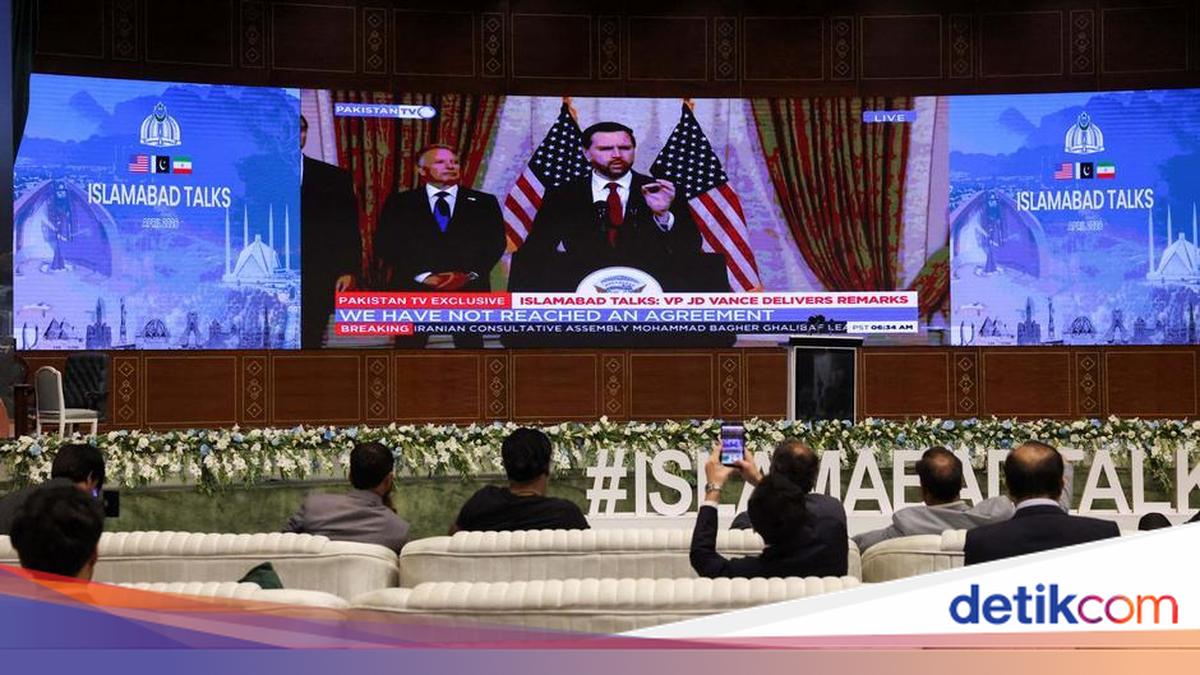
Both countries are blaming each other for the failure of peace talks in Islamabad, Pakistan, on Sunday (12/04), after lengthy negotiations that produced no agreement to end the war that began six weeks ago with attacks by the United States (US) and Israel against Iran.
US officials said the negotiations failed because Iran was unwilling to commit to abandoning its nuclear programme. However, Tehran blamed Washington for the failure.
“We need to see a firm commitment that they will not pursue nuclear weapons and will not seek means that would allow them to quickly acquire them,” said US Vice President JD Vance after talks with Iran.
Mohammad Bagher Qalibaf, Iran’s Parliamentary Speaker and head of the delegation, said responsibility now lies with Washington. “It is time for the United States to decide whether they can earn our trust,” he stated.
No agreement on Hormuz or Iran’s nuclear programme
The meeting in Islamabad marked the first face-to-face negotiations between the United States and Iran in over a decade, as well as the highest-level involvement since the 1979 Iranian Islamic Revolution. The talks took place following a ceasefire agreed upon earlier in the week.
Iran’s Tasnim News Agency reported that US demands, deemed “excessive,” hindered progress. Other Iranian media noted agreements on some issues, but deep differences remained regarding Iran’s nuclear programme and control over the Strait of Hormuz. After the negotiations failed, US President Donald Trump announced that the US Navy would blockade the strait.
A spokesperson for Iran’s Foreign Ministry described the negotiation atmosphere as filled with mistrust, stating that an agreement in a single meeting was unrealistic.
Pakistan’s Foreign Minister Ishaq Dar urged both parties to maintain the ceasefire agreed on Tuesday (07/04), calling it “very important” for peace efforts.
“We are leaving this place with a simple proposal, a method of understanding that is our final and best offer. We will see if Iran accepts it,” said US Vice President JD Vance before departing Pakistan.
Several issues remain deadlocked
US-Iran negotiations remain stalled on various issues, and analysts assess that the differences are difficult to bridge. Fatemeh Aman from the Atlantic Council said the conflict is structural, not merely tactical.
“The US wants restrictions on Iran’s nuclear programme, regional de-escalation, and shipping lane security as security imperatives. Meanwhile, Iran demands sanctions relief, recognition, and protection. It is more about status than mere restrictions,” she stated.
Farwa Aamer from the Asia Society Policy Institute in New York added that both sides have different approaches to next steps, both regarding the nuclear issue and the Strait of Hormuz.
According to Aman, Washington wants concessions first, while Tehran demands relief first. With minimal trust and opposing interests, the negotiations failed.
“These talks failed because the end goals of both parties are not aligned,” she emphasised.
Can the ceasefire hold?
Analysts are cautiously optimistic that the ceasefire will hold and attacks will not resume immediately, with backchannel diplomacy potentially sustaining the agreement.
“This ceasefire is holding, but it is fragile,” said Fatemeh Aman. “It is not based on a political agreement but a temporary pause formed by caution and short-term calculations. Both parties are merely managing the situation, not resolving it.”
The Islamabad talks began on Saturday (11/04), a few days after the ceasefire was announced, while the six-week war that killed thousands and shook global markets was still ongoing.
Farwa Aamer is also cautiously optimistic: “It is important for the ceasefire to hold, for mediation channels to remain open, and for both parties to continue the diplomatic process,” she said.
However, US Vice President JD Vance did not clarify what would happen after the two-week ceasefire ends or whether it would be extended.
“The risk is gradual erosion,” said Aman. “Local incidents, miscalculations, or actions by allied groups could test the limits of restraint. Without follow-up diplomacy, this ceasefire remains vulnerable. It may hold in the short term but lacks long-term stability.”
“Further talks are likely, but not in the near future”
Analysts assess that direct negotiations between the United States and Iran in the near future are unlikely, given rising tensions and the latest failure. However, diplomacy is not over, as both parties still have strong interests in continuing talks.
“Further talks are likely, but not in the near future,” said Fatemeh Aman. “No party wants to appear to concede after a failed round of negotiations. There will likely be a temporary pause for both sides to reassess positions and bargaining power. If negotiations resume, they will probably not directly address the most difficult issues but start with narrower technical steps to reduce risks without requiring major concessions.”
Meanwhile, Farwa Aamer believes quiet diplomacy and mediation will still play a role in paving the way for the next round. “However, that will depend on how the United States and Iran determine their next steps,” she said.