
US-Iran Negotiate in Islamabad: These 5 Issues Hindering Talks
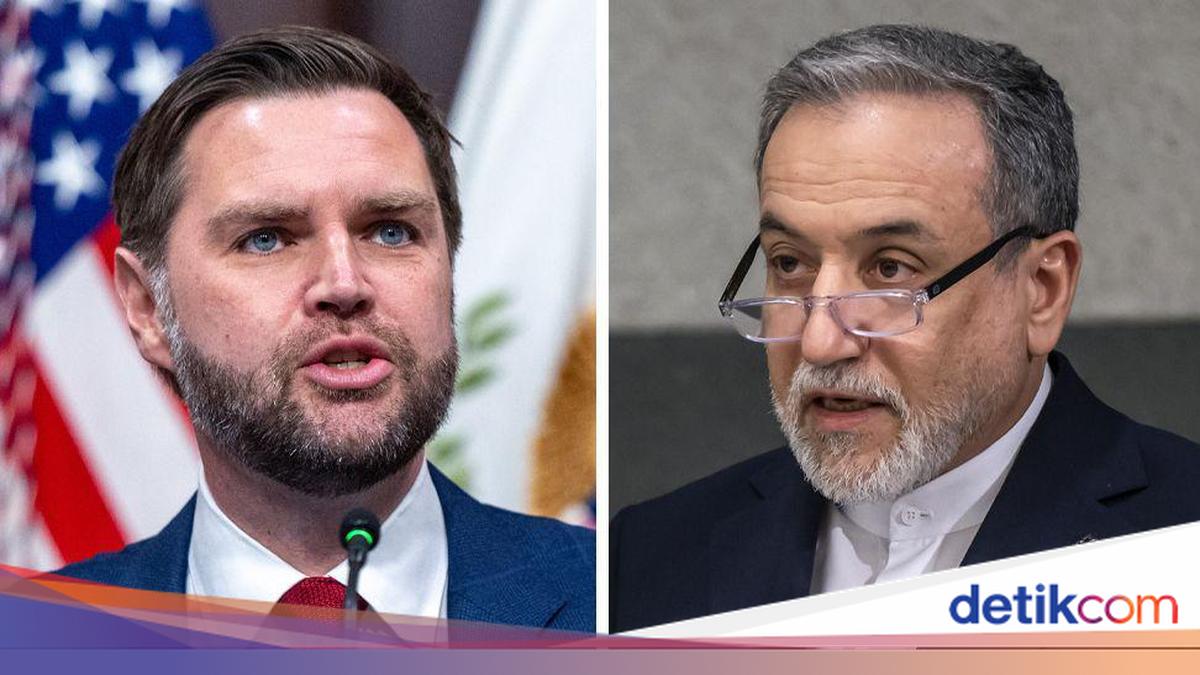
Iranian state media reported that the Iranian delegation has arrived in Islamabad ahead of peace negotiations with the United States on Saturday (11/04).
The Telegram channel of Iran’s state television station stated that the delegation is led by Iran’s Parliament Speaker, Mohammad-Bagher Ghalibaf.
He is accompanied by Iran’s Foreign Minister, Abbas Araghchi; Secretary of the Defence Council, Ali Akbar Ahmadian; Central Bank Governor, Abdolnaser Hemmati; and several Iranian parliament members.
Trump stated that the US has received a 10-point proposal from Iran, which he described as “a workable basis for negotiation”.
Iran’s Foreign Minister, Abbas Araghchi, also mentioned a 15-point proposal.
What are the issues that could hinder negotiations between the two countries?
Lebanon
A two-day holiday has been announced in Pakistan’s capital ahead of the negotiations between Iran and the US. (Reuters)
Israel’s attacks on Iran’s ally in Lebanon, the Hezbollah group, could derail the negotiations even before they begin.
“The continuation of these actions will make the negotiations meaningless,” wrote Iranian President Masoud Pezeshkian on X.
“Our fingers remain on the trigger. Iran will never abandon our brothers and sisters in Lebanon,” he added.
Donald Trump said Israel’s actions in Lebanon will now be “somewhat lower in scale”, and the US State Department stated that direct talks between Israel and Lebanon will take place in Washington next week.
Whether those steps will satisfy Iran remains to be seen.
Strait of Hormuz
Only a few ships have crossed the Strait of Hormuz since the ceasefire between the US and Iran began. (Reuters)
Another topic that could derail the negotiations from the outset is the crucial shipping route for tankers, the Strait of Hormuz.
Donald Trump said Iran is doing a “very poor job” in allowing ships to pass through the strait, even though he had previously said it would do so.
“This is not the deal we have!” he said in a post on Truth Social, accusing Iran of being “dishonourable”.
Very few ships are passing through. So far, hundreds of ships and around 20,000 seafarers remain stranded in Gulf waters.
On Thursday (09/11), Iran announced the establishment of a new transit route, north of the two main shipping traffic separators.
Iran said the new route is necessary “to avoid the presence of various types of anti-ship mines in the main traffic zone”.
Amid reports that some ships that have managed to pass in recent weeks have paid fees of US$2 million (Rp34.2 billion), Trump warned that Iran “had better not charge fees to tankers”.
Nuclear
The nuclear topic is arguably the biggest and certainly the longest-standing source of dispute between the US and Iran.
Trump said he launched Operation Epic Fury to ensure Iran “will never have nuclear weapons”.
Iran says it has never sought to build a bomb—a claim viewed with great scepticism by most Western countries. As a signatory to the Nuclear Non-Proliferation Treaty, Iran emphasises that it has the right to enrich uranium for civilian purposes.
The 15-point plan reportedly proposed by Trump demands that Iran “end all uranium enrichment on Iranian territory”.
However, when asked about the nuclear issue earlier this week, Defence Minister Pete Hegseth only said Iran “will never have nuclear weapons or the capability to pursue a path to weapons”.
It took international negotiators years to reach the 2015 Joint Comprehensive Plan of Action (JCPOA), which addressed this complex topic in great detail.
Are both sides ready to discuss a new deal?
Iran’s Allies in the Middle East
Iran’s network of regional allies and proxies—Hezbollah in Lebanon, Houthis in Yemen, Hamas in Gaza, and various militias in Iraq—have given Tehran influence in the Middle East.
This allows Iran to pursue what is often called “forward defence” in its long-standing disputes with Israel and the United States.
Since the Gaza attacks began in October 2023, the network that Iran calls the “Axis of Resistance” has been continuously targeted.
One of them, the regime of former Syrian dictator Bashar al-Assad, is no longer in power. However, Israel views the alliance, dubbed the “Axis of Evil”, as an existential threat that needs to be eradicated entirely.
At a time when Iran’s economy is under pressure, many Iranians also want to see their government reduce spending on foreign allies and spend more funds on domestic interests.
However, so far there are few signs that Iran is ready to let go of its allies.
Sanctions Relief
Iran has been subjected to a string of debilitating international sanctions for decades. Iran demands that the US and various countries lift the sanctions as part of a peace deal.
On Friday (10/04), Iran’s Parliament Speaker Mohammad Bagher Qalibaf said that around US$120 billion in frozen Iranian assets must be released before negotiations begin.
According to him, this is one of two previously agreed steps (the other being a ceasefire in Lebanon).
However, a statement on 7 April from Pakistan’s Prime Minister Shehbaz Sharif, announcing a two-week ceasefire, made no mention of releasing frozen assets. It is unclear what agreement Qalibaf is referring to.
Is the Trump administration willing to make such a major concession? That remains to be seen.