
US-Iran Conflict Could Pressure Credit Demand, OJK on Alert to Maintain Stability
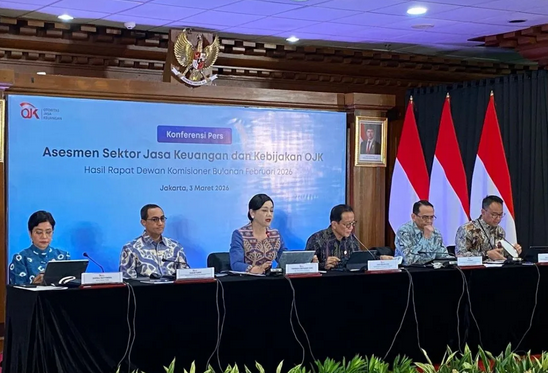
The conflict between the United States and Iran, which continues to heat up, is assessed as having the potential to pressure national banking credit demand. The Financial Services Authority (OJK) is increasing its vigilance and preparing anticipatory steps to maintain financial system stability amid rising global uncertainty.
OJK’s Executive Head of Banking Supervision, Dian Ediana Rae, stated that the impact of the conflict could be felt by sectors with high exposure to global markets, such as exports and imports.
“Yes, there will certainly be disruptions in certain sectors, particularly those highly exposed internationally, such as exports, imports, and so on,” she said in Jakarta, quoted on Thursday (26/3).
Nevertheless, OJK believes that domestic financial system stability can still be maintained amid various global challenges. This confidence is supported by various anticipatory measures that have been prepared, as well as ongoing efforts to strengthen the financial sector.
“There are efforts we are undertaking, at the very least, to secure financial stability. Hopefully, the situation will not be too disruptive or too serious,” she said.
She added that the current conflict’s impact is estimated not to be as great as the Covid-19 pandemic, either in terms of duration or pressure on the national economy.
“This situation can actually be said, hopefully, not to be the same as Covid-19, and its impact on our economy will not be that severe,” she remarked.
On one hand, OJK continues to warn of the need for vigilance against potential worsening global conditions. Dian emphasised that if the situation deteriorates further, OJK will review various policies, particularly those related to exposures in certain sectors.
“That is why we must prepare ourselves,” said Dian.
In addition, OJK has asked supervisors and the banking industry to view global volatility as an early warning signal. OJK stresses the importance of vigilance by seeing those dynamics as a warning sign, so that all parties can continue to prepare for the worst possibilities.
“I have also asked colleagues in supervision and banking to really see the global volatility situation as a warning sign for us to always prepare for the worst,” she added.
The authority hopes the conflict does not drag on, given its broad impact on the global economy. According to Dian, escalation of the conflict has the potential to pressure the world economy as a whole, thereby driving international pressure to end the conflict quickly.
In the United States itself, the impact is already visible, such as rising prices that could pressure consumer purchasing power, especially ahead of domestic political agendas like midterm elections. This condition is seen as potentially accelerating pushes to de-escalate the conflict.
“In America itself, it’s already clear now how prices are rising,” she said.
For Indonesia, this situation is also a concern due to its high dependence on energy imports, particularly oil and gas. Therefore, OJK emphasises the importance of readiness among all stakeholders in facing potential ongoing impacts from these global dynamics.