
US-Iran "An Inch" from Peace, Everything Decided in 48 Hours
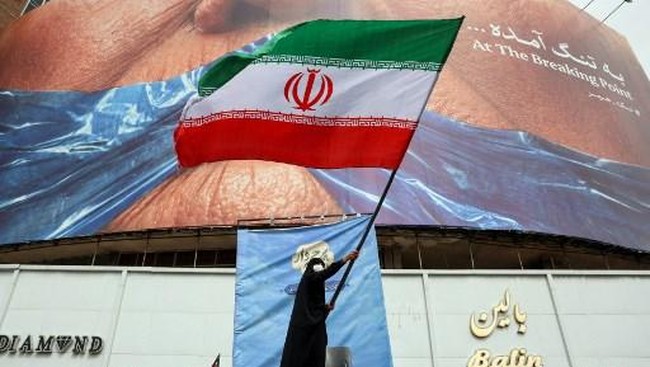
Jakarta, CNBC Indonesia - Diplomatic efforts between the United States and Iran have entered the phase closest to an agreement since the conflict erupted. Several White House officials have revealed that Washington and Tehran are discussing a one-page memorandum of understanding (MoU) aimed at ending the war while serving as the basis for more detailed negotiations on Iran’s nuclear programme.
According to two US officials and two other sources familiar with the process, as reported by Axios on Wednesday (6/5/2026), Iran’s response to several key points is expected within the next 48 hours.
Although no final agreement has been reached, those sources describe this situation as the closest point to a deal since the conflict began.
In the draft under discussion, Iran would commit to a moratorium on uranium enrichment, while the US would ease sanctions and release billions of dollars in frozen Iranian funds. Additionally, both sides would lift restrictions on shipping traffic in the Strait of Hormuz.
However, most provisions in this MoU are contingent on reaching a final agreement, leaving open the possibility of the conflict reigniting or entering a “limbo” phase where the war stops but core issues remain unresolved.
On the other hand, the White House assesses that Iran’s current leadership is divided, making it difficult to achieve internal consensus. Several US officials even doubt whether even an initial agreement can truly be reached, given that similar optimism emerged in previous negotiation rounds without concrete results.
Two US officials stated that President Donald Trump’s decision to refrain from new military operations in the Strait of Hormuz, which was previously announced, as well as maintaining the fragile ceasefire, is influenced by progress in these talks.
The MoU negotiations, which contain 14 points, are being conducted by Trump’s envoys, Steve Witkoff and Jared Kushner, along with several Iranian officials, either directly or through mediators.
In its current form, the MoU would declare an end to the war in the region and initiate a 30-day negotiation period to draft a more detailed agreement. Those discussions are likely to take place in Islamabad or Geneva.
During that period, Iran’s restrictions on shipping in the Strait of Hormuz and the US naval blockade would be gradually lifted. However, if negotiations fail, the US is said to be able to reinstate the blockade or resume military actions.
One of the most sensitive points is the duration of the uranium enrichment moratorium. Three sources indicate a minimum duration of 12 years, while another source mentions 15 years as a possible compromise. Iran had previously proposed a five-year moratorium, while the US wanted 20 years.
Washington is also pushing for an additional clause allowing extension of the moratorium if Iran violates the terms. After the moratorium ends, Iran would be permitted to enrich uranium to a low level of 3.67%.
In the MoU, Iran would also commit to never developing nuclear weapons or engaging in weaponisation-related activities. Additionally, both sides are discussing a possible clause prohibiting Iran from operating underground nuclear facilities.
Iran is also expected to agree to a tightened inspection regime, including surprise inspections by UN inspectors.
In return, the US would gradually lift sanctions on Iran and provide access to billions of dollars in frozen Iranian funds in various countries.
In a somewhat surprising development, two sources indicate that Iran may agree to transfer highly enriched uranium abroad, a key US demand that Tehran previously rejected.
One option under discussion even includes the possibility of transferring the material to the United States.
US Secretary of State Marco Rubio acknowledged the complexity of the negotiation process. “We don’t have to have a fully written agreement in one day,” he said.
“This is very complex and technical. But we must have a very clear diplomatic solution regarding the issues they are willing to negotiate and how far the concessions they are willing to give at the outset to make it viable,” he added.
However, Rubio also levelled sharp criticism at some Iranian leaders. He described some of them as “crazy in the brain” and questioned whether they are truly willing to reach an agreement.