
US-Indonesia Trade Deal: Government Asserts It Will Not Burden the State Budget
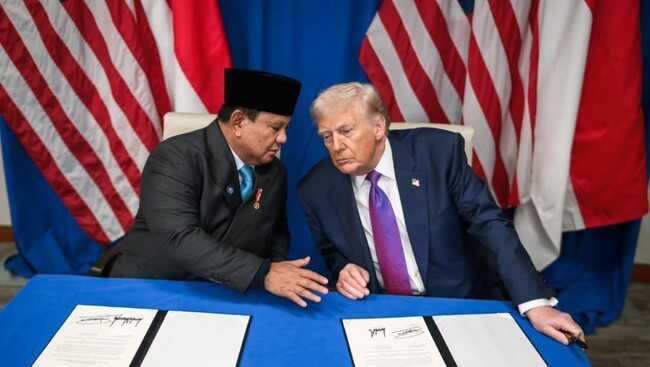
Jakarta – The Indonesian government has reached a trade agreement with the United States termed the “Agreement on Reciprocal Trade” (ART). One component of this agreement involves Indonesia’s commitment to facilitate agricultural product imports valued at US$4.5 billion.
The government has emphasised that this agreement will not burden the state budget. The agreement is characterised as a policy support measure to facilitate business-to-business (B2B) cooperation between Indonesian and American business operators, rather than a government-funded purchase.
“The government serves solely as a regulator and guardian of quality standards, whilst transactional and financing decisions rest entirely with the private sector,” stated an official statement released by Haryo Limanseto, Spokesperson of the Coordinating Ministry for Economic Affairs, on Sunday, 1 March 2026.
Furthermore, Haryo noted that the US is a strategic trading partner and Indonesia’s second-largest export destination. In 2025, Indonesian exports to the US reached US$31.0 billion, representing approximately 11% of Indonesia’s total global exports of US$282.9 billion.
Maintaining market access in the US through a balanced trade approach represents a rational step to protect the competitiveness of domestic products.
This cooperation also holds essential dimensions for national industrial interests. Indonesia has historically imported commodities such as wheat as primary raw materials for processing industries, including export-oriented processed food industries.
By expanding and diversifying supply options competitively, domestic business operators can obtain stable, quality raw materials at competitive prices.
Regarding proportions, in 2025, Indonesia’s total agricultural commodity imports from the US amounted to approximately US$1.21 billion, whilst total agricultural commodity imports from various other countries reached approximately US$13.2 billion.
This demonstrates that the share of imports from the US represents only approximately 9.2%. For example, cereal imports (HS10) from the US totalled US$375.9 million from a global total of US$3.7 billion (approximately 10%), whilst soybean imports (HS12) amounted to only US$1.0 million from a global total of US$1.6 billion. This indicates that supply adjustment capacity remains based on commercial considerations and does not create fiscal burden.
This commitment has been implemented through Memoranda of Understanding (MoUs) between relevant companies across two stages.
The first stage occurred on 7 July 2025, and the second stage took place at the Indonesia-US Business Summit on 19 February 2026, supported by business associations including the Indonesian Chamber of Commerce and Industry (Kadin) and the Indonesian Entrepreneurs Association (APINDO).
“This facilitation therefore forms part of a strategy to strengthen market access whilst supporting national industrial value chains, whilst remaining oriented towards national economic interests and sovereignty. The government will continue to ensure that imports meet applicable quality and safety standards, and will take appropriate measures in accordance with regulations should disruptions to the domestic market occur,” the statement concluded.