
US Hopes for Continued Negotiations, Iran Stalls for Time
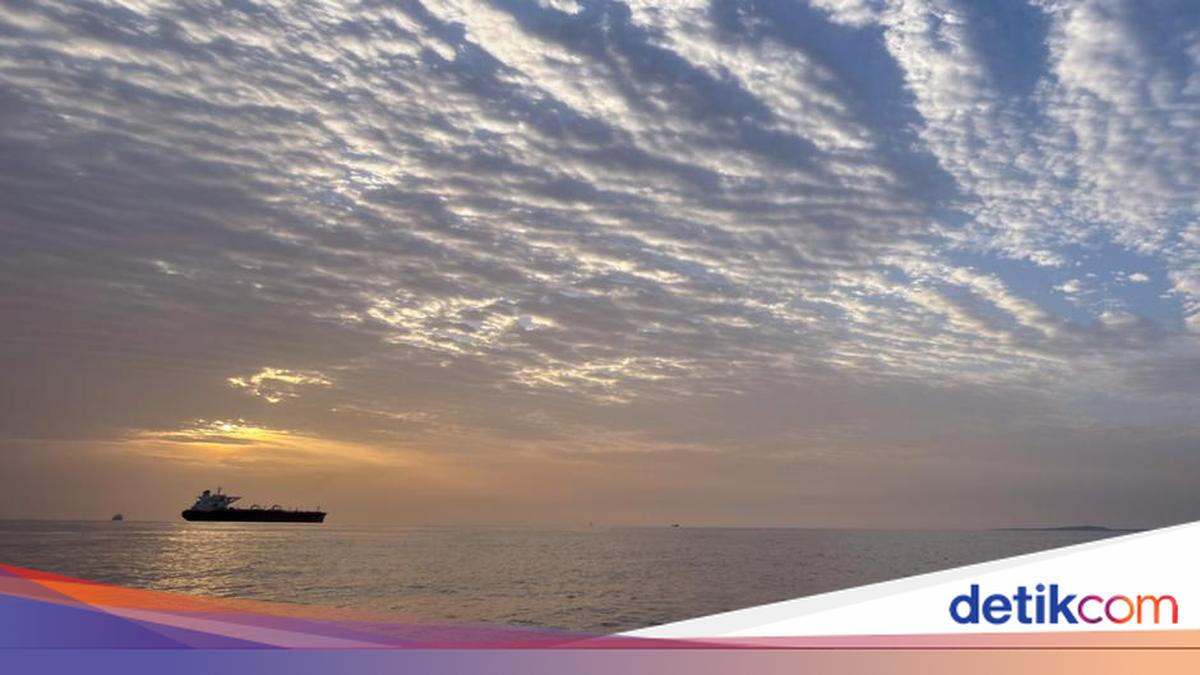
The situation in the Persian Gulf is complicated. Although diplomatic channels between the US and Iran remain officially open and US President Trump has announced an extension of the ceasefire in the middle of this week, talks between the two countries have stalled. There is no new schedule for the next negotiations. Several planned meetings have been postponed and their continuation is no longer known.
According to the national news agency Tasnim, Iran still has no plans to participate in peace talks with the US. US media previously reported that a new round of negotiations might be held on Friday (24/4).
In the new round of negotiations, besides the most important point for US President Trump, namely the cessation of Iran’s nuclear programme, other sensitive issues are expected to be discussed, such as the future use of the Strait of Hormuz.
The regime in Tehran stated on Thursday (23/4) that the country has received shipping fees through the blocked strait. “The first toll fee has been deposited into the account of the Central Bank of Iran,” Tasnim quoted the deputy chairman of the Iranian parliament as saying.
“Tactical game of patience”
According to experts, what is happening now appears to be a battle of strategy, time, influence, and endurance rather than an exchange of military attacks.
“Currently, both sides seem to be in a tactical game of patience,” Hanna Voß, a Middle East expert from the Friedrich-Ebert-Stiftung, told DW. Iran is acting very cautiously in responding to the possibility of talks with the US.
“In Tehran, there is great concern that this is a trick - negotiations but at the same time the military remains on standby.”
This vigilance aligns with strategic calculations, according to Pauline Raabe, a political analyst from the Berlin think tank Middle East Minds, in an interview with DW, “For Iran, the stakes are much higher because it concerns its own territory.”
Therefore, Tehran is using its instruments wisely, “Regarding the Strait of Hormuz, Iran is undoubtedly in a strong position - currently Hormuz is an important instrument.”
According to the Center for Strategic and International Studies (CSIS), this position is not only effective militarily, but especially economically. Iran exploits its geographical location to put pressure on the global economy by controlling traffic in the Strait of Hormuz.
Thus, energy is the main issue. The Washington Institute also emphasises that oil and gas are determining factors with long-term consequences for regional and global markets.
The Strait of Hormuz as Iran’s ‘trump card’
Hormuz is an ‘instrument’ that is easy to use, Voß said. “It doesn’t take much effort to effectively block this route.”
The threat alone is enough to trigger significant economic impacts. Shipping companies withdraw, insurance companies pull out, while drones and mines continue to threaten the sea route. “In other words: Tactically, Iran currently holds stronger control and that is where the strategic advantage emerges.”
Raabe adds developments from the military dimension, “Iran is often underestimated, but the country has proven capable of routinely launching missiles.”
This contradicts the assumption that the country has significantly weakened. On the contrary, Iran has purposefully increased its military capabilities in recent years.
Ideological Actor
At the same time, it is evident that this conflict goes beyond the military realm. The Washington Institute describes Iran as an actor that acts not only as a state, but also as an ideological actor. Therefore, agreements are practical but Iran’s fundamental stance does not change.
This structural characteristic is also reflected domestically. “Iran’s leadership is ready to demand a lot from its own people,” Voß said, “The level of suffering domestically over decades is far higher compared to Western societies.”
Raabe also highlights social dynamics, “When the domestic population sees their country attacked from outside, it can strengthen their bonds.”
However, this does not automatically mean support for the ruling regime, but rather a reaction to external pressure.
While Iran relies on a strategy to endure in the long term, political pressure domestically in the US is increasing. “As time passes, the economic impact becomes more felt,” Raabe said.
Rising energy prices and market uncertainty directly affect public opinion.
However, in the short term, this conflict stabilises Iran’s system. “This leads to internal consolidation,” Voß said. This war aligns with the ideological logic that the regime has prepared.
Concessions and Rewards
Diplomatic dynamics are also shifting. The pan-Arab newspaper Al-Quds al-Arabi sees increasing pressure on Washington to politically de-escalate the conflict. At the same time, Tehran appears increasingly confident and demands concrete rewards for every concession it gives, such as easing sanctions or releasing frozen Iranian assets.
The success of this strategy is also related to the asymmetric war waged by Iran. According to CSIS, although Tehran suffers military defeats, they still exert significant influence through cyberattacks, sabotage, and economic pressure.
Therefore, the Washington Institute predicts several war outcome scenarios. The first is a “hidden defeat” for the US through a ceasefire while Iran retains its influence.
Another scenario is an “open defeat” for the US, where Tehran holds out until the US can no longer contain the immense pressure.
In the end, this conflict boils down to one question: Who can endure longer - economically, politically, and socially? Or, as Raabe put it, “The time available now tends to