
US Faces Strong Rival as Russia Begins Meddling in Iran's Nuclear Affairs
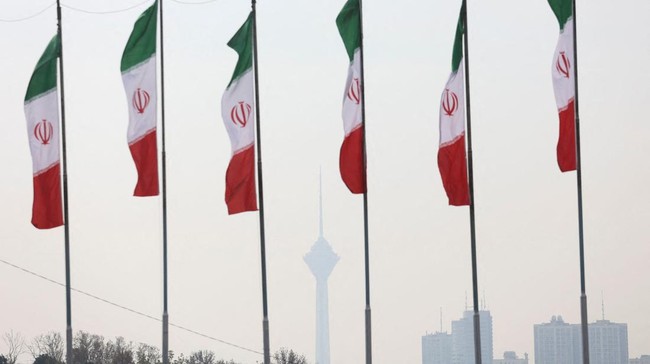
The fate of Iran’s nuclear programme and its stockpiles of highly enriched uranium continues to pose the primary obstacle in negotiations with the United States (US). Citing a report from Russia Today on Monday (20/04/2026), Washington and Teheran remain in a total impasse regarding the future of these hazardous material reserves amid a temporary ceasefire that is nearing its end.
How Much Uranium Does Iran Possess?
Iran holds a vast stockpile of fissile material, including uranium enriched to 60%. Although this material has not yet reached weapons-grade levels, it could technically be enriched to that point in just a few days, depending on the equipment used.
Citing the latest comprehensive assessment from the International Atomic Energy Agency (IAEA) published in May 2025, Teheran possesses more than 400 kg of uranium enriched to 60%, as well as nearly 300 kg enriched to 20%. In addition, the country is believed to hold around 5.5 tonnes of uranium enriched to 5% and 2.2 tonnes up to 2%.
Teheran has long asserted that its nuclear programme is purely for civilian purposes. The Iranian government has consistently rejected claims that it is pursuing nuclear weapons for military interests.
Where Exactly Are Iran’s Uranium Stockpiles Located?
The location and status of Iran’s current uranium stockpiles remain disputed due to the lack of robust independent assessments. The IAEA has stated that it has lost “continuity of knowledge” about these stockpiles after Teheran disabled surveillance cameras at nuclear sites in June 2022 in response to a resolution from the organisation deemed politicised.
According to US claims, Iran’s “nuclear dust”—as President Donald Trump has termed it—remains buried at nuclear facilities bombed by the US military in June 2025. At that time, the US struck sites in Fordow, Natanz, and Isfahan using bunker-busting bombs and Tomahawk missiles.
Although Trump claimed these main facilities were completely destroyed, a Pentagon assessment in July 2025 indicated that the nuclear programme had only been set back by about two years. However, a recent report from Le Monde suggests that Iran may have moved all its uranium to the underground facility in Isfahan shortly before the June 2025 attack, based on satellite imagery showing large trucks transporting radioactive containers.
Opposing Positions of the US and Iran on Uranium
The uranium issue remains the main barrier to an agreement between the two countries. Washington demands that Teheran surrender all its highly enriched uranium, dismantle its infrastructure, and permanently halt its nuclear programme.
In recent talks in Islamabad, US Vice President J.D. Vance reportedly proposed a 20-year ban on Teheran continuing its nuclear programme. However, Trump has publicly rejected that prospect, stating that the proposed moratorium period is not long enough.
Teheran has repeatedly refused to abandon its nuclear programme and has instead offered to dilute its uranium stockpiles. On Monday, Iran’s Foreign Ministry spokesman Esmaeil Baqaei emphasised that handing over uranium stockpiles abroad has never been an option for Iran.
Baqaei stated that nuclear achievements and national assets are a matter of national pride and cannot be negotiated away. Iran prefers to offer a five-year moratorium on uranium enrichment rather than surrender its assets to a third party.
Russia’s Offer
Moscow has repeatedly proposed hosting Iran’s uranium as a compromise to defuse the Middle East crisis. Citing a statement from Kremlin spokesman Dmitry Peskov last week, Russia has put forward this offer for a long time, and Teheran had previously agreed to it.
Peskov described the plan as an excellent solution but noted that the proposal was flatly rejected by Washington. Nevertheless, Russian officials have signalled that the offer remains valid to this day.
Head of Russia’s state nuclear corporation Rosatom, Aleksey Likhachev, stated over the weekend that his company is ready to assist in transferring Iran’s uranium stockpiles. He noted that only Russia has positive experience interacting with Iran on this matter.
Likhachev explained to the Strana Rosatom newspaper that in 2015, at Iran’s request, Russia had transferred enriched uranium as part of the JCPOA agreement. However, that scheme collapsed at the beginning of Trump’s first term after the US accused Teheran of violating the deal and chose to withdraw unilaterally.