
US Dollar Pressure Seen as Main Factor in Asian Currency Weakness
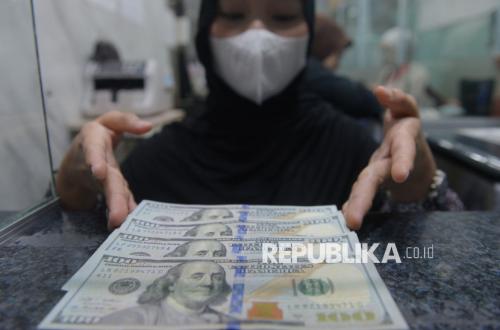
The weakening of the rupiah exchange rate against the US dollar is considered more influenced by external factors than domestic economic fundamentals. Pressure on currencies is not only experienced by Indonesia but also occurs in several Asian countries amid rising global uncertainty.
Economic observer Surya Vandiantara stated that the strengthening of the US dollar is occurring alongside increased market sentiment due to the conflict between the United States and Iran. This situation leads global investors to shift investments to the US dollar, seen as safer.
“The conflict between the United States and Iran causes investors and businesses to choose the US dollar as an investment instrument and means of exchange over other countries’ currencies. The high demand for the US dollar is what strengthens its value,” said Surya in his statement.
Based on Bank Indonesia (BI) data, the rupiah’s weakening since the start of the US-Iran conflict is recorded at around 3.65%. This figure is still lower than several other countries’ currencies, such as the Philippine peso which weakened by 6.58% and the Thai baht by 5.04%.
Additionally, the Indian rupee weakened by 4.32% and the Chilean peso by 4.24%. Meanwhile, the South Korean won fell by around 2.29%.
Surya assessed that this condition shows pressure on the rupiah is more influenced by global dynamics than domestic factors. According to him, the stability of national economic growth and the trade surplus with the US are indicators that Indonesia’s economic fundamentals remain relatively stable.
“This reinforces that the rupiah’s weakening is not caused by internal factors, but is more dominantly by external factors,” said the lecturer from the Faculty of Economics at Muhammadiyah University of Bengkulu.
Regarding Bank Indonesia’s steps to maintain rupiah stability, Surya views the policies taken by the monetary authority as short-term strategies to boost demand for the domestic currency.
According to him, rupiah strengthening does not only depend on central bank policies but also requires support from market participants and the business world to continue prioritising the use of the rupiah in transaction and investment activities.
He warned that prolonged rupiah weakening could increase import costs, including raw materials and industrial production equipment domestically. As a result, production goods prices could rise and pressure market absorption.
“Therefore, collective awareness is needed to withstand the pressure of rupiah depreciation,” he said.