
US Dollar Breaches Rp17,000, Import Costs Rise 15-20%
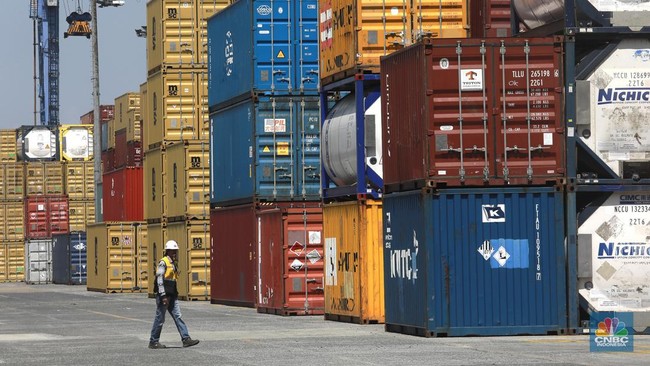
Jakarta, CNBC Indonesia - Importers affiliated with the All-Indonesia National Importers Association (GINSI) have begun voicing their concerns over the continued depreciation of the rupiah against the US dollar.
The rupiah exchange rate has even weakened to above Rp17,000 per US dollar on Wednesday, 1 April 2026. Based on data from Bank Indonesia’s Jakarta Interbank Spot Dollar Rate (JISDOR), the reference rate for that day was Rp17,002.
In fact, since early March 2026, the rupiah rate according to JISDOR records has consistently hovered around Rp16,900 per US dollar. On 16 March 2026, it was already at Rp16,990, and the volatility continued to Rp16,999 on 31 March 2026.
GINSI General Chairman Subandi said that the persistently pressured exchange rate has caused the cost of goods imported from abroad to swell further. Businesspeople reliant on foreign goods, he said, have become desperate regarding the rupiah.
“In fact, importers are already desperate about the rupiah’s weakening against the dollar,” Subandi told CNBC Indonesia, quoted on Thursday (2/4/2026).
According to him, to date, there has been no policy mix from the monetary authority capable of making the Indonesian exchange rate move more stably and tend to strengthen. Because, in reality, the rupiah has consistently tended to weaken against the US dollar.
“Policy after policy, there is still no change as hoped for by business actors,” he said.
“Even when BI issued a policy to tighten foreign exchange transaction rules with the aim of controlling the rupiah against the dollar, importers are resigned,” Subandi revealed.
He also claimed that the effect of the consistent weakening of the rupiah has at least caused import costs to rise from last year’s levels. The increase, he said, ranges from 15% to 20%, with the highest push for transportation costs from the country of origin.
“What is certain is that the purchase price of goods from the country of origin has risen, shipping costs from the country of origin such as sea transport have risen, port costs that use US dollars have risen,” Subandi emphasised.
It is important to note that the rupiah actually managed to reverse and strengthen against the US dollar at the close of trading yesterday. Referring to Refinitiv data, the rupiah ended trading in the green zone with a 0.09% appreciation to Rp16,975/US$.
However, during intraday trading, the rupiah briefly breached the psychological level of Rp17,000/US.Infact, therupiaheventouchedRp17, 026/US, which became the weakest level in history on an intraday basis. This marks the first time the rupiah has breached that crucial level in the spot market.
Head of Economics at Davidi Sumual said that the pressure on the rupiah is more due to external factors, namely the continued rise in global crude oil prices due to the war in the Middle East. This has raised concerns among financial market players about the spillover effects on global economic stability.
However, he acknowledged that internal problems also cannot be ignored as factors adding to the pressure on market sentiment, especially related to the increasing risk from rising oil prices to Indonesia’s state budget (APBN). As a result, selling pressure has been observed in the government bond market.
“So it’s still about negative external sentiment like rising oil prices and concerns about its impact on the APBN. There is quite strong selling pressure from foreigners in the SUN market,” Sumual told CNBC Indonesia on Wednesday (1/4/2026).
Head of Macroeconomic and Market Research at Permata Bank, Faisal Rachman, also acknowledged that, besides the ongoing negative sentiment due to the war in the Middle East, the rupiah is indeed still burdened by negative domestic sentiment.
He explained that among them is the government’s decision not to raise non-subsidised petrol prices, which creates uncertainty and concerns about Indonesia’s fiscal condition going forward, thus leading to risk-off sentiment from that side.
The second factor is that improving global sentiment may mean BI is unlikely to rush into interventions in the FX market as in previous days. Third, the entry into the second quarter triggers seasonal increases in payments of returns on Indonesian financial assets to non-residents.
“And fourth, there is also anticipation of the release of inflation data and Indonesia’s trade balance,” he emphasised.