
US Dollar Breaches Rp17,000, Business Owners Begin to Rely on Local Raw Materials
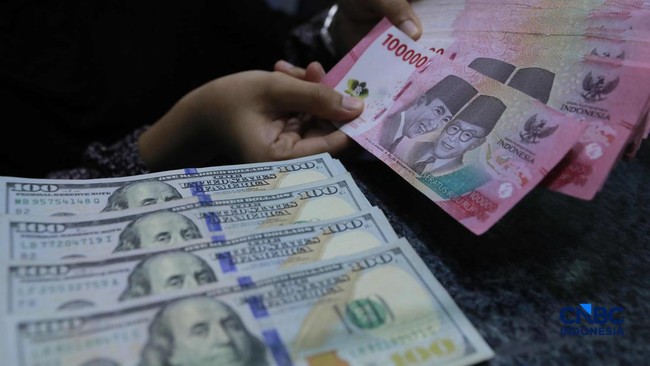
The pressure on the building materials industry is intensifying amid the rupiah’s weakening, which once approached Rp17,500 per US dollar. Various challenges, from energy issues to global uncertainties, are forcing industry players to adjust their strategies to remain competitive.
According to Refinitiv, the rupiah closed at Rp17,380/US$ in Wednesday’s (6/5/2026) trading session, appreciating by 0.17%. This strengthening interrupted a five-day consecutive weakening trend for the rupiah. The rupiah’s weakest position occurred in Tuesday’s (5/5/2026) trading session at Rp17,445 per US dollar.
The rupiah’s depreciation often concerns industry players as it could squeeze margins through rising import costs. Manufacturing companies, such as those producing lightweight bricks, are racking their brains to keep foreign currency exposure under control.
“Some components, like machinery and supporting materials, are still tied to the US dollar and yuan, but foreign currency-based projects have been completed. Currently, operations rely more on local raw materials, so currency exposure is relatively minimal,” said Finance Director of PT Superior Prima Sukses Tbk (BLES), Andrew, to CNBC Indonesia on Wednesday (6/5/2026).
The company is implementing various strategies to maintain margin stability, minimising sensitivity to the rupiah’s weakening.
Amid foreign exchange market dynamics, industry players also face a policy restricting dollar purchases from US$100,000 to US$50,000 per person per month. This condition requires companies to be more disciplined in managing foreign currency needs while strengthening domestic operational resilience.
“The company has also implemented electric vehicles as an alternative to conventional vehicles, particularly for heavy equipment. This step is part of efforts to improve cost efficiency and reduce dependence on conventional energy sources with fluctuating prices,” Andrew stated.
In addition to internal factors, the company is monitoring external conditions that affect demand. Global economic slowdown is an aspect that cannot be ignored, especially for the property and construction sectors. Nevertheless, housing needs and infrastructure development serve as main supports amid global uncertainties.
“The global economic slowdown can generally affect the property and construction sectors, which ultimately impacts demand for building materials. However, Indonesia’s domestic market still has strong fundamentals, primarily driven by housing needs and development,” Andrew said.
Through these measures, the result is a more than 4,000% growth in net profit for the first quarter of 2026. Meanwhile, revenue increased by around Rp334 billion, up 6.3% from Rp314 billion in the first quarter of 2025.
Looking ahead, the company remains wary of potential pressures from global factors, particularly related to geopolitical dynamics that could affect energy and raw material prices. Anticipatory steps continue to be taken to maintain performance.
“From a geopolitical perspective, the potential impact on energy and raw material prices remains a concern. Therefore, the company continues to anticipate through operational efficiency, diversification of raw material sources, and strengthening sustainability strategies to maintain company performance stability,” Andrew stated.
Previously, Bank Indonesia Governor Perry Warjiyo reported seven steps to be taken to strengthen the rupiah, including dollar purchase restrictions. This was conveyed after a meeting with President Prabowo Subianto at the State Palace on Tuesday evening (5/5/2026).
“What we have issued is a restriction on dollar purchases in the domestic market without underlying. Previously US$100,000 per person per month, we reduced it to US$50,000 per person per month. That is what we immediately coordinated with KSSK for strengthening,” he said.
“Including domestically, the yuan market, Chinese yuan with rupiah, has developed domestically because our local currency with China and the rupiah is very high. And now a domestic yuan and rupiah market is starting to form, including this local currency, so it reduces or diversifies from the dollar, which can strengthen,” he explained.