
US Director of National Intelligence Resigns After Clash with Trump Over Iran War
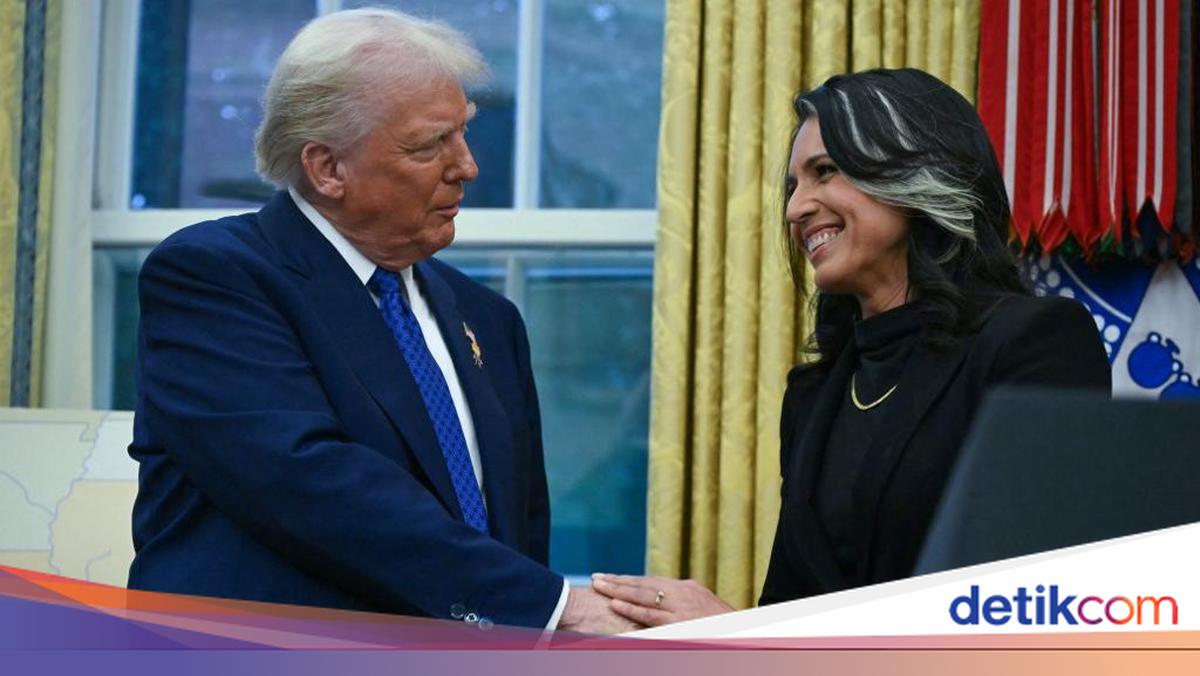
US Director of National Intelligence Tulsi Gabbard has officially announced her resignation. Gabbard cited her husband’s illness with cancer as the reason behind the resignation.
Although, rumours circulated about her resignation. One claimed Gabbard was forced to resign by the White House. Moreover during her tenure, she clashed with President Donald Trump over the war against Iran.
According to detikNews, Gabbard told Trump of her intention to resign during a meeting in the Oval Office of the White House on Friday, 22 May local time. Gabbard’s resignation as DNI, which has been in office since 2025, will take effect from 30 June.
In a letter to Trump posted on the social network X, Gabbard explained that she is stepping down as DNI to care for her husband, Abraham Williams, who was recently diagnosed with bone cancer.
‘Starting now, I must step back from public service to be by his side and to fully support him through this fight,’ Gabbard said, referring to her husband.
Gabbard herself is a former member of the US Congress from the Democratic Party. She is married to a cinematographer in Hawaii in a Hindu ceremony. The couple met while filming a campaign advertisement and Gabbard’s husband proposed while they were surfing at sunset.
Trump praises Tulsi Gabbard
Meanwhile, Trump praised Gabbard and said she had done an outstanding job. As DNI, Gabbard’s job involved coordinating information from a broad network spanning 18 US intelligence agencies for daily briefings to the President of the United States.
‘Tulsi has done an outstanding job, and we will miss her,’ Trump said in a statement via Truth Social.
Trump said the decision to care for her husband was the right thing. According to him, Gabbard’s deputy, Aaron Lukas, will serve as Acting Director of National Intelligence.
Rumours that Gabbard was Forced to Resign
Terlepas dari itu, rumours circulated about the resignation. Reuters reported a source familiar with the matter saying that Gabbard had been forced to resign by the White House. The White House quickly denied the rumours.
“This is untrue. Her husband, who is an extraordinary man, has been diagnosed with cancer of the bone that is rare,” said Gabbard’s Chief of Staff, Alexa Kenning, in a statement via X.
“Any suggestion that the White House coerced her to resign because of her husband’s health is a smear,” said White House spokesperson Davis Ingle.
Clash with Trump over Iran War
During her career in Congress, Gabbard positioned herself as someone who was anti-interventionist and opposed US military action overseas. This sparked tensions after Trump decided to strike Iran at the end of February.
Gabbard was reported not to have attended when Trump consulted his top advisers ahead of launching strikes against Iran on 28 February. After the US-Israel war against Iran erupted, Gabbard avoided publicly expressing support for Trump’s decision.
In a March Congressional hearing, Gabbard carefully avoided questions about whether the government knew the potential impacts of the war. She also refused to endorse Trump’s claim that Iran posed a real threat.
She also said that US intelligence concluded that Iran had not rebuilt its nuclear enrichment capacity that had been destroyed by bombs by the US-Israel last year — a claim used as the main justification for the war.
Last year, Trump appeared to disregard Gabbard’s statement before Congress about Iran not seeking to develop a nuclear weapon.
“I don’t care what she says. I think they (Iran) are very close to possessing a weapon,” Trump told reporters at the time. Trump has repeatedly cited Iran’s nuclear capability as a justification for the war against Iran.
Her resignation came two months after his top aide, former Director of the National Counterterrorism Center Joe Kent, left the Trump administration over the Iran War. Kent urged Trump to change direction in his policy.
After Kent’s departure, Gabbard openly supported Trump’s decision regarding military operations in Iran. She said that as commander-in-chief, Trump was responsible for determining what constitutes an imminent threat and what does not.
Artikel ini telah tayang di detikNews. Baca selengkapnya di sini!