
US Deploys Spy Drone to Middle East with 60-Hour Endurance
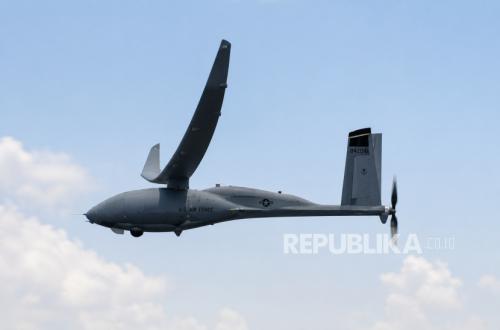
WASHINGTON — The US Air Force plans to deploy the latest version of the Unmanned Long-endurance Tactical Reconnaissance Aircraft (ULTRA) to the Middle East for operational evaluation. The surveillance drone, developed by DZYNE Technologies, is designed to fly faster, higher, and remain airborne for days. The ULTRA Turbo is an upgraded version of the previous ULTRA model, featuring a glider-like design with a turbo engine. This unmanned aircraft is part of the US military’s effort to strengthen Intelligence, Surveillance, and Reconnaissance (ISR) capabilities at lower operational costs. US Air Force budget documents for fiscal year 2027 state that operational evaluations will take place within the US Central Command (CENTCOM) area of responsibility, covering the Middle East. Funding for the programme has been allocated since fiscal year 2026 and will continue in 2027 to support drone capability enhancements. ‘FY26 funding will support operational assessments outside the continental US in CENTCOM’s area of responsibility as the next step in ULTRA system development,’ according to US Air Force budget documents, as reported by several US media outlets recently. The ULTRA drone features a ‘Multi-INT’ configuration, enabling the use of various surveillance sensors including electro-optical cameras, infrared systems, synthetic aperture radar, and signals intelligence equipment. The latest version uses a Rotax 916 four-cylinder piston engine, also employed in other military drones such as Israel’s Hermes 900. This engine allows the ULTRA Turbo to fly above 25,000 feet and enhances operational flexibility in adverse weather conditions. In February, DZYNE announced the ULTRA Turbo completed a 60-hour flight at 25,000 feet at 100 knots. The drone is claimed to carry payloads of up to 450 pounds and operate continuously for over two days. This extended endurance is deemed crucial for US military operations in the Middle East, particularly amid rising aerial surveillance needs following recent tensions with Iran and monitoring shipping lanes in the Gulf. Previously, the initial ULTRA model underwent operational evaluations in the Middle East in 2024. During one mission, it reportedly flew from Al Dhafra Air Base in the United Arab Emirates to Afghanistan and back, a range exceeding that of the MQ-9 Reaper drone, which has been the backbone of US aerial reconnaissance in the region.