
US Commits to Strengthening Cooperation to Return Indonesian Cultural Artefacts
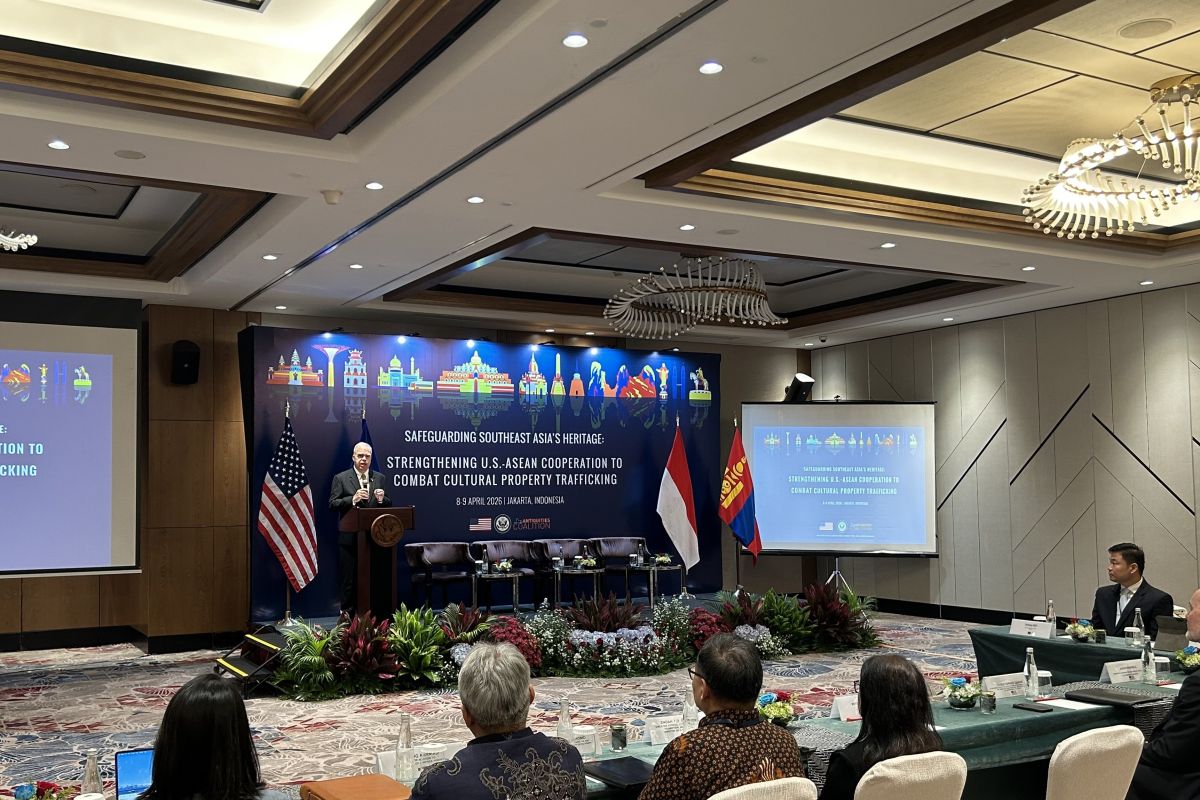
Jakarta (ANTARA) - The United States has conveyed its desire to strengthen cooperation with ASEAN, including Indonesia, in returning artefacts and cultural objects that have been illegally traded in Washington.
Acting Director of Political and Public Diplomacy for the Bureau of East Asian and Pacific Affairs at the US Department of State, Christopher Quade, stated that Southeast Asia is home to cultural heritage, but the United States has become a “home” to practices of looting and illegal trade in cultural objects.
“We hope to continue this cooperation next month through US-ASEAN training in Manila on eradicating the illegal trade in cultural objects in Southeast Asia,” Quade said at the US-ASEAN Conference on Eradicating the Illegal Trade in Cultural Property in Jakarta on Wednesday.
Therefore, the US Government, through the Cultural Heritage Centre, continues to negotiate and implement agreements to disrupt networks funding cross-border crime, protect American collectors from unwittingly purchasing items from illegal trade, and safeguard the cultural heritage of partner countries.
The Cultural Heritage Centre also develops and funds various programmes for cultural preservation and heritage exchange initiatives, bringing American expertise in various fields.
The United States has provided more than $14 million for around 140 projects to protect and preserve the cultural heritage of ASEAN member countries since 2001.
In the past year, the United States has also hosted cultural heritage professionals from Brunei Darussalam, the Philippines, Vietnam, and Indonesia.
“The Cultural Heritage Centre works closely with the US mission to ASEAN, ASEAN member countries, and other regional organisations to address issues related to the protection of cultural objects and the preservation of cultural heritage,” Quade added.
“The United States feels a responsibility because it is also one of the major markets for cultural objects, both legal and illegal,” he said.
The US Government, he noted, is increasingly demonstrating its commitment to combating that illegal trade through various means, including diplomacy and law enforcement.
Such agreements will enable efforts to formalise partnerships, strengthen law enforcement mechanisms, and enhance positive responsible cultural exchanges.
“Although we do not speak on behalf of the US Government, as an organisation, we hope that one day such an agreement will be established with Indonesia,” said Davis.