
US Claims Iran's Nuclear Facilities Destroyed, Tehran Delivers Scathing Response
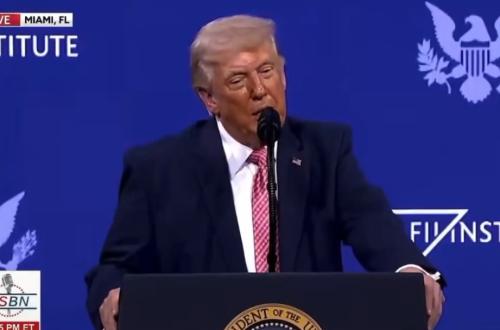
The narrative of victory and claims of failure are once again intertwined in the US-Iran conflict. On one side, US President Donald Trump stated that Washington’s military operation has crippled Tehran’s threat. On the other, Iran and several observers question that achievement, especially amid ongoing disruptions to the vital global energy route, the Strait of Hormuz. In his latest speech, Trump emphasised that Iran is “fundamentally no longer a threat” following a military campaign lasting more than a month. He even claimed that Iran’s nuclear facilities have been “utterly destroyed” and warned of further strikes if Tehran tries to restore its capabilities. “We hold all the cards. They don’t have a single one,” Trump said, asserting that America is on track to achieve all its military objectives soon, as reported by Fox News. However, that statement has not been accepted without criticism. Iranian media views the speech as more reflective of an effort to build political legitimacy than a factual depiction on the ground. In its analysis, Tasnim described Washington’s victory claims as a “readjustment of objectives” to appear successful at the conflict’s end. According to them, several indicators actually show a more complex situation. Disruptions in the Strait of Hormuz continue, while Iran is assessed to still have the capability to launch retaliatory attacks, including via missiles. “If Iran’s strength were truly destroyed, who is still disrupting global shipping lanes?” reads the criticism in that narrative. Amid these differing claims, Iran’s position was also affirmed directly by Foreign Minister Abbas Araghchi. He stated that the future of the Strait of Hormuz cannot be determined unilaterally by external powers, but is under the authority of Iran and Oman as coastal states. “The management of the Strait of Hormuz is Iran’s and Oman’s affair,” Araghchi said, adding that the route could become a “path of peace” if managed through joint mechanisms, as reported by Al Arabiya. The Strait of Hormuz itself holds immense strategic importance. Under normal conditions, about one-fifth of the world’s oil supply passes through that route. However, since the conflict erupted, access to the strait has become limited, with several ships avoiding the route due to security risks and a surge in insurance costs.