
US-China Maritime Dispute
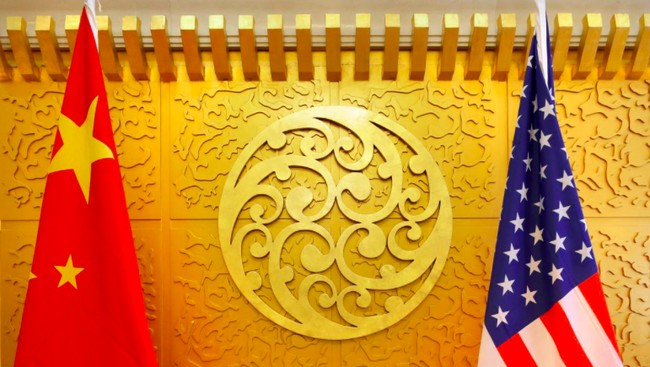
In addition to tensions in the Strait of Hormuz involving Iran and the US, maritime frictions are also occurring between China and (once again) the US. As widely reported, the friction between these two superpowers began with the revocation of CK Hutchison’s concession for the Balboa and Cristobal terminals located in the Panama Canal.
That policy was taken by Panama’s Supreme Court at the end of January, which unilaterally cancelled the legal framework supporting the historic 1997 concession of the port operator owned by Hong Kong conglomerate Li Ka-shing.
Although Panama is a sovereign nation separate from the US, even grandmothers know that the country has historically been the “backyard” of Uncle Sam’s nation. That’s why China is extremely defiant towards that decision by Panama’s highest court.
In retaliation for that country’s policy, China aggressively detained dozens of Panamanian-flagged cargo ships. The US Federal Maritime Commission (FMC) stated that it is closely monitoring the surge in ship detentions.
Following the controversial decision, the Panamanian government immediately appointed two subsidiaries of US and European giants, namely Maersk APM Terminals and Terminal Investment Limited owned by Mediterranean Shipping Company, as temporary port operators under an 18-month agreement.
It is reasonable for the US to respond harshly to China’s actions because Panamanian-flagged ships carry a very significant portion of US containerised trade. Thus, these actions could result in significant commercial and strategic consequences for US shipping. The existing tensions are believed to directly affect the nerve centre of the US economy.
On the other side, China’s Ministry of Transport has reportedly summoned representatives of Maersk and MSC to Beijing for high-level negotiations. CK Hutchison, which has operated those ports for nearly 30 years, has strongly responded to the illegal seizure of assets and immediately launched an international arbitration lawsuit demanding compensation of more than US$2 billion.
The turmoil above began when CK Hutchison divested shares in several port networks owned or operated by its subsidiary, Hutchison Ports, around the world. The latter is mentioned as holding shares in the Jakarta International Container Terminal (JICT) and TPK Koja.
CK Hutchison’s move to divest shares in container terminals or ports in various corners of the globe amounts to around 43 terminals/ports. Is Hutchison Ports planning to “retire” from the port business? No. Hutchison Ports will not retire from the port business. At least, it is retaining its share ownership in several terminals or ports in Singapore, Hong Kong, Shenzhen, and southern China.
The shares to be divested are spread across terminals/ports in Rotterdam, the UK, Spain, etc. (all 43 ports located in 23 countries, including Indonesia). So far, a US investment firm, BlackRock, and Terminal International Limited (TiL), a subsidiary of international shipping operator MSC, have purchased shares in the aforementioned Hutchison Ports ports worth US$22.8 billion.
Not only that, their consortium also acquired 90 per cent of shares in Panama Ports Company, which operates the Port of Balboa and Port of Cristobal located right at the entrance to the Panama Canal.
With the reduction in Hutchison Ports’ stake in the global port landscape, a reconfiguration has occurred in the “standings” of the international port league. Here’s what that means. Until now, the players in this business consisted of relatively independent companies from shipping lines.
Names like PSA, DP World, Hutchison Ports itself, and others are companies with these characteristics. They are then connected to other investors (generally from banking or financial institutions). Of course, there is also involvement from shipping companies, but usually only as minority shareholders.
Now, the landscape is changing with the entry of shipping companies, through their terminal subsidiaries—in this case, TiL—into port/terminal management with larger shareholdings. But note that it has not yet been revealed how large the shares of TiL and BlackRock respectively are in the ex-Hutchison Ports ports that have been acquired.
As a subsidiary of Mediterranean Shipping Company (MSC), headquartered in Switzerland, TiL has served the “mother” container ship fleet in Singapore, Ningbo, Busan, Los Angeles, Long Beach, Rotterdam, Antwerp, New York/New Jersey, and Valencia.
This list of port calls will grow longer with the inclusion of terminals previously managed by Hutch, the nickname for the company owned by Hong Kong tycoon Li Ka-shing among port businesspeople.
Reconfiguration naturally triggers changes in business practices. One of them is that business will become increasingly concentrated (read: monopolistic) to shipping companies from upstream to downstream.
Usually, shipping fleets dock at terminals or ports managed by third parties. Now, these facilities are operated by “siblings” themselves. There is indeed a business calculation to it, but being siblings means it can be more flexible.
However, for shipping lines that are not siblings, this new relationship model could spell trouble. They might not get service windows because the available slots are prioritised for the group’s own fleet. In the case of TiL, for example, the MSC fleet will receive priority for berthing and services compared to, say, Yang Ming, COSCO, or others.
For Indonesia, the current situation clearly could create ripples in its port business. If BlackRock and TiL take control of JICT and TPK Koja, how…