
US Chicken Imports Opened, Rp20 Trillion Danantara Project Could Be Affected
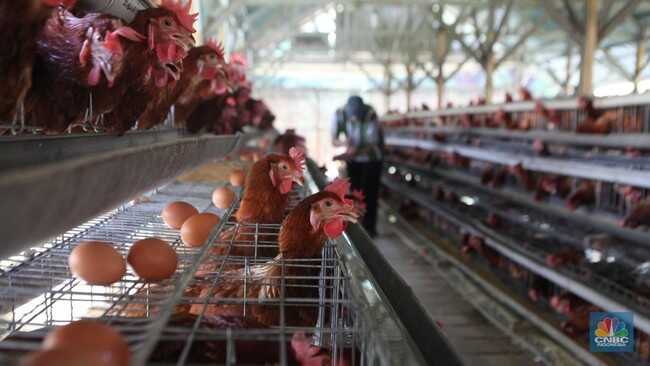
US Chicken Imports Opened, Rp20 Trillion Danantara Project Could Be Affected
Jakarta, CNBC Indonesia - The government’s plan to open imports of chicken products from the United States is seen as potentially posing new challenges to the downstreaming programme in the poultry sector that the government is pursuing through the Danantara investment worth Rp20 trillion.
The Indonesia–US trade agreement under the Agreement on Reciprocal Trade (ART) allows entry of several poultry products from the United States, including live birds for grandparent stock (GPS) to the extent of 580,000 birds, with a value of around US$17-20 million.
In addition, Indonesia is opening imports of mechanically deboned meat (MDM), widely used as a raw material for processed products such as sausages, nuggets and meatball. The import volume of MDM is estimated to be around 120,000 to 150,000 tonnes per year.
Senior economist Tauhid Ahmad of Indef states that policy to loosen controls on food commodity imports, including chicken, could affect the feasibility of the downstreaming programme that is being promoted by the government.
He explains that the government has already started the chicken downstreaming project through several pilot projects in several regions. However, a more open import policy is seen as potentially affecting the competitiveness of the domestic industry.
“The government does have downstreaming of chickens (Danantara); there are pilot projects and they have been conducted in several locations,” Tauhid said in Jakarta on Thursday (5 March 2026).
According to Tauhid, imported chicken products could penetrate the domestic market more quickly, especially if not accompanied by extra requirements such as halal certification. This condition could displace consumption of domestic chicken, particularly in large cities where demand is rising.
The situation also intersects with the Free Nutritious Meals (MBG) programme aimed at reaching around 82.9 million beneficiaries. This programme requires support for domestic chicken production through the downstreaming process.
Tauhid said that if imports are opened widely, the market might simply prefer foreign products because the process is much faster than waiting for the output from the downstreaming project which is still under development.
“If imports are opened, it is easier to import, because there, it is very cheap indeed. I think this becomes a problem, including for breeding; it also opens opportunities for their industry to enter for parent stock. In fact, if we want it, this should be done domestically,” he said.
Nevertheless, he believes the downstreaming programme is not automatically doomed just because of the trade agreement with the US. In his view, market decisions will ultimately be heavily influenced by price factors.
“In my view it’s not doomed to fail, but the market will choose which is cheaper. We do not yet know what price Danantara will yield or how much and how large; but if imports are much cheaper, consumers will surely opt for the cheaper price,” he said.
Therefore, Tauhid urged the government to strengthen the competitiveness of the national poultry industry. One key step is to reduce production costs, especially in terms of animal feed which is the largest component in the chicken industry.
In addition, government support is needed in providing medicines and veterinary health services and the development of supporting infrastructure. With more efficient production costs, the domestic poultry industry is expected to be able to compete with imported products in the domestic market.