
US Begins Blockade of Strait of Hormuz, Trump Threatens to Destroy Iranian Ships
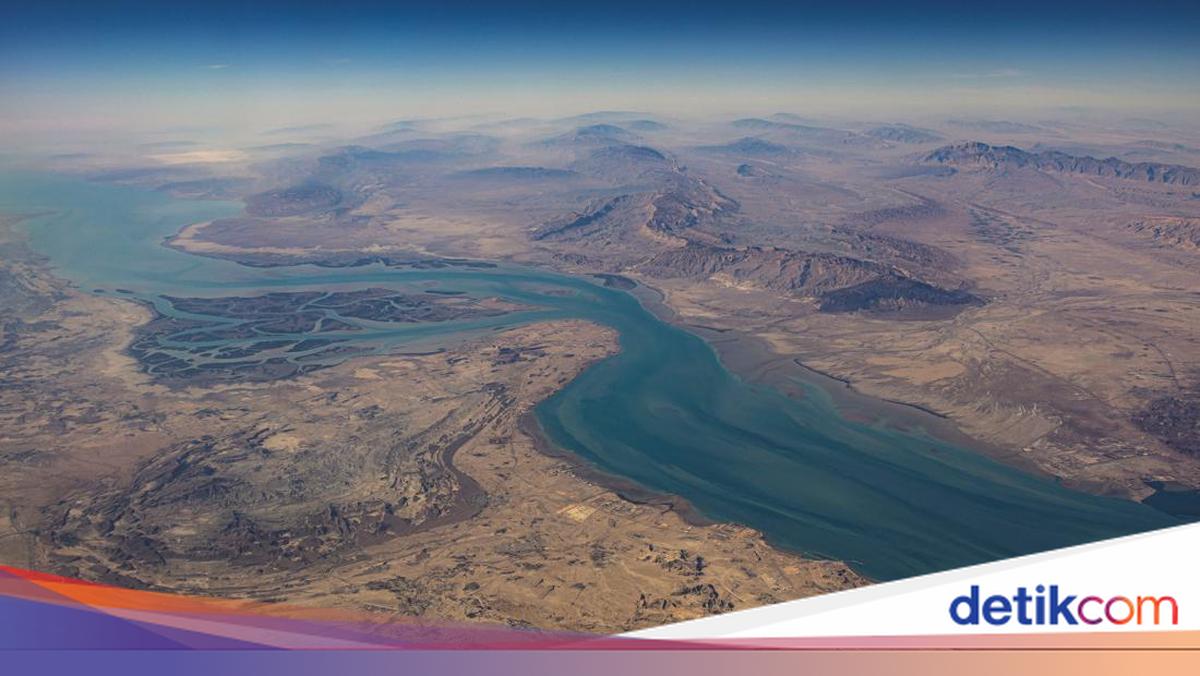
The United States has officially blockaded the Strait of Hormuz and warned that it will destroy any Iranian ships that approach. This step marks a sharp escalation in the conflict after peace negotiations between the two sides failed.
The blockade was enforced on Monday (13/4) at 10:00 local time, stopping all ships intending to pass to and from Iranian ports.
“We cannot allow a country to blackmail or threaten the world,” US President Donald Trump stated firmly after the blockade took effect on Monday at 10 a.m. US time, quoted from detikNews on Tuesday (14/4/2026).
When asked whether the blockade aims to force Iran to open the strait or to push for negotiations, Trump said both.
“Both of those (are what we want), of course, and more than that,” he said succinctly.
Trump’s statement at the White House came after Vice President JD Vance returned from Pakistan without a peace agreement with Iran. The two-week ceasefire agreement reached last week was also reported to be faltering amid rising tensions in the Middle East.
Trump claimed that Iran actually wants to reach an agreement, although negotiations in Pakistan over the weekend ended in deadlock. The nuclear issue was cited as the main obstacle.
“The sticking point is the fact that they will never have nuclear weapons,” Trump said about Iran.
“We agreed on many things, but they did not agree on that, and I think they will agree to it. I am almost certain of that. In fact, I am certain of it. If they do not agree, there is no deal,” he emphasised again.
As the blockade took effect, Trump also warned Iranian fast attack boats not to approach US forces.
“If any of these boats approach our blockade, they will be immediately eliminated,” Trump wrote on Truth Social.
Trump also stated that the US military has begun blockading Iranian ports as part of efforts to force Tehran to open the Strait of Hormuz and accept an agreement to end the war that has lasted more than six weeks.
“We cannot allow a country to blackmail or threaten the world because that is what they are doing,” Trump said about Iran at the White House, where he announced that the blockade had begun, reported by AP on Tuesday (14/4/2026).
Nevertheless, Trump hinted that the US remains open to dialogue.
“I can tell you that we have been contacted by the other side,” Trump said, adding that “they want to reach an agreement.”
Previously, Iran responded to the blockade plan with threats against all ports in the Persian Gulf and Gulf of Oman, including those of US allies.
In the field, at least two tankers approaching the Strait of Hormuz were reported to have turned back after the blockade was enforced, according to ship tracker MarineTraffic in a post on X.
The UK’s Maritime Trade Operations agency stated that the blockade restricts “the entire Iranian coastline, including ports and energy infrastructure.” However, ships heading to or from non-Iranian ports are reportedly still allowed to pass, though they may encounter military presence.
Blockade Potentially Has Wide-Ranging Impacts
The US Central Command stated that the blockade is enforced against ships from all countries entering or leaving Iranian ports and coastal areas in the Persian Gulf and Gulf of Oman.
The decision is seen as a relaxation from Trump’s initial threat, which previously aimed to fully close the route, as ships between non-Iranian ports are still permitted to pass.
In a social media statement, Trump also claimed that the Iranian navy has been “completely destroyed” although it still has fast attack boats. He reiterated the warning of potential firm action.
“If any of these boats approach our blockade, they will be immediately destroyed.”
Meanwhile, Iran has also issued counter-threats.
“Security in the Persian Gulf and the Sea of Oman is for everyone or for no one,” reported the Islamic Republic of Iran Broadcasting on Monday. “An Iranian military statement said, ‘no port in that region will be safe.’”