
US Banks Scramble for Yuan, Goldman Sachs Leads the Pack
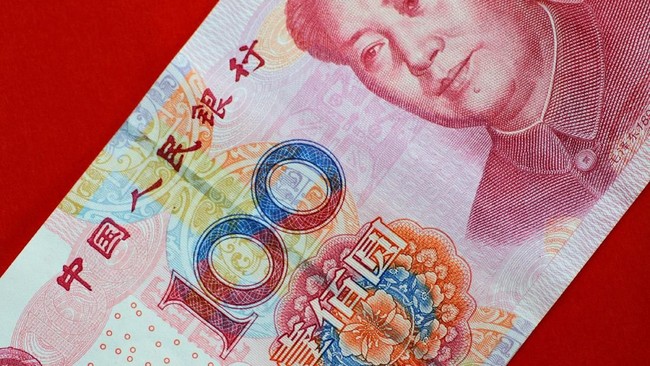
US banks are increasingly aggressive in seeking funds in the Chinese yuan, or renminbi. This trend is driven by relatively low borrowing costs in China, while Chinese investors seek higher-yielding instruments in Hong Kong. This combination makes the dim sum bond market increasingly attractive. Dim sum bonds are bonds issued offshore, typically in Hong Kong, but denominated in yuan. For foreign borrowers, these instruments offer relatively cheap funding costs. For Chinese investors, the products provide higher returns than domestic bonds. According to the Financial Times, dim sum bond issuance reached 300 billion yuan, or about US$44 billion, throughout 2026. This figure is more than double the same period in 2025, which also set a record. Goldman Sachs Most Aggressive Self-led issuance by US banks has surged to 47.5 billion yuan this year, a new record, with Goldman Sachs as the largest contributor. Goldman Sachs has issued dim sum bonds worth 32.1 billion yuan this year. That amount equates to about 10% of total dim sum bond issuance. With this achievement, Goldman has become the largest foreign issuer in the offshore yuan bond market. Isaac Wong, Head of Fixed Income, Currencies and Commodities Distribution at Goldman Sachs for Asia excluding Japan, said demand for offshore renminbi assets is very strong. “There is so much demand for offshore renminbi assets. This provides an attractive alternative funding source for companies,” Wong said, quoted from the Financial Times. Flocking to the Yuan Market, Foreigners Seek Cheap Funds It is not only Wall Street banks that are utilising this market. Several countries and government institutions are also issuing yuan bonds in the offshore market. This month, Portugal, Finland’s MuniFin, and Korea Development Bank issued yuan bonds. Previously, the Nordic Investment Bank and Swedish Export Credit Corporation had already entered the dim sum bond market. Yuan bond issuers are now increasingly diverse, from Indonesia to Morgan Stanley. This situation shows that the dim sum bond market is no longer just an arena for Chinese issuers but is beginning to become a funding source for global borrowers. The key to the market’s bustle lies in differing needs. Chinese investors need instruments with higher yields because domestic bond yields are very low. Meanwhile, foreign investors see Hong Kong as a market that can provide cheaper funding costs compared to many other global markets. China’s 10-year government bond yield is currently around 1.75%. By comparison, the coupon on Goldman Sachs’ 10-year dim sum bond is 3%. Beijing Gains Momentum, Goldman Converts Funds to US Dollars The surge in dim sum bond issuance aligns with Beijing’s agenda to expand the use of the yuan in global financial markets. China wants the yuan to be used more abroad, not just as a transaction currency but also as a funding currency. One way is by expanding access to the Bond Connect programme, a scheme that allows mainland Chinese investors to buy fixed-income products in Hong Kong. Last year, access to this programme was opened for the first time to insurance companies and non-bank financial institutions. That policy has increased capital flows from mainland China to Hong Kong’s bond market. At the same time, the offshore yuan market has become deeper and more attractive to foreign issuers. At the China Development Forum last month, China’s central bank governor Pan Gongsheng also emphasised the push to strengthen monetary and financial cooperation to develop the offshore yuan market. For Beijing, this trend is more than just foreign banks seeking cheap funds. The more global issuers borrow in yuan, the greater the opportunity for China’s currency to strengthen its position as an international funding currency. On the other hand, Goldman Sachs does not use the funds from dim sum bond issuance for its operations on the mainland. The yuan funds raised in Hong Kong are converted to US dollars, while exchange rate risk is hedged. This allows the funds to be used more flexibly across Goldman Sachs’ various business lines and jurisdictions. Additionally, yuan raised in Hong Kong is not subject to China’s strict cross-border capital controls like on the mainland, making the offshore renminbi market more attractive to foreign issuers. Yuan Fills the Space Left by Japan’s Yen The rise in yuan borrowing indicates an important change in the global funding market. Offshore yuan is starting to take on some of the role previously played by the Japanese yen as a cheap funding currency. For years, the yen was a choice due to its low borrowing costs. However, in the last two years, the yen’s appeal has waned after Japanese borrowing costs rose sharply. Offshore yuan is thus starting to be considered as an alternative funding option, especially as choices for low-cost currencies become more limited. This is even more evident in long tenors, when Japanese bond yields have risen much higher than in previous years. Japan’s 10-year government bond yield has now risen above 2.4%, from 0.61% at the beginning of 2024. Meanwhile, China’s 10-year government bond yield fell below Japan’s for the first time last November. With these conditions, offshore yuan is now not only an alternative cheap funding option for global banks but also part of the changing landscape of international funding.