
US and Iran Agree Key Points for Ceasefire Extension
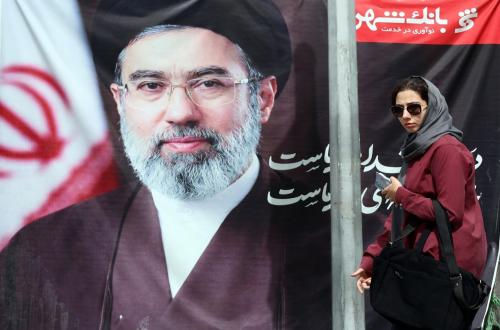
WASHINGTON – Negotiators from the United States and Iran have reportedly reached an initial agreement to extend a ceasefire for 60 days, according to US sources cited by Anadolu on Thursday, 28 May 2026. The sources stated that President Donald Trump has not yet given final approval to the memorandum of understanding, although negotiators have finalised most of the terms.
Key points agreed upon by both sides, as summarised by Al Jazeera on Friday, 29 May 2026:
Strait of Hormuz
According to media reports, the MoU will stipulate that shipping through the Strait of Hormuz will be ‘unrestricted’, meaning no tolls will be imposed, no ‘harassment’, and Iran will have 30 days to remove all sea mines. The US Navy’s maritime blockade will be halted ‘in proportion to the restoration of commercial shipping’ in the strait. The US will also ease some sanctions on Iran, allowing it to sell oil freely.
The issue of controlling the Strait of Hormuz has been a major point in US-Iran negotiations, which have largely been conducted through Pakistan as a mediator.
Since early March, Iran has restricted vessels passing through the Strait of Hormuz, which connects the Persian Gulf to international waters and through which 20% of the world’s oil and gas supply is transported. Iran has allowed some ships to pass but required negotiations with the Islamic Revolutionary Guard Corps (IRGC), with some vessels reportedly paying a toll of $2 million.
In April, the US responded to Iran’s closure of the Strait of Hormuz with a maritime blockade of Iranian ports, further disrupting global oil and gas supplies. The US and other countries have rejected the imposition of tolls on the Strait of Hormuz.
Under international maritime law, countries with natural straits like Hormuz cannot impose toll fees. However, they may charge ‘service fees’ for vessels passing through.