
US Allies Divided, Europe Firmly Tells Trump It Will Not Join Iran War
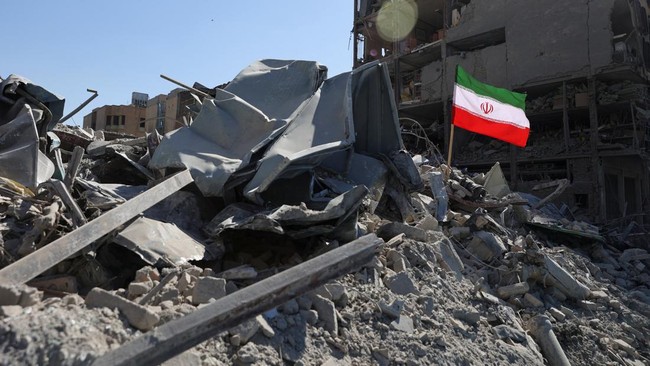
A number of European country leaders have shown a firm stance against the invitation from United States President Donald Trump to become involved in the conflict against Iran. European leaders have rejected direct involvement in US-Israel military operations against Iran, due to fears of being drawn into an unpredictable conflict whose objectives are unclear.
This mirrors the stance of German Chancellor Friedrich Merz, who firmly rejected Trump’s invitation and questioned the strategy that this operation would succeed. According to him, the US government also did not consult with European allies before taking military action.
“Washington has not consulted with us and has not said that European assistance is needed,” he said to parliament members, citing Reuters, on Thursday (19/3/2026).
He added that during the ongoing conflict, Germany would not participate in military operations to secure shipping lanes in the Strait of Hormuz.
“We would advise against continuing these actions as they have been done. Therefore, we have stated that as long as the war continues, we will not participate in ensuring freedom of navigation in the Strait of Hormuz, for example, in a military manner,” he emphasised.
The same sentiment was expressed by German Defence Minister Boris Pistorius, who stressed that the conflict is not their affair. “This is not our war, we did not start it,” he stated.
This stance was also voiced by French President Emmanuel Macron, who firmly stated that his country is not involved in the conflict. “We are not a party to this conflict,” he said.
It turns out that European countries have long been wary of Trump’s anger, which could negatively impact state relations with Ukraine or attempt to force Kyiv to accept a deal favourable to Moscow.
Moreover, Europe’s rejection is inseparable from concerns over the unpredictable impacts of the conflict, as well as pressure from domestic public opinion.
As seen in the UK, Prime Minister Keir Starmer faces a majority of the public rejecting involvement in attacks on Iran. A YouGov poll shows that Britons oppose the attacks by a ratio of 49% to 28%.
Even criticism of Trump’s rhetoric has come from various parties in the UK, including the opposition. This indicates that support for military involvement is increasingly limited among European countries.
“I am Keir Starmer’s biggest critic, but the word war coming from the White House is childish,” said Conservative leader Kemi Badenoch. “I do not like seeing our Prime Minister berated by foreign leaders,” said Robert Jenrick from Reform UK.
Trump specifically mocked UK Prime Minister Keir Starmer, whom he said “is not Winston Churchill,” the British leader during World War II.
The same phenomenon is occurring in Spain, where Prime Minister Pedro Sánchez described the attacks on Iran as reckless and illegal. He even dismissed threats from Trump to cut trade with Spain if the country does not allow a jointly operated base to be used in the war.
“We certainly will not be anyone’s subordinates, we will not tolerate any threats, and we will defend our values,” said Deputy Prime Minister Maria Jose Montero in early March.
This government stance is also supported by Spaniards, with 68% stating in a poll by Spanish company 40db that they oppose the war. An ARD DeutschlandTrend survey shows 58% of Germans oppose the war while 25% support it.
This rejection further highlights tensions in transatlantic relations. Besides the Iran issue, US-Europe relations are also tested by the war in Ukraine, tariff policies, and uncertainty over US commitments to NATO.
An unnamed European official said that the aims of the American war are not defined or clear, and may differ from Israel’s war aims, especially regarding regime change.
Although rejecting direct military involvement, Europe is still striving to maintain regional stability with a different approach. The UK and France are exploring plans to secure shipping lanes in the Strait of Hormuz through international cooperation without direct US involvement.
France has been attempting to form a coalition to secure the strait after the security situation stabilises - and without a US role.
Meanwhile, Paris has consulted with European countries, Asian nations including India, and Arab Gulf states over the past week regarding plans that will ultimately involve warships to escort tankers and commercial ships.
Macron said the plan would involve political and technical discussions, including with the maritime industry, insurance companies, and others.
“This work will require discussions and de-escalation with Iran,” he stated.
Overall, European countries have chosen not to be drawn into a conflict they deem to lack clear objectives. They assess that the risks of involvement outweigh the benefits, especially amid an already complex geopolitical situation.