
Urges Public to Stay Calm: Purbaya Advises Not to Worry About Recession Rumours
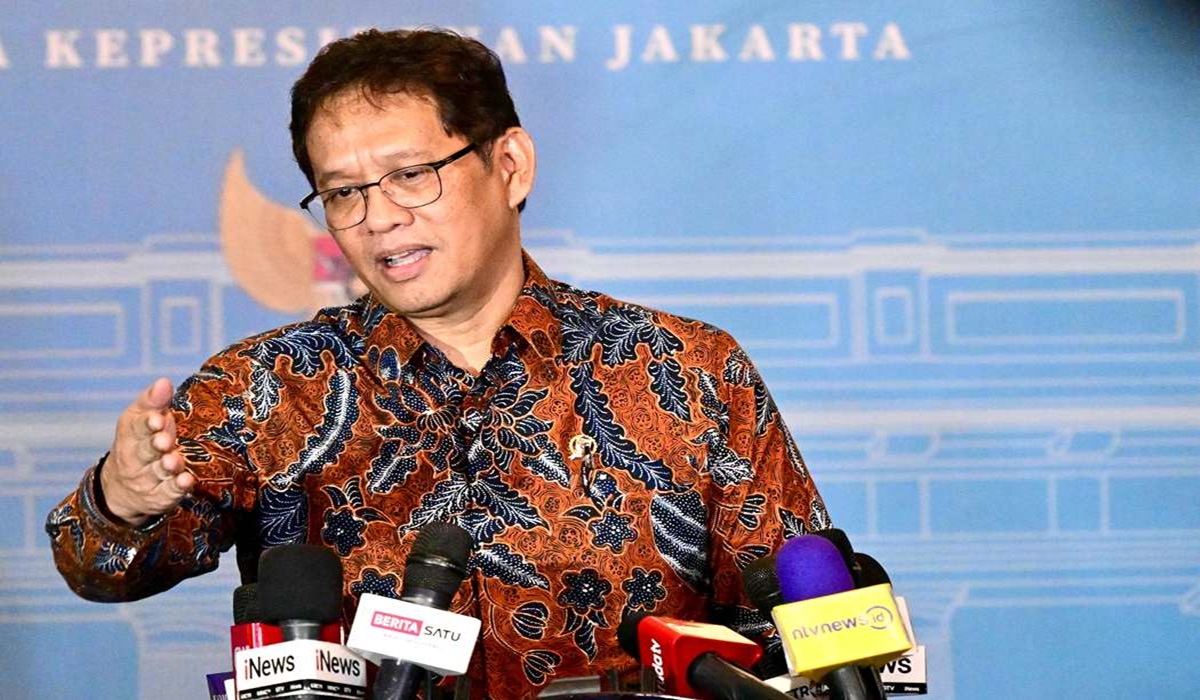
Finance Minister Purbaya Yudhi Sadewa has urged the public to stay calm in responding to rumours of a potential economic recession. He assessed that many predictions claiming Indonesia’s economy will face severe pressure in the near future are often based on unrealistic assumptions, such as a surge in global oil prices to extreme levels.
The Minister stated that if oil prices reached $200 per barrel, the impact would not only affect Indonesia but the entire world, potentially leading to a recession.
“Stay calm, no need to worry. Don’t immediately say that in two months Indonesia’s economy will collapse or enter a recession just because of the assumption that oil prices could reach $200 per barrel. If that happens, it won’t just be Indonesia; the whole world will also be affected by recession,” he said in Jakarta on Wednesday (25/3).
Purbaya emphasised that in compiling economic projections, the government uses measured assumptions based on historical data, not mere speculation. According to him, an economist should prepare projections with a clear basis, including considering realistic trends in commodity prices and global dynamics.
He gave an example that an oil price increase to around $100 per barrel alone already exerts significant pressure on various countries, including the United States. Even that condition can trigger social and political unrest. Therefore, assumptions of a price surge to $150–200 per barrel are deemed excessive for near-term projections.
“Just look now, America is already struggling, right? (Oil price at) $100 per barrel there, fuel prices have risen nearly 100% there. The people are starting to get angry. It’s not us who are falling, but there (in the US),” said Purbaya.
From a fiscal perspective, Purbaya assured that the state revenue and expenditure budget (APBN) remains safe and capable of withstanding existing pressures until the end of the year, based on current prices. The government also has no plans to significantly alter the APBN structure or subsidy policies, unless there is a very high price surge.
“With the current conditions until the end of the year, our APBN is still safe. The deficit can also be controlled to remain below 3%,” he said.
Regarding the energy emergency issue, he clarified that such a situation has not occurred in Indonesia. According to him, an energy emergency only arises if energy supplies are disrupted, not merely due to price pressures. Nevertheless, the government continues to prepare anticipatory measures to address potential future risks.
“An energy emergency is if, for example, the supply stops. So if it’s called an emergency, no. But we must keep preparing for the future,” stressed the state treasurer.
Furthermore, Purbaya dismissed criticism questioning the effectiveness of government spending. He assessed that Indonesia’s economic performance still shows positive results, reflected in economic growth of around 5.4% in the fourth quarter of 2025, as well as Indonesia’s relatively superior position compared to other countries, including in the G20 group.
“Our economy is still growing well. That means the policies implemented so far are running and yielding results,” he said.
Purbaya noted that government spending only accounts for about 10% of Gross Domestic Product (GDP), while the remaining 90% comes from private sector activities. Therefore, maintaining private sector stability is the main key to sustaining economic growth.
He added that the government continues to carry out budget efficiency by cutting non-productive spending items, such as official travel, and reallocating them to sectors that have a greater impact on the economy.