
Urbanisation Is Not Just Migration: The Social Networks Behind the Influx of Newcomers
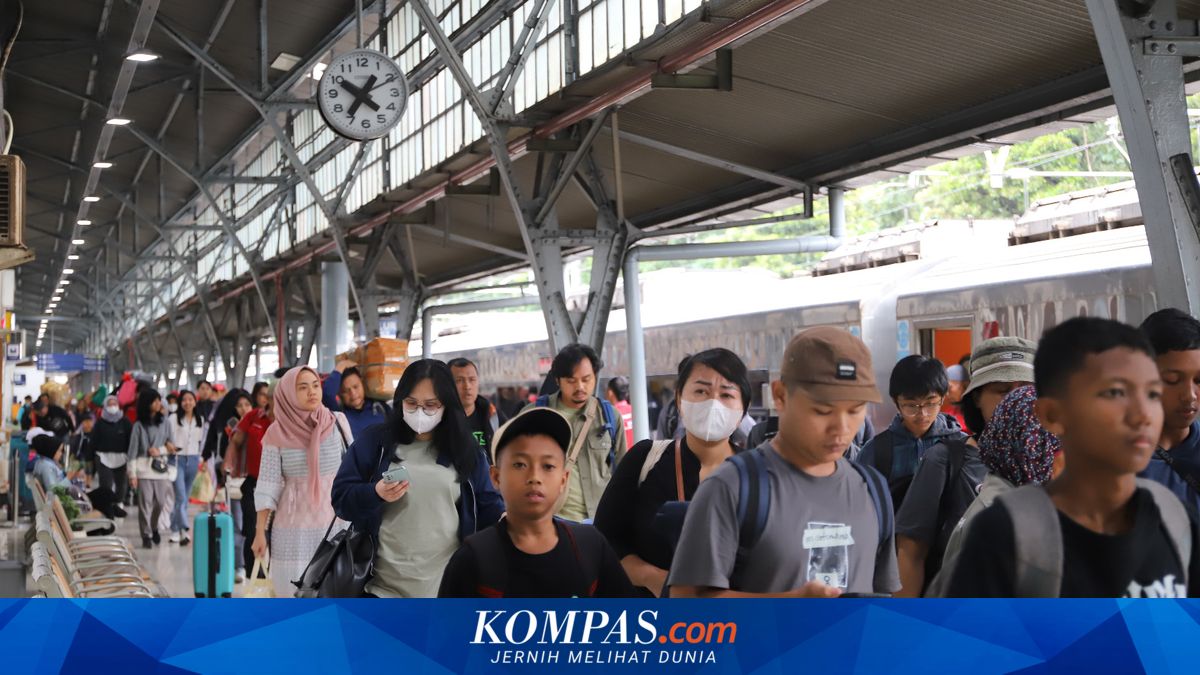
JAKARTA, KOMPAS.com - The influx of new migrants to Jakarta after Lebaran is often viewed as a recurring annual phenomenon. However, behind the seemingly similar mobility patterns year after year, there are fundamental changes in the way people decide to come to the capital. Urbanisation is no longer just about conventional “merantau” (migrating for work), but is increasingly supported by social networks, collective expectations, and more adaptive survival strategies. Sociologist from Universitas Negeri Jakarta (UNJ), Rakhmat Hidayat, explains that the current post-Lebaran migrant phenomenon is a combination of the continuation of old patterns and new transformations in urbanisation. “Sociologically, the phenomenon of new migrants after Lebaran can still be read as a continuation of classical urbanisation, but it has also undergone transformation. So there are two things: continuity and shift,” Rakhmat said when contacted by Kompas.com on Monday (30/3/2026). In classical theory, urbanisation is explained through the concept of push and pull factors. Population movement is driven by pressures from the village, such as limited job opportunities or poverty, and pulled by economic opportunities and facilities in the city. “Migrants now do not come randomly. They come because there are already relatives, friends, or fellow villagers who arrived in the city earlier. This network is the main strength in the migration decision,” he said. According to Rakhmat, a similar pattern is becoming increasingly common and forms what is called network-based migration. “This is different from classical urbanisation which tends to be individual. Now it is more collective and connected,” he stated. In addition, urbanisation patterns are no longer permanent. Rakhmat highlights the emergence of circular migration, where individuals do not settle in the city. “Now many come to the city for just a few months, then return to the village, and come back again. There are even those who take turns among family members. This shows increasing flexibility,” he explained. On the other hand, the development of information technology also shapes the way people view the city. Social media, success stories of migrants, and representations of the city in films and television build a collective imagination about Jakarta as a place full of opportunities. Rakhmat calls this a social construction of the “promise of a better life”. “The view that Jakarta is a symbol of social mobility does not arise just like that. There is a process of externalisation, objectification, and internalisation. Success stories are spread, considered as general truth, then believed as hope,” he said. However, the reality on the ground is often not as beautiful as expectations. This phenomenon, according to Rakhmat, shows the ambivalence of urbanisation. “Migrants can become a burden if not managed, because they add pressure on city infrastructure and services. But on the other hand, they are also drivers of the economy,” said Rakhmat. He explained that modern cities require labour differentiation, and migrants fill sectors that are not always desired by local workers.