
Urban Compost Bali Offers Organic Waste Processing Service for Rp 200,000 per Month
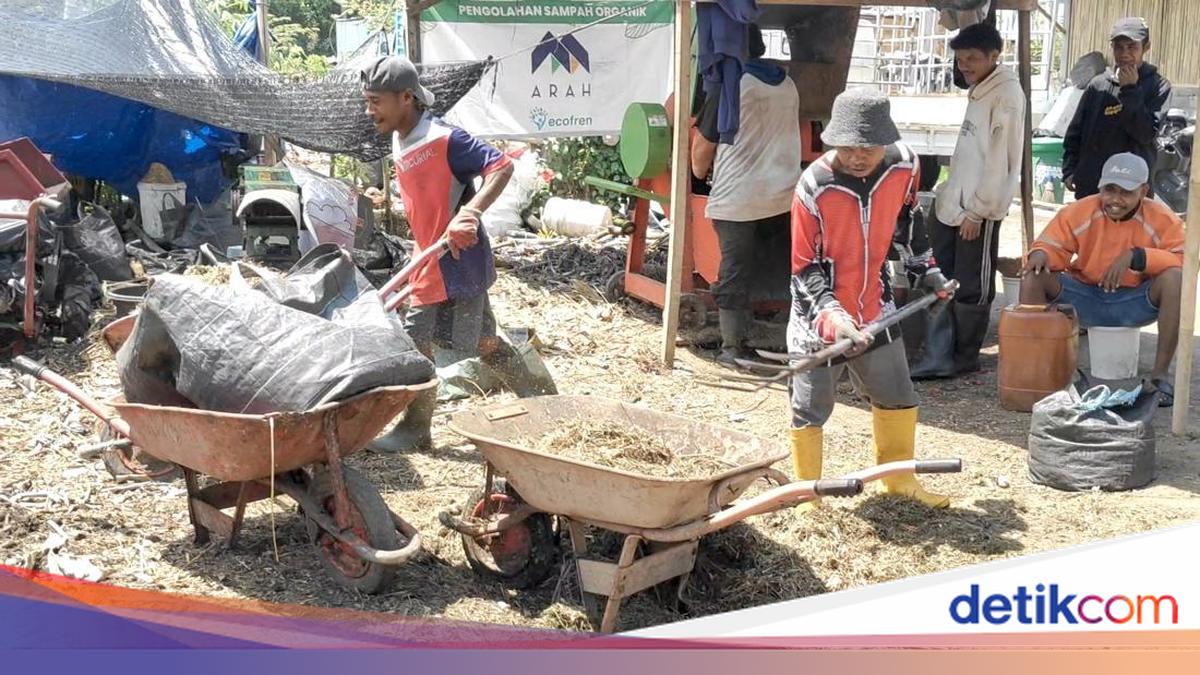
Urban Compost Bali in Darmasaba Village, Abiansemal Subdistrict, Badung, Bali, offers a solution for residents wishing to process organic waste but hindered by limited space and time. This processing service focuses on transforming food scraps and branch cuttings into natural compost through a subscription system.
“The main issues from members are usually that they lack space for composting and also have no time, as maintaining decomposing bacteria requires patience. We collect residents’ waste to turn it into compost medium or natural fertiliser,” said General Manager of Urban Compost Bali, I Komang Andhika Putra, when met recently on Tanah Putih Road in Darmasaba.
The service requires household members to subscribe for a minimum of three months, with an 8-litre bucket provided, while restaurants are supplied with 20-litre sizes. In addition to providing containers, the field team conducts regular collections once a week for households and up to three times a week for businesses.
“For households, we collect once a week depending on the route, whereas for restaurants it can be up to three pickups depending on distance and member class. Full buckets are exchanged for clean ones; the system is similar to swapping water gallons as we wash all containers before returning them to members,” Andhika explained.
Since the implementation of restrictions on organic waste disposal to the Suwung Regional Landfill from 1 April 2026, enthusiasm from Denpasar residents and surrounding areas has increased dramatically by 25 per cent. The management has even been forced to temporarily close registration quotas due to the overwhelming waiting list to maintain processing capacity.
“The increase in household members has reached 25 per cent, especially in Denpasar, where it was initially only 57 accounts jumping to 120 people, so we closed the quota on 9 April. There is a queue of around 300 household accounts, but we must consider land capacity so that the processing remains optimal and we are not overwhelmed,” he clarified.
Urban Compost applies strict standards regarding sorting at source and prohibits contamination with inorganic waste such as plastic in submitted buckets. If non-compliant waste is found three times, the management does not hesitate to terminate the partnership permanently.
“Our focus is on food scraps and there must be no plastic contamination at all; even a small mix can cause the composting process to fail. We have a scoring standard; if the sorting quality continues to drop below a score of two, we end the partnership,” he emphasised.
For the subscription scheme, the public can choose packages according to their daily waste volume needs at their respective locations. The management provides options for 8-litre buckets for household scale and 20-litre buckets for business or restaurant categories. Besides buckets, there is also a service using planter bags with a collection fee of Rp 300,000 per month for weekly schedules and Rp 200,000 per month for biweekly collections.
“We provide 8-litre buckets for households and 20-litre for restaurants, but there is also an option to use planter bags for those with different waste volumes. Subscription costs start from Rp 200,000 for biweekly collections up to Rp 300,000 for weekly ones,” Andhika explained.
Processing Process
The processing is carried out aerobically on a 20-are plot of land, with compost maturation duration ranging from two to three months. The final product in the form of organic compost is then redistributed to members or donated to organic farmers.
“The fastest is two months if the weather is good, but on average three months before it is sieved using a machine and packaged. This fertiliser is returned to members for their plants or donated to organic farmers as a form of social responsibility,” he said.
Currently, Urban Compost manages around 5 tons of food waste per day, handled by 12 field workers and 10 collection team members. The service coverage area now includes South Kuta, Canggu, Sanur, Denpasar, and surrounding areas like Darmasaba and Sibanggede Village, with plans to expand to Ubud next month.
“The total accounts we have handled since 2019 reach 2,018 household members and 229 restaurants, with current active numbers over 1,000 for households and 613 for restaurants. We want to prove that SMEs can also process waste independently if there is willingness and adequate facilities,” Andhika concluded.