
Upstream Oil and Gas Industry Deemed to Provide Multiplier Effects for Regional Economy
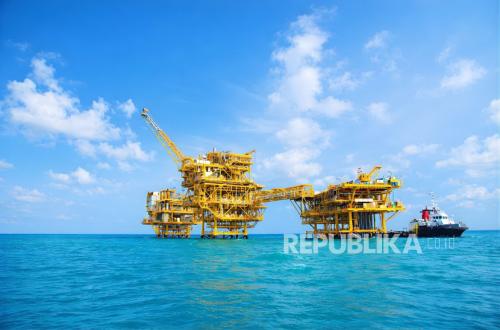
Lecturer from the Faculty of Economics and Business at Universitas Pertamina, Rinto Pudyantoro, explains that the contributions of the upstream oil and gas sector are not only reflected in state revenues but also directly impact regional incomes, job creation, and infrastructure development.
“There is often a perception that the presence of the oil and gas industry does not provide direct benefits to the surrounding communities. However, when viewed comprehensively, this industry actually delivers a very significant and multi-layered economic impact on the region,” Rinto stated during the Media Education IPA event on Wednesday (1/4).
Rinto details that these contributions come from, among others, the Oil and Gas Revenue Sharing Fund (DBH), oil and gas Land and Building Tax (PBB) receipts, and the 10% Participating Interest (PI) scheme involving Regional Owned Enterprises (BUMD).
For illustration, in 2023, Riau Province recorded DBH oil and gas receipts of Rp3.6 trillion and PBB oil and gas of Rp3.9 trillion.
In addition, operational activities in oil and gas working areas (WK) also drive local economic circulation through the procurement of goods and services as well as the involvement of local businesses. Further impacts are evident in the development of derivative industries, the provision of energy for domestic needs such as power plants, and the construction of public facilities.
Corporate social responsibility (CSR) programmes and community development (PPM) also play an important role in strengthening the socio-economic contributions in operational areas.
“The multiplier effect of the upstream oil and gas industry does not stop at state revenues but extends to various sectors, including local labour, infrastructure, and the overall strengthening of the regional economy,” he added.
From the state revenue perspective, this sector also contributes significantly through PBB. In 2022, the national total PBB reached Rp24.01 trillion, with oil and gas PBB contributing Rp13.711 trillion or more than 50% of the total.
Nevertheless, Rinto assesses that the main challenge lies in the optimisation of fund utilisation by regional governments. This is because the large receipts from DBH and PBB oil and gas do not automatically improve community welfare without proper management.
Amid the trend of declining oil and gas production, he emphasises that the upstream oil and gas sector remains one of the key pillars of the national and regional economy. With optimal management, this industry is deemed capable of becoming a sustainable economic driver.