
Uproar Over 1 Tonne of Gold Belonging to Toba Rulers Disappearing, Carried Away by 17 Horses
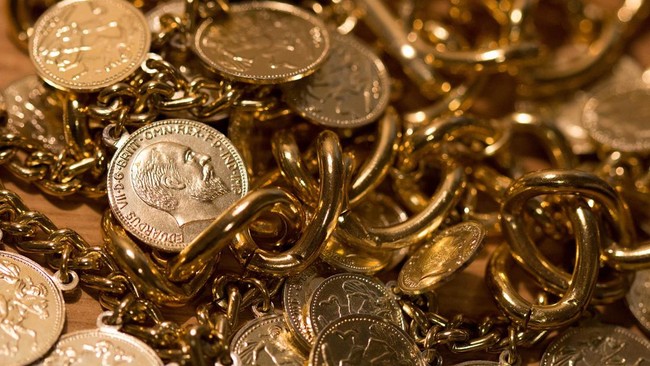
Gold remains one of the most promising investment instruments due to its resilience against global economic shocks. Even today, gold prices have hit record highs, surpassing Rp3 million per gram.
Gold is highly sought after and pursued by many as a hedge for their assets. One such example is the Batak family across generations, demonstrating how earnings were not squandered but invested in gold.
Incredibly, the total gold saved over hundreds of years amounted to 1 tonne. Allow us to introduce the Sisingamangaraja family, prominent from 1530 to 1876.
Hobby of Collecting Gold
The Sisingamangaraja family were the rulers of the Toba Kingdom in Batak land. The paramount leader was called Raja Sisingamangaraja, starting with Sisingamangaraja I (1530) to Sisingamangaraja XII (1876). This spanned 12 generations or 346 years.
During their reign, Sisingamangaraja held absolute rights over the camphor trade. At that time, Batak land was a major production centre for camphor, alongside the Malay Peninsula and Borneo. From there, camphor was exported, highly sought after by many. Even the plant held significant status in Islam and is mentioned in the Quran.
It is no surprise that camphor fetched very high prices in the global market. Whoever controlled the camphor trade was undoubtedly wealthy, including the Batak Sisingamangaraja family.
Augustin Sibarani in The Struggle of National Hero Sisingamangaraja XII (1988) records that since Sisingamangaraja I took power in 1530, the kingdom had traded camphor to Arab and European merchants for sale worldwide. Gradually, the kingdom not only traded but successfully monopolised the camphor market in North Sumatra.
All this practically made Sisingamangaraja immensely wealthy. However, this wealth was not squandered. In people’s imagination, a king would live luxuriously, bathed in riches in the palace. Yet, this did not apply to the Sisingamangaraja lineage.
From Sisingamangaraja I to Sisingamangaraja XII, all shared the same hobby: saving gold and jewellery.
“The Sisingamangaraja kings from the 1st to the 10th all enjoyed collecting Blue Diamonds from Ceylon. They also collected Ceylon diamonds brought from India via Barus. These Ceylon diamonds were as large as bird eggs,” wrote Augustin Sibarani.
The exact reason for their gold savings is unknown. However, their gold reserves certainly piled up. This is further detailed in various chronicles during the Padri attack in 1818.
According to Mangaraja Onggang Parlindungan in Tuanku Rao (1964), the Padri attackers, having crippled Sisingamangaraja’s defences, seized all jewellery and gold.
It was all carried away by 17 horses. Each horse could carry approximately 60 kg of gold. Thus, the total gold transported reached 1 tonne, which if converted to rupiah today would be worth Rp1.6 trillion.
This does not account for the gold saved by the Sisingamangaraja family during the attack. At that time, the family placed the royal jewellery in a super-large rice cooking pot. The pot was hidden in a secret location known only to a few people.
The attack ultimately ended the Sisingamangaraja lineage at the 12th generation. Sisingamangaraja XII was killed by the Dutch, concluding the long history of the family in Batak land.
The end of their rule meant the mountain of treasures belonging to the kingdom fell into others’ hands, including Queen Victoria in England. It is believed that Sisingamangaraja’s treasures were used in the English ruler’s crown.
“The jewellery could reach England because it was brought by a former Padri soldier who fled to Kelang in Malaysia and sold it there,” revealed Augustin.