
Upgrading trust in the Korea–Indonesia strategic partnership
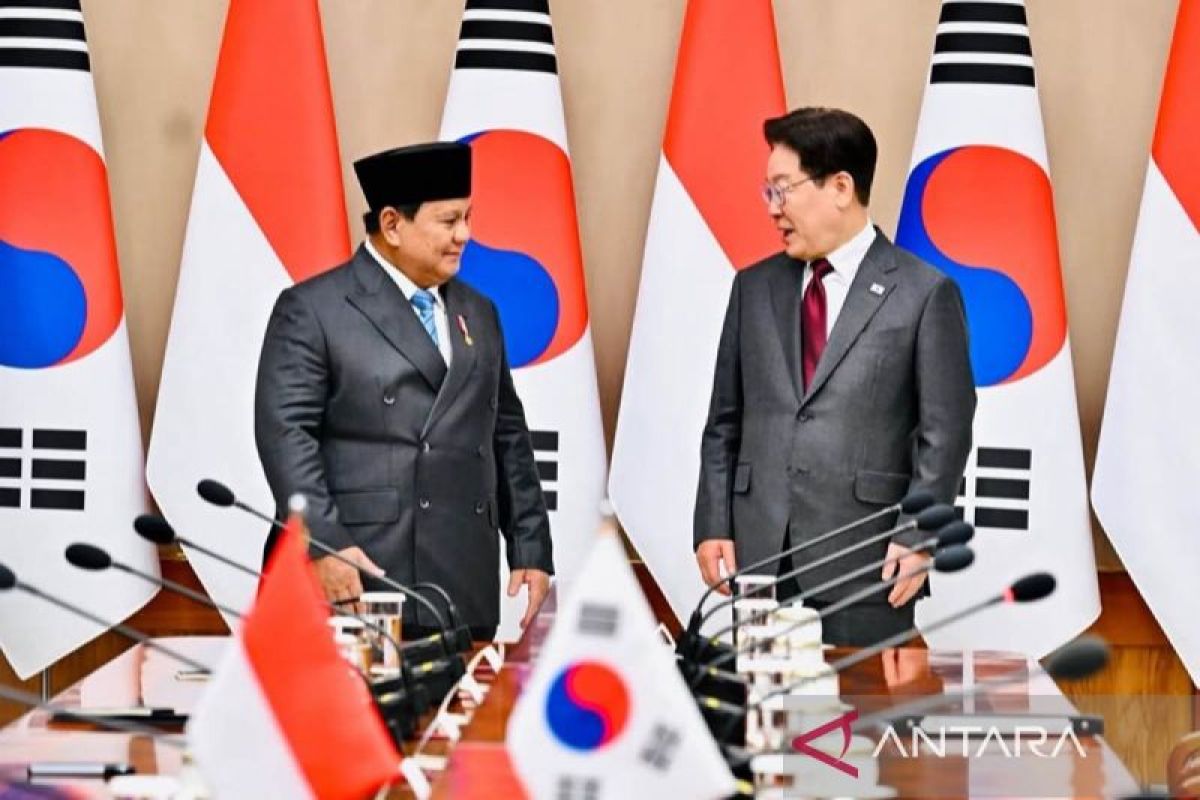
When Indonesian President Prabowo Subianto arrived in Seoul on March 31, following a state visit to Japan, President Lee Jae-myung presented him with the Grand Order of Mugunghwa, South Korea’s highest state honor.
The decoration, previously conferred on US President Donald Trump, signifies the highest level of diplomatic respect. It reflects the importance both countries placed on the summit.
This state visit and summit can be understood across three dimensions: reaffirming a trusted partnership amid geopolitical turbulence; deepening cooperation on defense and energy as twin pillars of an expanded security agenda; and declaring a forward-looking partnership in AI and digital that moves beyond manufacturing.
The most significant outcome of the summit was the elevation of bilateral relations to a “Special Comprehensive Strategic Partnership” — a first for both nations. This is not diplomatic rhetoric — it is a substantive upgrade grounded in trust.
Amid a polycrisis marked by intensifying US –China strategic competition, prolonged conflicts in the Middle East, and accelerated restructuring of global supply chains, the two countries have reaffirmed one another as reliable middle-power partners.
South Korea anchors the rules-based order in Northeast Asia; Indonesia does the same in Southeast Asia. Each needs the other.
The relationship rests on a long accumulation of trust: 53 years of diplomatic relations since 1973, and economic engagement dating back to 1968, when Indonesia became the first destination for South Korean overseas investment.
Complementary in industry and resources, and increasingly pivotal in strategic positioning, the two countries are emerging as co-architects of stability and shared prosperity — precisely the kind of partnership the current era demands.
Defense and energy
In an era of geopolitical crisis, security cooperation has become the most critical item on the bilateral agenda. Energy supply chains are equally a security imperative.
As the Strait of Hormuz remained effectively blockaded, Jakarta announced fuel rationing on the very day of Prabowo’s arrival in Seoul, limiting private vehicles to 50 liters per day.
The timing spoke to the urgency of bilateral energy cooperation. Indonesia’s role as a major LNG supplier and key partner in the region’s energy transition positions it as a strategic partner of choice as both countries reduce their vulnerability to Middle Eastern energy disruption.
Against this backdrop, the KF-21 next-generation fighter jet co-development program stands as the longer-term symbol of strategic partnership. Defense projects of this scale require sustained commitment and continuous negotiation.
What matters is how both sides adapt and how the relationship deepens through that process. The two countries are now advancing their KF-21 partnership to the next phase, with Indonesian production participation at its core.
President Lee’s framing of it as a “world-class model of international defense cooperation” signals the direction forward. Self-reliant defense does not require any single country to build every part of the supply chain alone — cooperating with trusted partners reduces development costs, lowers unit prices, and enables more efficient operational support.
It is a model both sides intend to expand into naval vessels, air defense systems, and beyond.
Beyond manufacturing
From LX International’s nickel mines to the Krakatau POSCO steel plant, LG Energy Solution’s battery operations, and Hyundai Motor’s electric vehicle production, the manufacturing value chain — built in alignment with Indonesia’s hilirisasi strategy — has long anchored bilateral economic ties.
But the summit’s most consequential declaration points beyond the factory floor.
The jointly declared “Global AI Society Solidarity Initiative” is not a technology agreement — it is a strategic inflection point.
By institutionalizing AI cooperation across healthcare, education, and food security, the two countries are committing to something more fundamental: making AI a shared platform for solving the social challenges that matter most to ordinary people.
Indonesia is not merely the first Southeast Asian partner in this initiative — it is a co-architect of a human-centered model of AI governance, designed for regional expansion. It is here — where technology meets human need — that the partnership can contribute most meaningfully to the Golden Indonesia 2045 vision.
From summit to reality
The World Economic Forum has defined 2026 as an “Age of Competition.” Every nation speaks of self-reliance, yet none can stand alone. The collapse of energy supply chains driven by geopolitical conflict is the clearest proof of that reality. Trusted partnerships have never been more indispensable.
Special relationships are proven through action. Prabowo told investors in Tokyo to call him directly with problems, declaring “a president must move like a CEO.” President Lee, in a KOMPAS interview, urged closer attention to the real difficulties Korean businesses face on the ground.
Ultimately, this partnership will be judged not by the communiqués signed in Seoul, but by what is delivered on the ground.
*)Dr. YoungKyung Ko is a Research Professor at the Digital Trade Research Center, Graduate School of International Studies, Yonsei University. A leading Korean expert on ASEAN economies with nearly a decade of field experience in Southeast Asia, she is the author of 7UPs in ASIA (2023) and ASEAN Super App War (2021), and writes a column for JoongAng Daily.
**)Disclaimer: The views and opinions expressed here are those of the author and do not necessarily reflect the official policy or position of the ANTARA News Agency.