
Update on Ships Passing Through Strait of Hormuz, Trump Announces "Permanent Opening"
Oil tanker traffic in the Strait of Hormuz is beginning to show movement. However, conditions remain far from normal amid tensions between the United States (US) and Iran, as well as the maritime blockade policy imposed by President Donald Trump since Monday.
According to LSEG data, citing CNBC International on Thursday (16/4/2026), at least nine oil tankers have crossed the Strait of Hormuz this week. This movement signals that the vital route has not been completely paralysed, though risks remain high.
One very large crude carrier (VLCC), RHN, was tracked entering the strait from the Gulf of Oman on Wednesday. The vessel can carry about 2 million barrels of crude oil. Assuming an oil price of US$80 per barrel, its cargo is worth around US160millionortheequivalentofRp2.72trillion(exchangerateRp17, 000/US).
Another VLCC, Alicia, was also recorded crossing the strait towards the Persian Gulf a day earlier. In total, at least four tankers of various sizes entered and exited the Strait of Hormuz on that day.
Nevertheless, the volume of traffic has plummeted sharply. On Tuesday, the number of tankers passing was recorded as more than 90% lower compared to normal conditions on 27 February, a day before the US and Israeli military strikes on Iran.
This drastic decline is occurring alongside rising security threats, including the potential for retaliatory attacks from Iran. Even after the ceasefire agreement on 7 April, ship traffic has not recovered significantly.
On the other hand, geopolitical tensions continue to escalate. The US is reportedly enforcing a blockade on maritime traffic entering and exiting Iranian ports after peace negotiations failed. Meanwhile, Iran insists that it retains control over the strategic route.
The Strait of Hormuz itself is one of the world’s most important energy chokepoints, with around 20% of global oil supplies passing through it before the conflict erupted. Disruptions in the region are cited as one of the largest energy supply disruptions in modern history.
Under current conditions, ships can still pass through, but in very limited numbers and with high risks. The global market continues to monitor developments, as any additional disruptions could trigger surges in world energy prices.
Trump Announces “Permanent Opening” of Strait of Hormuz?
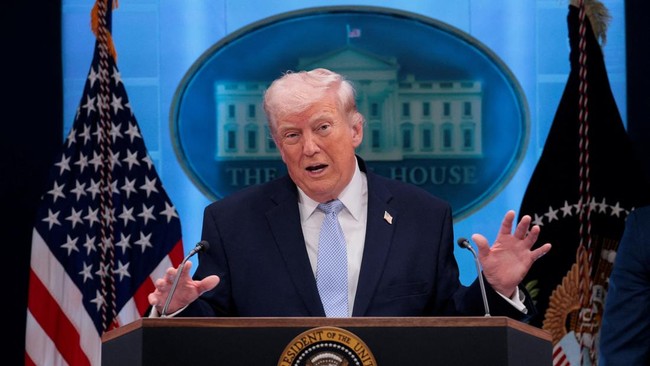
Meanwhile, Trump stated that he has “permanently opened” the Strait of Hormuz. He claimed to have taken this step for China and the world, adding that Beijing has agreed “not to send weapons to Iran”.
Initially, Trump announced the blockade of the vital waterway on Sunday after talks mediated by Pakistan failed to produce a peace agreement with Iran, during which on Tuesday, the US Central Command reported that American warships had effectively blocked all Iranian trade through the strait.
However, on Wednesday, Trump stated in a Truth Social post that “China is very happy that I have permanently opened the Strait of Hormuz”. He added that “I am doing this for them too - and for the World”.
Trump then stated that Beijing has “agreed not to send weapons to Iran”. That, said Trump, means that Chinese President Xi Jinping “will give me a warm hug when I get there in a few weeks”.
Since the Iran war broke out following the US and Israeli strikes on Tehran, Trump has frequently given mixed signals. Currently, US stock exchange regulators are investigating possible suspicious transactions ahead of Trump’s statements regarding the Iran war.