
Unveiling Israel's Cunning Motives in Attacking Lebanon and Derailing the Ceasefire?
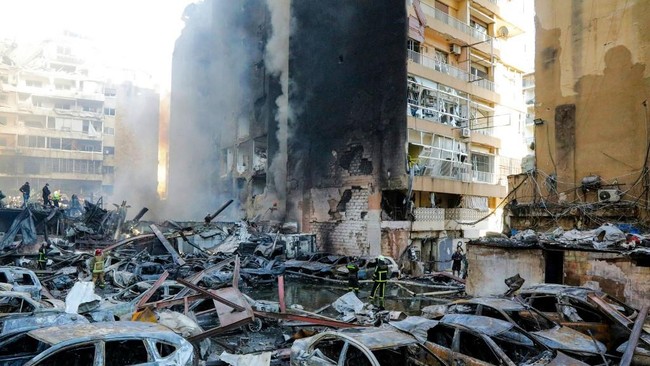
A massive surprise airstrike launched by Israel against Lebanon has killed more than 200 people and drawn sharp condemnation from the international community. This large-scale military operation raises significant questions about the true motives behind the aggression, especially amid ongoing diplomatic efforts. Senior International Correspondent for The Guardian, Peter Beaumont, provides in-depth analysis of the situation. He assesses the strikes not merely as routine military operations but as a spectacle of violence deliberately designed for the political benefit of Prime Minister Benjamin Netanyahu. “Prime Minister Benjamin Netanyahu and other officials claim the largest attack on Hezbollah during a month-long war against Iran was carefully targeted at members of the armed group, but the strike appears more a part of a spectacle of violence to benefit Netanyahu than simply militarily useful,” Beaumont writes in a Guardian article cited on Friday (10/4/2026). Efforts to Sabotage the US-Iran Ceasefire Many parties speculate that this unannounced attack, which hit more than 100 targets in 10 minutes, aims to undermine the ceasefire agreement between the United States and Iran. A densely populated area in central Beirut was one of the main targets in the lightning strike. “Some parties speculate that the attack aims to sabotage the US-Iran ceasefire, which many view as imposed on Netanyahu, who feels unhappy,” Beaumont reveals in his report. Israeli media claims that Hezbollah attempted to move its command post to a civilian area outside their historic centre for better protection. However, the massive scale of the attack and the death of Ali Yusuf Harshi, advisor to Hezbollah Secretary-General Naim Qassem, indicate more ambitious targets, namely an attempt to assassinate Qassem himself. A Time Bomb on Donald Trump’s Negotiation Table Amid ceasefire negotiations led by Donald Trump and his diplomatic team, the issue of Israel’s war in Lebanon seems left as a time bomb ready to explode at any moment. Although Hezbollah states it was informed and committed to the ceasefire, Israel continues its terrifying airstrikes. “What is clear is that in the half-baked ceasefire negotiations conducted by Donald Trump and his amateur diplomatic group, the question of Israel’s war in Lebanon against Tehran’s proxy has—intentionally or not—been left ticking like a time bomb,” Beaumont explains. Netanyahu is assessed as using the pretext of Israel’s right to continue attacking Lebanon as a way to disrupt an agreement he does not approve of. Israeli officials apparently believe they still have at least two weeks to continue military operations while Iran-US talks proceed. Potential Escalation and Collapse of the Agreement Ironically, Israel’s actions risk collapsing the peace deal. Iranian President Masoud Pezeshkian has warned that the attack violates the agreement and renders negotiations meaningless. The Soufan Center think tank in New York also highlights Netanyahu’s “scorched earth” strategy. According to it, Netanyahu is trying as much as possible to keep attacking Lebanon until the ceasefire agreement fails. “The Wall Street Journal reports that Israel was only informed of the agreement at the last minute and ‘is not happy’. Netanyahu now appears determined to pursue a scorched earth policy in Lebanon, even if—or perhaps especially because—it could derail the ceasefire agreement,” the Soufan Center writes in its bulletin. Director of the International Security Programme at Chatham House, Marion Messmer, adds that this situation shows Washington’s failure in managing its relationship with its main ally. Israel’s attack in Lebanon reveals major vulnerabilities in US diplomacy in the Middle East. “Israel’s insistence that its military actions in Lebanon are not part of the agreement reveals a major vulnerability and shows the limits of US ability to manage its ally: the ongoing bombing campaign in Lebanon could undermine the overall ceasefire and trap the US in a conflict it now wants to leave,” Marion Messmer writes in his statement. Although Israel continues ground invasions and bombings, internal assessments from the Israel Defense Forces (IDF) reportedly indicate that disarming or totally defeating Hezbollah is an unrealistic target to achieve.