
Unusual Phenomenon! Gold Price Falls Amid Iran War - Here Are 5 Triggers
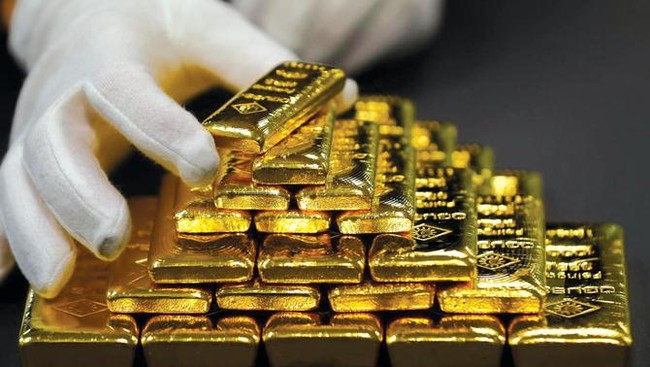
Gold prices remain lacklustre amid sustained demand for US dollars as risk aversion increases across markets. According to Refinitiv data, gold closed at US$5,136.91 per troy ounce on Monday (9 March 2026), declining 0.64%, reversing Friday’s 1.8% surge. By Tuesday (10 March 2026) at 06:28 WIB, gold recovered slightly to US$5,145.67 per troy ounce, gaining 0.17%.
Geopolitical tensions in the Middle East and surging oil prices maintain elevated market anxiety, prompting investors to seek safety in US dollars rather than precious metals—an unusual divergence from historical norms. The precious metal is unlikely to regain market favour in the near term, though upcoming US economic data could alter this trajectory. The United States will release inflation data on Wednesday and Friday, comprising the Consumer Price Index (CPI) and the Personal Consumption Expenditures Index (PCE), with CPI likely to receive closer scrutiny. This inflation data assumes heightened importance ahead of the Federal Reserve’s monetary policy announcement next week, with the central bank widely expected to hold interest rates steady amid energy price uncertainty.
The Anomaly: Why Gold Falls During Iran War
Nearly ten days after US and Israeli military strikes against Iran, gold and silver have moved contrary to their traditional behaviour during major geopolitical crises. Historically, both metals spike sharply during wars and geopolitical tensions; yet despite destabilising the Western Asia region and amid the ongoing Russia-Ukraine conflict, both metals have declined.
The first reason is that gold and silver are not surging because the US dollar strengthens and shifting expectations of Federal Reserve rate cuts dampen investor sentiment. In oil-rich Middle Eastern conflicts, crude prices typically rise, and since oil trades predominantly in US dollars, global dollar demand increases.
Secondly, market participants are assessing whether this conflict will remain geographically limited or brief, triggering profit-taking following earlier sharp gains rather than sustaining momentum. According to Satish Dondapati, Fund Manager at Kotak Mutual Fund: “Gold and silver prices have risen significantly in recent months. When prices spike following conflict news, many investors choose to take profits, resulting in correction rather than sustained sharp increases.”
Thirdly, investors are reallocating funds towards US government bonds (US Treasuries) and dollar-denominated assets, equally regarded as safe havens during heightened uncertainty. With more safe-haven asset options beyond gold, demand disperses across instruments, limiting gold’s price appreciation.
Fourth, declining equity markets contribute to the decline. Sharp stock market drops sometimes prompt investors to sell gold for liquidity. Since gold has delivered strong returns over the past year, many investors profit-take or sell holdings to offset losses in other assets, further suppressing prices short-term.
Fifth, elevated global interest rates make bonds and yield-bearing assets more attractive than non-yielding gold. Aksha Kamboj, Vice President of the India Bullion & Jewellers Association (IBJA) and Executive Chairperson of Aspect Global Ventures, notes that US dollar strengthening and rising US Treasury yields from inflation plus delayed Fed rate cuts constrain gold’s upside potential.
Additionally, investor capital flows have shifted towards crude oil due to war escalation and supply shortage concerns. “Most investor capital currently flows to crude oil because of war escalation and anticipated supply shortages, temporarily constraining gold prices,” Kamboj states.
Distinguishing the US-Iran Conflict from the Russia-Ukraine War
During previous geopolitical crises, including the 2022 Russia-Ukraine war, gold typically became the primary safe-haven asset as investors rushed to protect portfolios from uncertainty. However, the current US-Iran conflict occurs within a markedly different market environment.
Renisha Chainani, Head of Research at Augmont, explains the principal difference compared to the Russia-Ukraine crisis: the US dollar and US Treasury yields are currently exceptionally strong, reducing gold’s appeal as a safe-haven asset. Rising bond yields increase the opportunity cost of holding non-yielding assets like gold.
Additionally, today’s financial markets are more liquid and diversified, enabling investors to redirect capital towards dollars, energy assets, and defence sector stocks as alternative hedges. Consequently, geopolitical premiums on gold prices remain limited despite intense ongoing conflict.
Another factor is already-elevated investor positioning. Gold experienced strong rallies throughout 2025, with many investors entering earlier and limited room for new purchases when conflict intensifies.