
Unrealised Investment Reaches Rp2,000 Trillion in 2024 Amid Licensing Bottlenecks
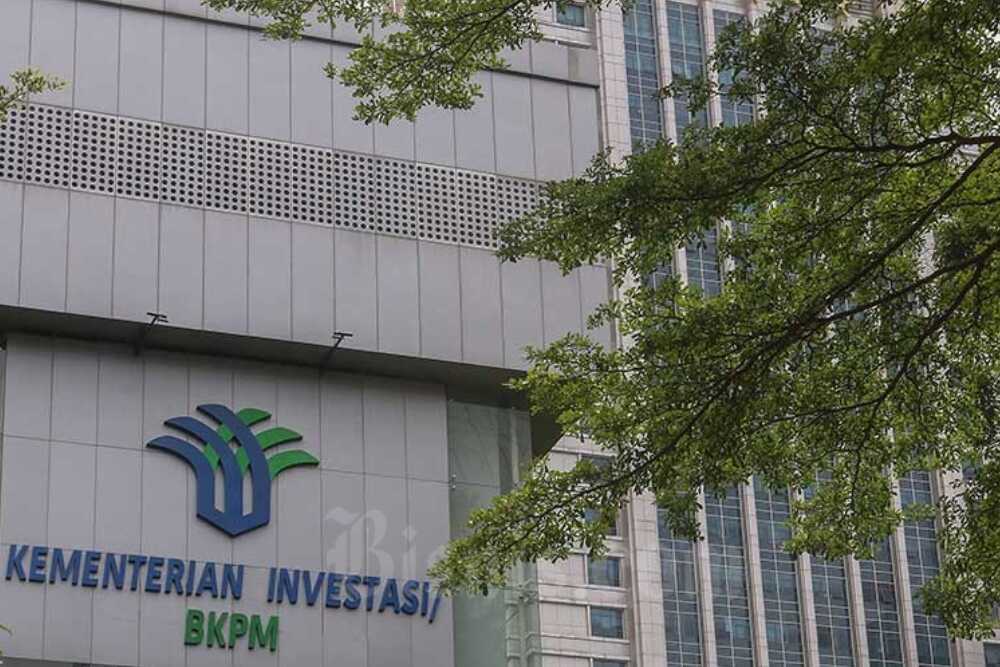
JAKARTA — The Ministry of Investment and Downstreaming/Investment Coordinating Board (BKPM) has revealed that unrealised investment throughout 2024 reached Rp2,000 trillion.
Deputy Minister of Investment and Downstreaming/Deputy Head of BKPM Todotua Pasaribu disclosed that the figure represents a serious concern amid the government’s efforts to accelerate investment in order to drive economic growth.
“Why is the unrealised investment figure so large? Because of issues such as licensing problems, an unconducive investment climate, various overlapping policies, and so forth,” said Todotua during a Public Consultation on the Draft Licensing Regulation on Thursday (3 July 2025).
He stressed that the situation warrants serious reflection by the government, particularly the Ministry of Investment and Downstreaming. Moreover, the government has set an ambitious target of more than Rp13,000 trillion in realised investment through to 2029 to drive economic growth towards 8 per cent.
Todotua therefore emphasised the need for breakthroughs in licensing, particularly through optimisation of the Online Single Submission (OSS) system and the application of fictive positive mechanisms in the licensing system to provide legal certainty for investors.
“We manage 1,700 types of permits, which intersect with 17 ministries and agencies. We are pushing for fictive positive schemes and the implementation of service level agreements so that permits are automatically issued if the deadline is met,” he said.
Todotua confirmed that the Ministry of Investment will continue to pursue licensing reform, including revision of three main BKPM regulations, namely Minister of Investment Regulations No. 3, 4, and 5 of 2021. These three regulations will be consolidated into a single regulation in accordance with the provisions of Government Regulation (PP) No. 28/2025 on the Implementation of Risk-Based Business Licensing.
Todotua also sought input from stakeholders regarding the draft of the new regulation. “We cannot work alone. The government needs input from business actors, associations, and MSMEs. The target is for this regulatory refinement to become the foundation of risk-based licensing reform that is simpler, more accountable, and pro-investment,” he said.
The government has begun disseminating PP No. 28/2025 on the Implementation of Risk-Based Business Licensing, which was officially issued on 5 June 2025. This new regulation replaces PP 5/2021 and marks an improvement to the risk-based business licensing system to be more measurable, digital, and integrated through the Online Single Submission Risk Based Approach (OSS-RBA).
“This government regulation affirms the government’s commitment to strengthening the business licensing ecosystem that supports investment growth and provides legal certainty for business actors,” said Coordinating Ministry for Economic Affairs Secretary Susiwijono Moegiarso during a dissemination event at the Coordinating Ministry for Economic Affairs office on Monday (30 June 2025).
Susiwijono explained that there are three main substantive differences between PP 28/2025 and the previous regulation. First, the implementation of service level agreements (SLAs). For the first time, every stage in the business licensing process, from registration to permit issuance, will be given clear service time limits (SLAs).
“Business actors have long complained about uncertainty over timeframes. Under PP 28, for example, the process for approval of spatial utilisation conformity at the Ministry of Agrarian Affairs and Spatial Planning/National Land Agency is set at a maximum of 25 working days without revision, or 40 days if amendments are required,” he explained.