
Unravelling the Reasons Why the Isbat Session is Key to Determining Eid al-Fitr in Indonesia
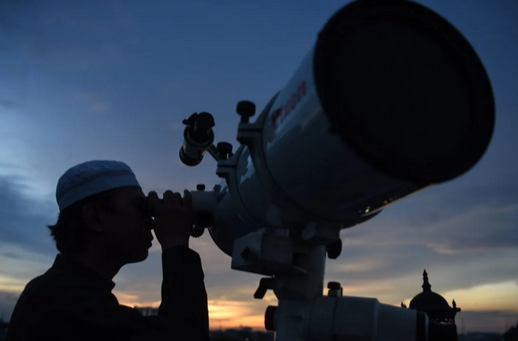
Every year, as the holy month of Ramadan draws to a close, the attention of Indonesian society turns to one national agenda: the Sidang Isbat. Although astronomical technology has advanced rapidly and can predict the positions of celestial bodies with high accuracy, the Sidang Isbat continues to play a vital role in determining the Eid al-Fitr holiday. The urgency of the Sidang Isbat is not merely a tradition but has a strong legal basis in our state system. Based on Fatwa MUI Number 2 of 2004, it is stipulated that the determination of the start of Ramadan, Shawwal, and Dhu al-Hijjah is carried out by the Minister of Religious Affairs through the Sidang Isbat. The involvement of the state in this process aims to provide legal certainty. Without an official decision from government authorities, Indonesian Muslims could face confusion due to differences in determination methods among various Islamic community organisations (ormas). One of the main reasons why the Sidang Isbat must be held is to verify theoretical data with field facts. In the field of falak (Islamic astronomy), two main methods are known: The Sidang Isbat becomes a forum where calculation data from experts is presented and then validated with reports from hundreds of rukyat monitoring points across Indonesia. If the calculation data indicates that the hilal is already high and field reports confirm this, the decision for 1 Shawwal is made with full conviction. Since 2022, Indonesia has adopted new hilal visibility criteria agreed upon jointly by the Ministers of Religious Affairs of Brunei Darussalam, Malaysia, and Singapore (MABIMS). The minimum requirements for the hilal to be visible are: The Sidang Isbat ensures whether the hilal’s position in 2026 meets these technical requirements before declaring the start of the new month. Sociologically, the Sidang Isbat functions as a unifying tool. Indonesia has a diversity of Islamic ormas that sometimes have different criteria for determining the start of the month. By sitting together at one table, the government facilitates deliberation to achieve consensus. The decision taken in the Sidang Isbat is expected to serve as a meeting point respected by all levels of society, so that Muslims in Indonesia can celebrate Eid al-Fitr with full tranquillity and togetherness. The consultative session is conducted in a closed manner to maintain solemnity and focus in listening to technical arguments and witness reports, before the results are opened transparently to the public. Not always. Differences can occur if the criteria used differ. However, the government always strives to conduct dialogue to create a common perception for the comfort of the ummah in worship. Thus, the Sidang Isbat is not merely a formality but an important mechanism that combines adherence to religious sharia, scientific precision, and the state’s responsibility in serving its ummah. Etymologically, hilal comes from Arabic meaning crescent moon. In astronomy, hilal is the first young crescent moon that can be seen after the conjunction. Staff from the Meteorology, Climatology, and Geophysics Agency (BMKG) observe the hilal position using telescopes at the BMKG Hilal Observation Building, Afe Taduma Sub-district, Ternate. The Regional Office of the Ministry of Religious Affairs in the Special Region of Yogyakarta (DIY) stated that monitoring the hilal for determining 1 Shawwal 1447 Hijriah is centred in Bantul. The Ministry of Religious Affairs will hold the isbat session this afternoon. The government has officially set 1 Ramadan 1447 H to fall on Thursday, 19 February 2026. KH Anwar Iskandar from MUI urged Muslims to respond to differences in the start of fasting wisely. Minister of Religious Affairs Nasaruddin Umar emphasised that 1 Ramadan 1447 H falls on Thursday, 19 February 2026. He invited Muslims to respond to differences in the start of fasting wisely.